
Have you ever wondered if a small signal on a chart might lead to smarter trades? Technical analysis takes past market data and turns it into simple, clear hints about when to act. It’s like reading a story where changes in price, volume, and momentum reveal the best moments to enter or exit a trade. In this post, I'll show you how these hints work together to give traders an easy way to time their trades. Get ready to dive into the basics that could change the way you approach the market.
Fundamentals of Technical Analysis in Trading
Technical analysis is all about looking at past market behavior to get a feel for what might happen next. Think of it like reading a story in the price charts and volume trends to spot repeating patterns. For instance, if you see a pattern that usually leads to a good buying chance, it gives you a nudge to consider jumping in. This method has grown into a trusted way to spot market shifts by watching for familiar behaviors over time.
On the flip side, fundamental analysis zooms in on economic news and happenings. Instead of digging into price charts, fundamental analysts pay close attention to things like interest rates, government policies, and global events. So while technical analysis focuses on how prices move and change, fundamental analysis is more about the big picture in the economy.
- Price patterns
- Volume trends
- Trend direction
- Momentum shifts
- Support/resistance
By zeroing in on these key areas, technical analysis gives traders a set of clear tools to check out market trends. It lays out a simple way to see how prices move, giving you hints on when to jump in or step back. Whether you're planning for a quick swing trade or a longer hold, this approach helps you find entry and exit points with confidence. Is it a bit like piecing together a puzzle? Absolutely, and that’s part of what makes reading the market so exciting.
Price Action Techniques and Chart Patterns for Technical Trading

Price action shows you exactly how the market behaves by focusing on the actual movement of prices instead of slower signals. It gives traders a clear look at shifts in mood by watching how prices interact with key levels from past highs and lows. This approach makes it simple to figure out the best times to buy during dips or sell at peaks.
- Head & Shoulders
- Double Top/Bottom
- Triangles
- Flags
- Hammer
- Engulfing
- Doji
- Breakout Bars
In real trading, these patterns become handy tools. Traders often keep an eye on head & shoulders patterns as a sign things might turn around, while double tops or bottoms can hint at a change in momentum. For example, if you see a breakout bar at a strong resistance level, it might be a sign that a new trend is starting, giving you a chance to trade smartly. When you mix these clear patterns with other technical hints, you get a better shot at spotting high-probability trades. It’s a bit like solving a puzzle, each pattern adds more detail, guiding you on when to take a buying dip or close out at a resistance peak.
Core Technical Indicators for Trading Analysis
Moving Averages
Traders often turn to moving averages because they help smooth out price data, making it easier to see the overall trend. There are two basic types: the simple moving average, which just finds the average price over a set period, and the exponential moving average, which puts extra weight on the latest prices. Have you ever noticed how a short-term average crossing above a long-term one might hint that prices are starting to rise? This tool cuts through the market’s little ups and downs to show you the bigger picture.
Relative Strength Index (RSI)
The Relative Strength Index, or RSI, is a handy gauge for market momentum. It measures recent gains against recent losses to see if prices might be too high or too low. Typically, levels around 70 suggest the market is overbought, while levels near 30 signal it might be oversold. And if the RSI behaves differently from the actual price movement, that mismatch can be a clue of an upcoming reversal. It’s a simple yet effective way to keep an eye on whether the market needs a little correction.
MACD and Volume Indicators
The MACD, short for Moving Average Convergence Divergence, comes with two lines – the MACD line and the signal line. When these lines cross, it’s often seen as a sign to consider a new trade. Volume indicators play a big role too, as a spike in trading volume along with a MACD crossover can boost the chances that the trend will continue. Together, these tools help traders feel more confident in their decisions about when to enter or exit the market.
Drawing Trend Lines and Identifying Support-Resistance Levels in Trading
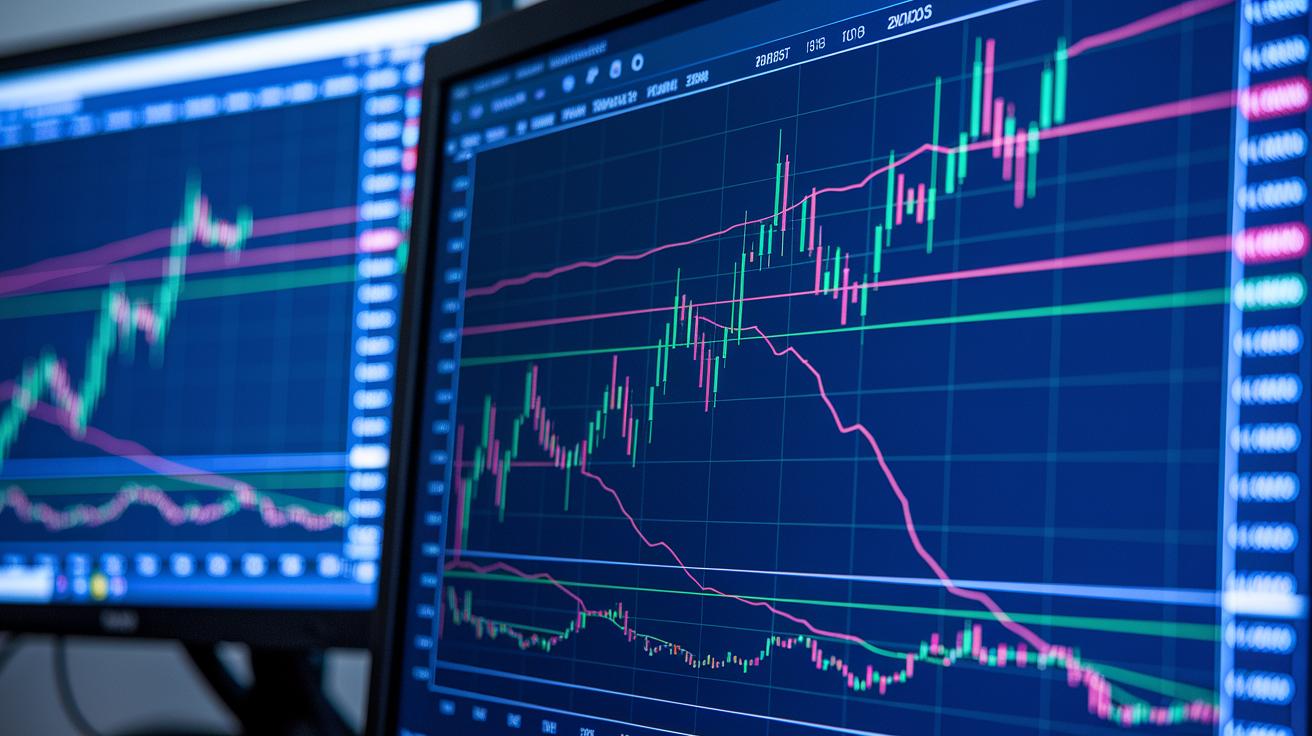
Drawing trend lines is really about connecting clear swing highs or swing lows to show the market’s direction. This simple method helps you see how prices change over time and spot those moments when the market might switch gears. Tools like the rectangle tool and horizontal lines can mark out support and resistance areas. Support zones often hint at a good time to buy when prices drop, while resistance zones might be the best time to sell as prices hit a top. For example, try drawing a line that links the peaks of price highs, this can reveal when the market might turn around.
Understanding these visual clues is a key part of smart trading. Support and resistance areas guide you on when to get in or get out, and they back up other signals you see in the market. Pairing clear trend lines with these zones can boost your confidence, showing you when a dip might be a buying chance or when an upward move is losing steam.
Keep your drawings simple. Focus on the major swing points so you don’t end up with clutter or misread small price moves.
Timeframe Strategies and Intraday Chart Techniques for Trading
Technical analysis helps us understand market moves whether they happen in a flash or over several days. By switching between chart periods, like seconds, minutes, or even days, you can tailor your strategy to suit your trade style. This way, you can jump in quickly during busy market hours or spot longer trends as they build up. It’s really about tuning into what the market is saying at the right moment.
Intraday Chart Techniques
For fast trading moves, stick with shorter timeframe charts. Many traders check one-minute, five-minute, or even hourly charts to catch those quick swings. For example, one-minute charts give a close look at price ticks during scalping, while five-minute charts help smooth out the noise a bit. Hourly charts can offer a slightly wider view. These tools make it easier to decide when to step in or out quickly as the market changes.
Swing Trading Indicators
If you’re holding trades over several days, swing trading indicators can be a big help. Using moving averages on charts that span from four hours to a full day smooths out price fluctuations and highlights the overall trend. Also, the RSI (which shows if prices might be too high or too low) can signal when a reversal is coming. Combining these tools can give you more confidence to hold your positions, allowing you to capture multi-day moves while keeping risks in check.
Leveraging Advanced Charting Platforms for Technical Analysis in Trading

When you start using charting tools like TradingView, MT4 with its premium upgrade, or mobile apps such as OANDA Mobile and OANDA Paxos, it feels a bit like having a trusted instrument in your hands. These platforms give you clear snapshots of price data and market trends, helping you easily spot key signals, whether you’re just testing the waters or you’ve been trading for years. Really, it’s similar to having a smooth, well-tuned tool that guides you when you need to make fast decisions.
Now imagine tools that come with smart extras like an open order indicator, a spreads calculator, and smooth links to algorithmic trade software. These features show you extra details about market moves right when you need them. For instance, an advanced chart might alert you when a trade starts to follow a pattern that fits your strategy. This mix of real-time insights with historical data makes it easier for you to decide if it’s time to adjust your trading plan.
So when you’re picking a charting platform, go for one that really matches your style and comes loaded with solid analytics. It might help to try a few different interfaces to see which one feels best, like switching channels until you find your favorite tune. Look for one that smoothly shifts between different technical indicators and algorithm-driven signals to make sure every trade is backed by clear, smart data.
Risk Management and Entry-Exit Planning in Technical Analysis for Trading
Good risk management starts when you figure out the right size for each trade by checking your profit and loss numbers. Looking at things like spreads, margins, fees, and overall profit or loss helps you build a strong base for your trading plan. It shows you how much you can safely risk and how each move might influence your entire account. This way, you can balance the chance for gains with the possibility of losses, knowing when to step in or back out based on your own financial limits.
Calculating Risk-Reward Ratios
First, pick the price on the chart where you want to enter a trade. Then, decide where you'll exit if things go your way. Next, find out how much you could lose by measuring the gap between your entry point and your stop-loss level. Now, compare that amount to your expected profit by dividing the potential loss into your target gain. Generally, aiming for a 1:2 ratio, or even better, means you're expecting to earn twice what you're risking. This clear, step-by-step method helps keep every trade aligned with your financial goals.
Setting clear stop-loss and take-profit points is key to disciplined and smart trading. Use simple signals like support and resistance levels from your chart to set these points. With stops and targets in place, you safeguard your capital while letting your trade run in a controlled way, making your strategy both sound and straightforward.
Case Studies: Technical Analysis for Trading Across Forex, Crypto, and Commodities
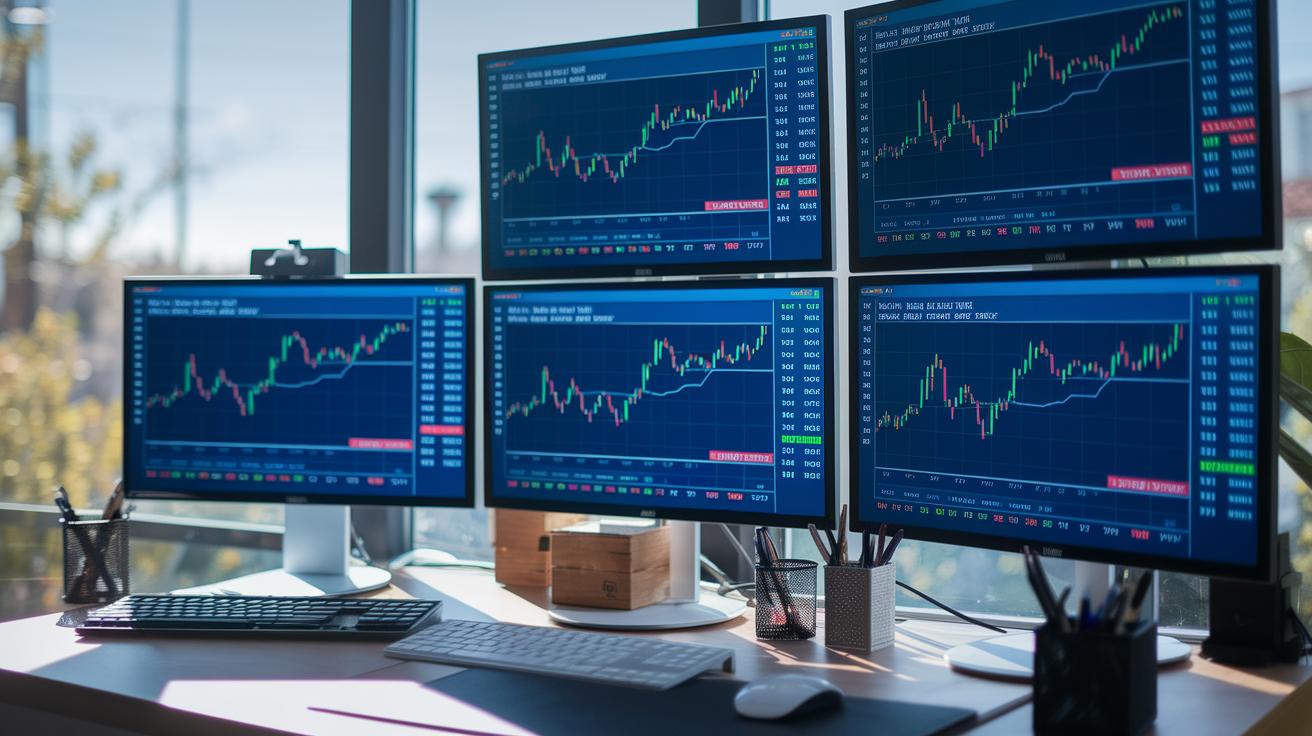
Technical analysis uses simple tools to spot price trends. It works on all kinds of assets, whether you're trading forex pairs, cryptocurrencies, or even gold. By checking out price charts and patterns, you can make smarter choices even when the market shifts. Tools like moving averages and RSI (a tool that tells you if an asset might be too expensive or cheap) help catch small price moves. This makes it easier to compare things like forex candle patterns with crypto signals or to use a Fibonacci retracement trick in commodities.
Every market has its own beat. For example, forex trading is all about clear candle patterns where even small ticks matter. Crypto can be much more unpredictable, so you really need to watch the signals closely. And in commodities, prices tend to move in a steadier way, giving techniques like Fibonacci retracement a chance to work well. When you compare different markets using the same basic tools, you start to see both their similarities and differences. That means you can put together a flexible trading plan that fits each market’s unique rhythm.
| Market | Instrument | Key Indicator | Timeframe |
|---|---|---|---|
| Forex | EUR/USD | Moving Average Crossover | 1H |
| Crypto | BTC/USD | RSI Divergence | 4H |
| Commodity | Gold (XAU/USD) | Fibonacci Retracement | Daily |
Looking at these examples, you can see that even if the signals change, the idea stays the same. Forex trades show quick, hourly signs, crypto signals come from a broader view like a four-hour chart, and commodities give steady, daily insights. In truth, technical analysis is like a common language that helps you trade across all these markets.
Final Words
In the action, we’ve unraveled technical analysis methods, explored how chart patterns and indicators guide smart decisions, and examined trend lines, timeframes, and advanced charting platforms. We touched on risk controls and shared real-world case studies across various markets. This review brings everything together, helping you weigh market signals and refine trade planning. Keep using technical analysis for trading as a tool to boost clarity and confidence in your investment decisions. Stay positive and keep advancing with each market pulse.
FAQ
What are some good resources like technical analysis trading books or PDFs?
The technical analysis trading book and PDF formats offer clear guides that use historical charts to help traders learn market trends and trading signals in a straightforward style.
Where can I find free technical analysis resources for trading?
Free technical analysis resources online provide accessible insights into price patterns and volume trends, making it easier for traders to grasp market moves without a hefty upfront cost.
What is an example of technical analysis in trading?
The technical analysis example involves using tools like moving averages and support/resistance lines to pinpoint when to enter or exit trades based on historical price movements.
What do technical analysis tools do for traders?
Technical analysis tools help traders turn chart data into clear signals by highlighting price trends, momentum shifts, and key breakout points, which guide quick trading decisions.
Which technical analysis method is best for trading?
The best technical analysis method depends on your style; some traders favor moving averages while others rely on oscillators, so choose the approach that best fits your specific market strategy.
What is the 3-5-7 rule in trading?
The 3-5-7 rule in trading offers a simple framework to review price trends over short, mid, and intermediate timeframes, helping traders set timely entries and exits based on observed patterns.
How can I earn $1000 per day in trading using technical analysis?
Earning $1000 per day with technical analysis calls for tested strategies, disciplined risk management, and practical experience; it’s a goal that builds gradually rather than a quick-fix formula.
How do I perform technical analysis in trading?
Performing technical analysis means studying past price and volume data on charts, which helps you spot trends and plan effective entry and exit points tailored to your trading timeframe.