
Have you ever noticed how natural gas prices can swing so wildly in just one day? It’s like the market is on a roller coaster, one minute prices are soaring, and the next they’re dropping just as fast.
Technical analysis comes in handy here. By looking for clear signals in the price data, you can spot trends and patterns that help explain these quick shifts. In other words, these simple techniques can alert you to potential warnings or opportunities in a market that never seems to slow down.
Core Technical Analysis Techniques for Natural Gas

The natural gas market has been on a wild ride lately. Prices shot up quickly and then fell to about $3.00 per MMBtu on January 31, 2025, as warmer winter weather and high storage levels eased the surge. Traders have their eyes glued to the market since shifting weather, supply changes, and even moves on the global stage keep things unpredictable. Have you ever noticed how even slight changes in demand can make prices wobble?
Technical analysis is a must-have tool for making sense of these ups and downs. Traders use easy-to-understand methods, like those from our trusted resources, to track trends and spot early warning signs. Looking back at past price moves can help them see bearish patterns, such as gaps in price and key resistance levels just below $3.10 and $3.14. Catching patterns like a head-and-shoulders setup with a neckline at $3.05 can also be a game changer when deciding to jump in or step away.
| Level | Price (MMBtu) | Date Identified |
|---|---|---|
| Support | $3.00 | January 31, 2025 |
| Head-and-Shoulders Neckline | $3.05 | January 31, 2025 |
| Resistance | $3.10 | Recent Analysis |
| Resistance | $3.14 | Recent Analysis |
Moving averages and RSI signals go hand in hand with these price levels to clear up the trend picture. For example, comparing the 50-day to the 200-day moving averages helps smooth out the price data and show the market’s true direction. And when the RSI (a tool that measures the speed and change of price movements) slips into lower zones or hangs around the middle, it gives an extra nod on whether a bounce back or further drop might be coming. This blend of simple signals helps traders decide when the time is right to make a move, keeping their strategy steady in a market that can shift on a dime.
Natural Gas Moving Averages and Momentum Indicators

Moving averages and momentum indicators help clear out market noise and show us when trends might be shifting. They smooth out short-term ups and downs so you can see the bigger picture. For example, when you compare the 50-day moving average with the 200-day moving average, it often signals whether natural gas might be getting stronger (bullish) or weaker (bearish).
The Relative Strength Index (RSI) is another handy tool, it gives a simple hint about market conditions. When the RSI drops to around 30, it can mean natural gas is oversold, while readings near 70 suggest it might be overbought. In plain language, it’s like checking if a product is too cheap or too pricey before buying. And then there’s MACD divergence, which, along with the stochastic oscillator, can fine-tune your timing by signaling when prices might be about to bounce back after a dip.
- 50/200-day moving average crossover signals a shift in the market direction
- RSI above 70 indicates overbought conditions; below 30 shows oversold conditions
- MACD line crossing away from the signal line can hint that a trend is about to change
- Stochastic %K crossing %D in the oversold area helps confirm these signals
- Momentum Price Oscillator shows key turning points
- Bollinger Bands squeezing together often lead to breakouts
When you see a moving average crossover together with an RSI in the oversold range and backed up by a clear MACD divergence, the signals to buy or sell become much stronger. This mix of tools gives traders a balanced view, making it easier to decide when to enter or exit a natural gas trade.
Chart Patterns and Candlestick Analysis for Natural Gas

When it comes to gas futures, chart patterns act like helpful hints that can show when the market might change its direction. Recognizing these signals lets traders plan their moves with more confidence and ease.
Head-and-Shoulders Pattern
Picture a mountain range with a tall peak in the middle flanked by two smaller ones. That’s what the head-and-shoulders pattern looks like after a price surge. Here, the peak in the middle, the head, towers over the two shoulders, and a key line appears at $3.050. Once prices dip below this line, it usually means a downward trend might follow. This clue helps traders decide the best moments to exit trades and adjust their stop-loss orders.
Bearish Price Gaps
Imagine the market taking a sudden step down, leaving a gap on the chart. These bearish price gaps pop up during sharp market shifts and quickly signal changing sentiment. For instance, when natural gas dipped from $2.792 to $2.645 and then stalled without recovering, it left a gap that warns traders of potential further declines. Many traders place their stop orders just above these gaps, giving themselves a bit of protection if the market starts to bounce back.
Fibonacci Retracement Insights
Fibonacci retracement levels can add another layer of insight when the market is swinging wildly. By mapping the recent move between $2.645 and $3.140, traders can spot important resistance points. The 38.2% retracement level shows up around $2.90, and the 61.8% level appears near $3.05. These levels often reveal areas where a pullback or reversal might occur, guiding traders on when to enter or exit positions. It’s a bit like having a road map during a twisting, unpredictable journey.
All of these tools together help create a clearer picture of the market, making it easier for anyone, from a beginner to a seasoned trader, to plan smart moves in natural gas trading.
Natural Gas Support and Resistance Level Strategies

When traders look back at past price moves, they can spot key zones where prices often bounce. A common example is the $3.00 level, a familiar checkpoint that many traders watch, and a break near $3.05 can signal a change in the trend.
Volume spikes and clear signs of supply and demand add extra clues. When storage builds push prices close to resistance at $3.10 or $3.14, a sudden jump in volume tells traders this move might be more than just a quick push. Imagine watching the trading screen light up as the price nears $3.10, it’s a real hint that the market is testing its limits. This blend of past trends and live data helps traders fine-tune when to enter or exit a trade.
Smart risk management ties these ideas together. Many traders set stop orders just below $3.00 to guard against steep drops. This kind of safety net can protect your position if the market suddenly turns against you.
| Level | Type | Confirmation Signal |
|---|---|---|
| $3.00 | Support | Consistent bounces; stop orders placed below this level |
| $3.05 | Broken Support | May indicate a reversal |
| $3.10 | Resistance | Noticeable volume spike as price approaches this point |
| $3.14 | Resistance | Strong volume surge amid supply and demand pressure |
Forecasting Natural Gas Prices with Technical Models

Mixing seasonal trends with long-term data can be a smart way to predict natural gas prices. For instance, a milder winter in early 2025 reduced heating needs, which went hand in hand with past lows around $3.00. This combo gives traders a clear starting point and helps them track both regular seasonal shifts and the broader market direction.
Tools like rolling regressions and time-series analysis play a big role in this process. They dive into historical data to spot repeating patterns and estimate where prices might go next. Rolling regressions update the trend information continuously, staying in tune with real-time market changes. Meanwhile, time-series analysis finds steady trends even when short-term ups and downs occur. These methods together offer a disciplined way to handle the unpredictable nature of commodity markets.
Adding other indicators like moving averages, RSI signals, and chart patterns can sharpen the forecast even more. For example, combining a simple moving average crossover with RSI, which can signal a rebound when the market is oversold, adds extra insight. Recognizing familiar chart patterns, such as head-and-shoulders or noticeable bearish gaps, strengthens the forecast further. And when this method lines up with a consistent bearish trend noted between August 12 and August 27, 2025, it provides traders with clear, multi-layered signals for both short-term moves and longer-term strategies.
Risk Management Strategies in Natural Gas Technical Trading
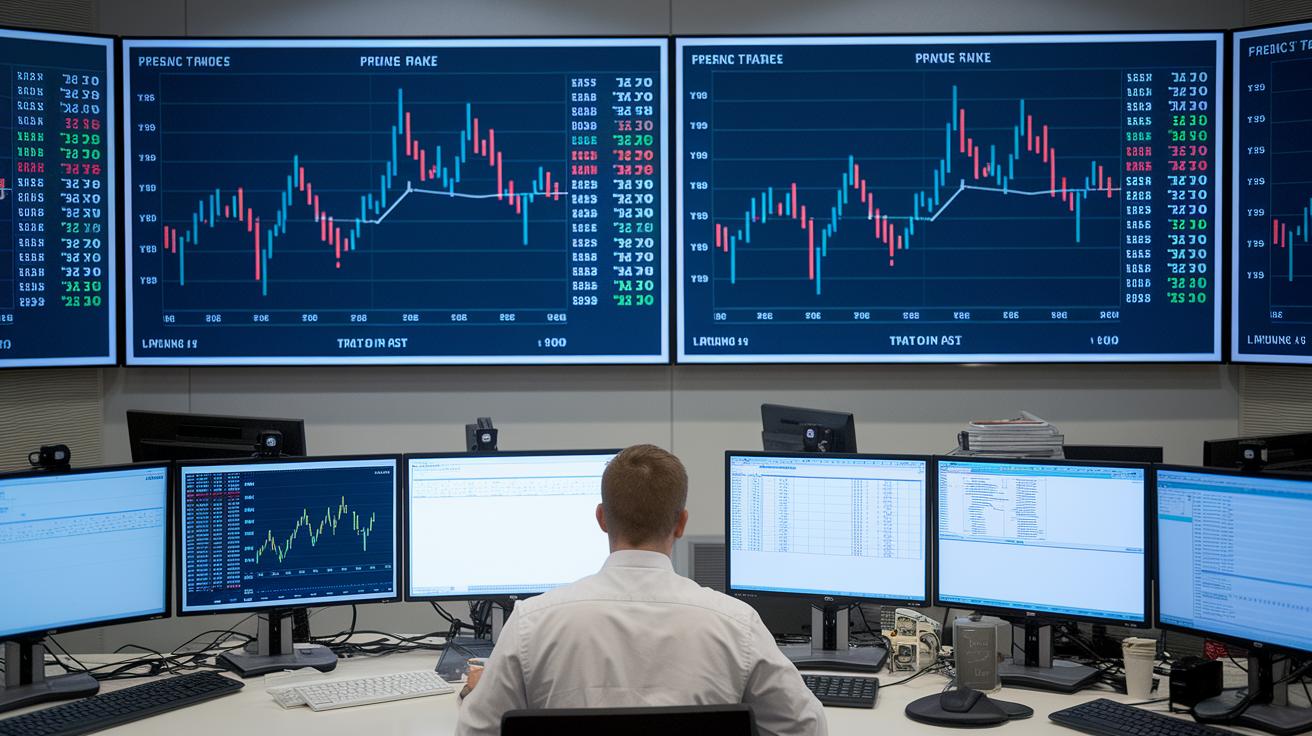
In fast-moving gas markets, having strict risk rules is super important because prices can change in a flash. Every trade comes with some risk, and even a tiny mistake might turn into a big loss. That’s why it’s smart to stick to clear risk guidelines.
When you set up a trade, placing stop-loss orders is a key step. For example, you might put a stop just below a main support level, like around $2.99 when $3.00 is the line. This helps protect you from sudden drops. It’s also important to size your position carefully and aim for at least a 1:2 risk-reward ratio on breakout trades. Watching the trading volume in real time can be a big hint too; a sudden spike in volume might signal a potential swing that could hurt your position. Many traders also use risk management tools (check out https://tradewiselly.com?p=192) to double-check their setup and adjust their trades as needed.
Using demo accounts to test strategies is another smart move. It lets you run automated setups in a risk-free setting, so you can fine-tune your approach without putting your real money on the line.
Final Words
In the action, this article broke down technical analysis of natural gas into easy-to-follow steps. We covered key chart patterns, momentum indicators, and support-resistance strategies while highlighting smart risk management practices. Each section provided close-up insights into price levels and market signals that can guide sharper decision-making. These tools can help you respond to market shifts with confidence and care. Take what you've learned and keep refining your strategies for a more secure and promising trading future.