
Have you ever thought about protecting your future without taking huge risks? GIC investments let you grow your money with a set interest rate and clear rules. They provide a steady plan that isn’t shaken by the ups and downs of riskier choices.
In this chat, we’ll explore what a Guaranteed Investment Certificate is, look at the different types available, and explain how they can serve as a solid building block for your financial plan.
GIC Fundamentals: What Is a Guaranteed Investment Certificate?

A Guaranteed Investment Certificate (GIC) is simply a way to save money by depositing a set amount with a bank or credit union for a fixed time. You earn a set interest rate, so no matter how the market swings, you know exactly how much you’ll make. It’s like having a steady, reliable brick in your savings plan without worrying about the wild ups and downs of riskier investments.
When you choose a GIC, you sign a clear agreement. You decide how much to deposit, how long you’ll keep the money there, what interest rate you’ll earn, and what happens if you need to take money out early. If you withdraw your funds before the term ends, you might lose some of your interest or face a penalty. This setup is designed to give you predictability and a sense of security.
GICs usually start with minimum investments of around $500 or $1,000. For those who want a safe way to save, knowing these details is key. You’ll understand exactly how much you need to save, how long your money is locked in, and what return you can count on. This clear structure makes GICs a smart choice when you’re building a secure financial future.
Types of GIC Investment Options
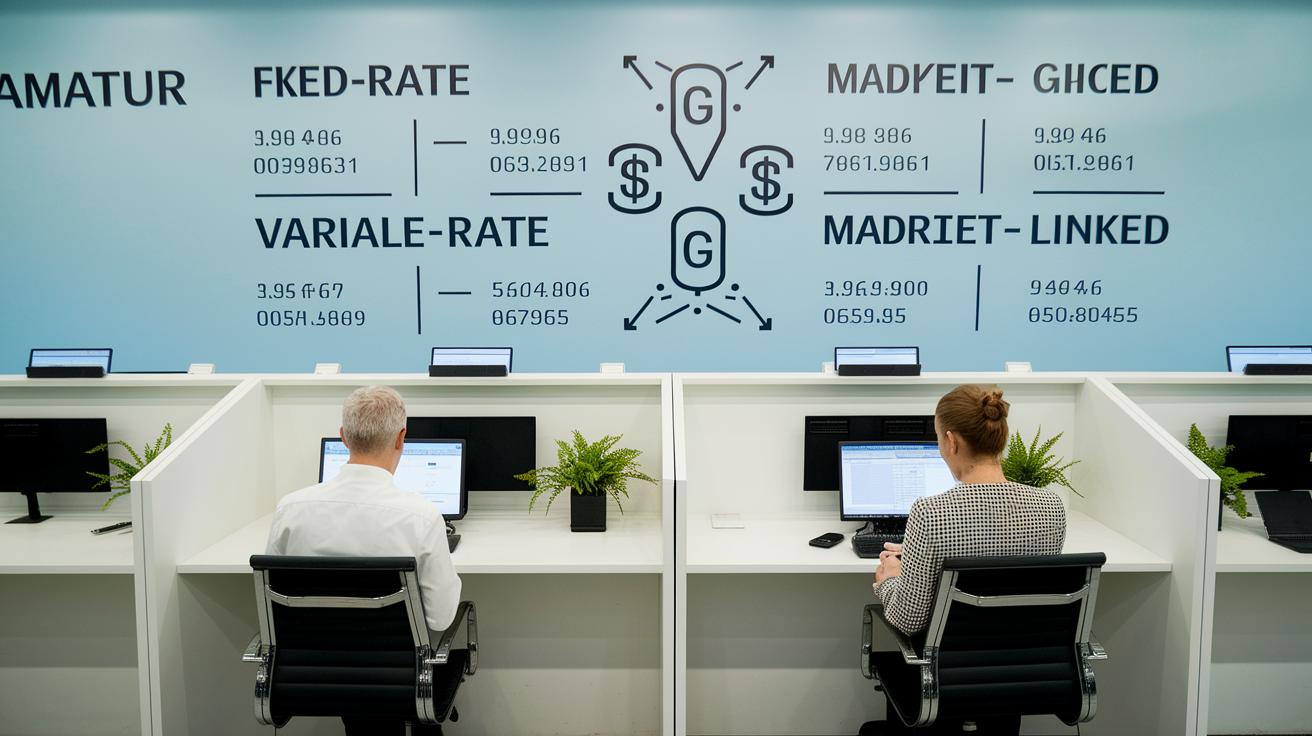
When you’re exploring GICs, knowing your choices is key. They help match your investments with what you care about, whether that’s steady growth or a touch of market-driven excitement. Picking the right kind can give you the security you love along with the potential to grow your money.
Fixed‐Rate GIC
With Fixed‐Rate GICs, you get a set interest rate for the whole term. It’s like knowing exactly when a clock will tick, consistent and dependable. If you’re someone who likes things to be predictable, this might be the choice for you.
Variable‐Rate GIC
Variable‐Rate GICs are a bit more flexible. Their interest rates can change with the market. So if you think rates might get better, or you don’t mind a few ups and downs, this option could be appealing. It’s a bit like watching the tide change, you get a sense of natural rhythm.
Market‐Linked GIC
Market‐Linked GICs tie your returns to how the stock market is doing while keeping your main deposit safe. In other words, if the market does well, you could see higher gains without risking your initial money. This offers a nice blend of potential rewards and a safety net.
Registered vs. Non‐Registered GICs
Registered GICs sit in tax-advantaged accounts, which means your interest might grow tax-free. However, they do come with some age and contribution limits. On the flip side, Non‐Registered GICs don’t have the tax benefits, but you get more freedom with your investment.
Foreign‐Exchange GIC
Foreign‐Exchange GICs let you invest in another currency, such as U.S. dollars. This can be a smart way to diversify your investments and add a global element to your strategy.
| GIC Type | Key Feature | Typical Term |
|---|---|---|
| Fixed‐Rate GIC | Set and predictable interest rate | 1-5 years |
| Variable‐Rate GIC | Rate adjusts with market conditions | 1-5 years |
| Market‐Linked GIC | Returns tied to market performance with principal protection | 3-7 years |
| Registered GIC | Tax perks within registered accounts | 1-5 years |
| Non‐Registered GIC | More flexible outside tax-sheltered accounts | 1-5 years |
| Foreign‐Exchange GIC | Investing in alternative currencies | 1-5 years |
GIC Interest Rates and Yield Calculation

When it comes to GICs, how much you earn depends on a few simple things: the type of interest rate, how long you let your money sit, and how often the interest is added to your balance (this is called compounding). Fixed-rate GICs give you a set return once you invest, while variable or market-linked GICs change their returns based on market moves and interest-rate benchmarks.
To work out your GIC yield, start with these easy steps:
- Figure out if your rate is fixed or variable.
- Check how long your money will be invested, this could be in years or even days.
- Notice how often the interest is compounded, whether it's once a year, twice a year, or computed simply without any extra boost.
- Use an online yield calculator or a spreadsheet. For example, you might try out some financial planning tools to see how everything adds up.
- Look at the difference between what you earn on paper (nominal yield) and what you actually get (effective yield) to understand your true earnings.
Online calculators can be a real lifesaver. If you adjust the term or the compounding period, these tools show you right away how your effective yield will change. This hands-on method makes it easier to see which factor matters most and helps you set clear, smart expectations for your investment. With a bit of practice using these tools, you'll be able to predict your returns confidently and make choices that keep your fixed-income investments safe and steady.
Risk Management and Insurance in GIC Investment

GICs are a safe, steady way to invest your money. When you put your savings in a GIC, you know your original amount is kept safe and will be given back to you at the end of the term. For example, if you invest $1,000, you'll get that full amount back no matter what happens in the market. This kind of certainty gives many people peace of mind when planning for their future.
Taking money out of a GIC before the term ends usually comes with penalties. Imagine you need your money sooner than expected, pulling it out early might mean losing some of the interest you earned or even more. This is a way to remind you to stick with your original plan so that you can enjoy the steady growth of your savings over time.
There’s even more safety built into GICs. Credit unions and provincial insurance programs cover GICs up to $250,000. This means that even if your bank faces problems, your investment stays secure. Knowing that extra protection is in place can make GICs an attractive choice for keeping your hard-earned savings safe.
Portfolio Diversification with GIC Investments

GICs can be the rock-solid part of your investment mix. They work like a safety net, your money stays secure even when other investments promise bigger returns but come with more risk. Think of them as the quiet anchor in your savings that helps smooth out the wild swings of the market.
When you plan how much of your money goes into fixed-income investments, set aside a clear slice for GICs that fits your timeline. For example, if you’re saving for something soon, a 1- to 3-year fixed-rate GIC might be the ticket. If your goal is further down the road, a market-linked option could give you a chance at a bit more growth while still keeping your money safe.
Mixing up different types of GICs can help you hit your medium-term goals too. By combining fixed-rate, variable-rate, and market-linked options, you get both steady predictability and the possibility of extra gains. Imagine it like adding a pinch of spice to a reliable recipe: most of the mix is fixed and steady, with just a bit of market-linked flavor to keep things interesting.
For those thinking long term or who prefer to play it safe, GICs are a smart fit for retirement plans. They help build a portfolio that weathers tough times, steadily smoothing out the ups and downs along the way.
Comparing GIC Investment to Other Safe Income Options

GICs keep your original money safe and give you a fixed return. When you invest in a GIC, you know right away what you’ll earn, which makes it a reliable building block for your savings. Bonds might look safe too, but they can bounce around with market ups and downs. Even if bonds sometimes offer nice yields, shifts in the market can change their prices and affect your overall return.
Multi-year GICs usually offer better interest rates compared to high-yield savings or money-market funds. High-yield savings accounts let you access your money quickly, but they often pay less interest than a longer-term, bond-like investment such as a GIC. Money-market funds might be more flexible, yet they rarely guarantee a set return like a GIC does. This difference matters a lot if you prefer knowing exactly how your money will grow.
Here are a few things to keep in mind when weighing your options:
- Liquidity: With GICs, your money is locked in until the term ends, so you can’t grab it quickly.
- Rate risk: Bonds and other products with changing interest rates can change in value unexpectedly.
- Yield variability: High-yield savings and money-market funds might not give you returns as solid as GICs.
- Tax considerations: Each product has its own tax rules based on your account type and local laws.
Selecting the Right Provider for GIC Investment

When you're picking a spot to open a GIC, start by looking at the rates from big banks like RBC, TD, and CIBC, and then check what credit unions have to offer. Take a moment to compare their rates and see if a credit union gives you something similar along with provincial deposit insurance up to $250,000. This side-by-side look helps you notice even small rate differences that can really add up over time.
Next, think about fees, minimum deposit amounts, and the different term options each institution offers. Some places might charge service fees or set the rates based on the type of account you have. For example, a bank might need a larger minimum deposit while offering the same interest rate as a credit union. Knowing these little details lets you pick the option that best fits your financial needs.
It’s a smart move to check rate updates and special offers every few months. Doing this on a quarterly basis means you can catch top deals as the market changes, making sure your GIC investments stay in line with your goals.
Final Words
In the action, we explored how a guaranteed investment certificate lays the groundwork for secure, fixed-income strategies. We broke down how these products work, from contract details to different types, helping simplify risk management and portfolio diversification. The insights guide you in comparing options and selecting a provider that fits your needs while keeping your funds safe. Embracing a gic investment strategy can build stability and boost confidence as you make smart, informed choices in today’s market. Enjoy a promising path forward with clear, steady financial steps.
FAQ
Q: What is a GIC investment?
A: The term “GIC investment” refers to a secure fixed‐income deposit where you place funds for a set period in exchange for a guaranteed interest rate, offering a predictable return with minimal risk.
Q: Is a GIC a good investment?
A: The GIC investment is a solid option for conservative savers seeking steady, predictable returns, although its fixed nature might yield lower gains compared to more dynamic investment products.
Q: What are the downsides of GICs?
A: The downsides of GICs include limited access to your funds during the term, potential penalties for early withdrawals, and returns that may not keep pace with inflation or higher-yield alternatives.
Q: What is the US equivalent of a GIC?
A: The US equivalent of a GIC is a certificate of deposit (CD), which also offers a fixed interest rate over a set term, providing similar stability and safety for your funds.
Q: What is GIC Investment Singapore and who owns it?
A: GIC Investment Singapore, known as GIC Private Limited, is a Singapore-based sovereign wealth fund owned by the government, recognized for managing a broad and diversified investment portfolio.
Q: What is in the GIC portfolio and its AUM?
A: The GIC portfolio comprises a wide range of global assets, and its significant assets under management reflect the fund’s role in securing long-term growth through diversified international investments.
Q: How does GIC compare to Temasek?
A: GIC and Temasek differ in strategy and focus; GIC invests globally over the long term for steady returns, while Temasek concentrates more on investments aligned with Singapore’s economic strengths.
Q: Does GIC invest in the USA?
A: The phrase “GIC investment USA” refers to the portion of the sovereign wealth fund’s portfolio focused on American markets, targeting opportunities that complement its global investment strategy.
Q: What is GIC Singapore net worth?
A: GIC Singapore’s net worth is reflected in its extensive assets under management, though the exact figure fluctuates with market conditions and the performance of its diverse international investment portfolio.