
Have you ever wondered if you're really getting value from your investment advisor? Fidelity promises to combine expert advice, careful planning, and secure operations into one simple package with one clear fee. They even offer a small discount every three months.
Today, we'll break down how these fees work and what each charge means for your wallet. Imagine it like assembling a balanced meal: every fee is an ingredient that adds up to the final taste. Let's explore whether Fidelity's fee structure truly delivers the clear and honest value it promises.
How Fidelity Advisory Fees Are Structured

Fidelity’s gross advisory fee is an all-in-one charge that covers everything you need. It gives you access to a knowledgeable advisor, solid financial planning, careful portfolio oversight, and secure brokerage and custody services. Imagine getting a complete package that bundles every important service to help manage your wealth.
Every three months, Fidelity uses a credit offset to lower your overall fee. In simple terms, they subtract a bit of the fee every quarter to balance out earnings from trading and custody operations. For instance, if you’re paying a 0.50% fee on a $10,000 investment, you’d shell out about $50 a year. On a $100,000 investment, it climbs to roughly $500 annually. It’s a bit like getting a steady discount that makes the costs easier to handle.
Fidelity’s ADV form lays out 18 key disclosures in clear detail, including any regulatory disciplinary actions. Think of it like a detailed report card that shows you all the important facts, making it easier to understand potential risks. This process shows Fidelity’s commitment to being clear, ethical, and trustworthy in managing your money.
Breakdown of Fee Types in Fidelity Advisor Services
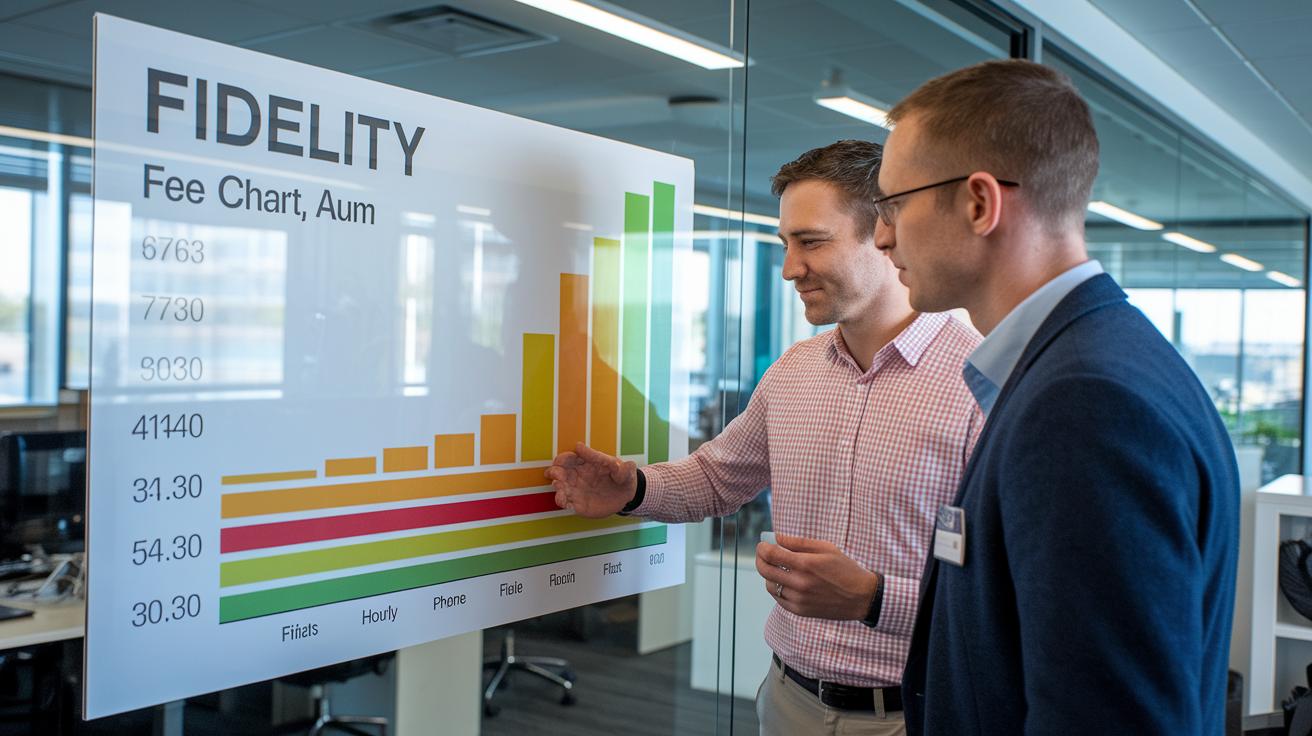
Fidelity provides a mix of fee options that can fit different financial needs and preferences. They have services aimed at offering long-term support as well as one-off financial planning sessions, giving you the flexibility to choose what feels right for you.
For example, you can pick from:
- A flat annual fee ranging from $2,000 to $7,500
- Hourly rates for targeted financial advice
- A single, one-time fee for a complete financial plan
- Fees based on your assets under management (AUM), usually around 1% per year
Each fee option comes with its own set of benefits. A flat fee keeps your yearly expenses steady, making it easier to budget. Hourly rates are great if you need focused advice without a long-term commitment. A one-time fee covers an all-inclusive plan, and AUM fees link your advisor’s earnings to the success of your portfolio, creating a performance-based connection.
When you compare robo-advisors with human advisors, the differences in pricing become clear. Robo-advisors usually charge lower AUM fees, often between 0.25% and 0.50% per year, which makes them a cost-effective choice for straightforward portfolios. Meanwhile, human advisors charge about 1% per year. This higher fee reflects the personalized attention and tailored insights they bring to your financial strategy.
Account Minimums and Eligibility for Fidelity Advisor Fees

Fidelity has a range of account minimums set up to suit every type of investor. If you’re investing on your own, you can start with a smaller deposit. On the other hand, institutions like pension plans, charities, government entities, and businesses have their own custom minimums. It’s a bit like picking out the right backpack size, just enough room for your unique financial goals.
Getting started is simple. First, fill out a short questionnaire to help figure out which account is best for your situation. Once you’ve done that, you can easily contact an advisor by calling 800-343-3548 or by stopping by one of Fidelity’s branches. This process is straightforward and designed to connect you with friendly, personalized financial guidance.
Comparing Fidelity Advisor Fees with Industry Standards

Fidelity's fee setup fits right in with what's common in the market. Typically, human advisors charge about 1% each year to manage your money. On the other hand, robo-advisors usually ask for a bit less, around 0.25% to 0.50% per year. You might also come across flat fees that range from $2,000 to $7,500 each year, offering you a clear benchmark for what most experts charge.
| Fee Model | Typical Range |
|---|---|
| Fidelity AUM Fee | ~1% per year |
| Robo-Advisor Fee | 0.25%–0.50% per year |
| Flat Annual Fee | $2,000–$7,500 per year |
Looking at these common rates makes it simple to understand how fees break down, giving you a quick snapshot to compare different managed solutions.
FAQs on Fidelity Investment Advisor Fees

When it comes to Fidelity's advisory fees, the rate you pay depends on a few things. Your account size, the services you choose, and how tailored those services are all play a part. For more details, check out the fee breakdown section. For example, a larger account might get a different fee setup than a smaller one.
There are ways to potentially lower your Fidelity fees. You might qualify for credits, bundled services, or even fee waivers. Look at the fee reduction section to see all your options. For instance, receiving credits every quarter can help make your fees more manageable.
Compared to robo-advisors, Fidelity's fees are generally about 1% per year, while robo-advisors usually charge between 0.25% and 0.50%. This extra cost at Fidelity covers the personalized guidance they provide, which goes deeper than the more basic service of robo-advisors. For more insights, check our service fee evaluation section.
Final Words
In the action, the article breaks down how advisory fees are structured, with a clear look at gross advisory rates, quarterly credits, and the steps behind compliance disclosures. It sheds light on the range of fee models from flat rates to AUM percentages, explains account minimums and qualification details, and even compares these costs with industry standards. All this helps you grasp the details of fidelity investment advisor fees and manage risk with confidence, leaving a positive note for your financial planning ahead.
FAQ
What are Fidelity’s investment advisor fees?
Fidelity’s investment advisor fees cover advisor access, financial planning, portfolio oversight, and custody services. These fees depend on account size and service model, with detailed disclosures provided via their ADV Form.
Are Fidelity financial advisors worth the cost?
Fidelity financial advisors are considered worth it by many clients due to personalized advice and comprehensive planning. Reviews often reflect satisfaction with the dedicated service and transparent fee structure provided.
Do Fidelity brokerage accounts charge fees for trading?
Fidelity brokerage accounts typically feature no-commission trading on many transactions. Although some specific services may incur extra costs, the overall fee schedule is competitive and clearly outlined.
What do Fidelity advisory and wealth services include?
Fidelity advisory and wealth services offer personalized investment advice, financial planning, and portfolio management. Clients benefit from a dedicated team focused on guiding your financial decisions and long-term goals.
Are Fidelity’s fee schedules and management fees transparent?
Fidelity’s fee schedules and management fees are fully disclosed via ADV filings. They explain the gross advisory fee components, credit offset mechanisms, and any other related expenses to ensure complete transparency.
Is a 1% or 1.5% financial advisor fee standard with Fidelity?
A 1% fee aligns with typical advisory costs, though a 1.5% fee may be on the higher end. Clients should compare services, overall value, and market rates to decide if it meets their financial needs.
Do I need $500,000 to work with Fidelity advisors?
Working with Fidelity advisors isn’t strictly limited to $500,000 in assets. While higher balances can unlock additional services, they offer personalized guidance for a range of account sizes based on your unique financial situation.
Is Fidelity Portfolio Advisory Services a good choice for investors?
Fidelity Portfolio Advisory Services is valued by investors seeking comprehensive portfolio management and financial planning. Clients appreciate its clear fee structure and hands-on advisory support that helps clarify complex investment decisions.