
Are we about to see a big win in our budget or brace ourselves for some rough times ahead? Recent votes in the House and new updates from the Office of Management and Budget have stirred up a lively debate on government spending.
These moves might just be a quick patch as officials work on more permanent fixes. The updated federal budget news is hinting at changes that could ripple out to affect everything from your taxes to the services you rely on daily.
Isn’t it fascinating how such decisions can shift our financial landscape? Let’s take a closer look at how these changes might reshape our nation’s money matters in the months ahead.
Latest Federal Budget Updates and Official Announcements
On September 19, the House approved a short-term resolution to fund government operations until November 21, with a close vote of 217 to 212. It’s a move that keeps essential services running while lawmakers continue to work on longer-term spending plans. Think of it like fixing a small leak until the big repair project is ready.
The White House’s Office of Management and Budget just shared its Mid-Session Review for FY 2026. This update adjusts spending estimates and tax plans, giving us a fresh look at where the country’s money matters are headed. It’s like a financial health check that shows potential shifts in future government spending.
This November, the Supreme Court is set to hear arguments about tariffs that were imposed by the previous administration. These decisions might change how much revenue comes in from tariffs, a detail that could reshape the federal budget in a big way.
The Congressional Budget Office also updated its forecasts for 2025 to 2028 by changing its January 2025 baseline. This update highlights rising deficits and revenue challenges, painting a clear picture of the financial hurdles we might face ahead.
Congressional Action on the Federal Budget: Debates and Timeline
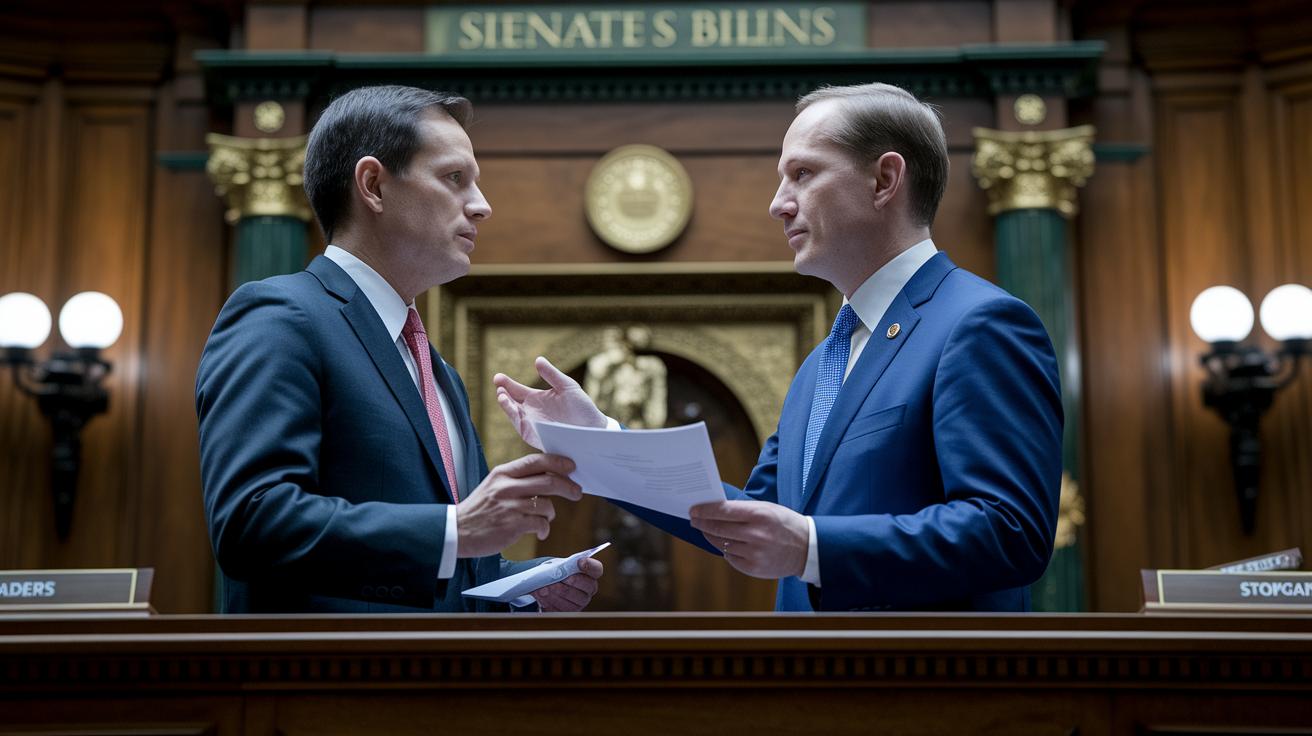
Senate leaders are stirring up worry by rejecting different funding bills, which could lead to a government shutdown as early as October 1. It really feels like every vote is a high-stakes move in a game that impacts millions of lives.
Lawmakers are trying to balance many competing ideas, each one as crucial as the next. Meanwhile, the White House has come in with a temporary funding plan, a stopgap continuing resolution, to keep the government running until January 31 while the tougher debates continue. At one big meeting, talks over extending health-care funding stalled, and that split the parties even more.
Key dates are now on everyone’s radar. The House will finish its appropriation sessions by September 30, and the Senate has floor votes scheduled for late September. Every decision made now counts, almost like missing a critical move in a tightly-wound game.
Legislators are even preparing backup plans to handle these deadlocks. Think of it like having a safety net in case unexpected issues come up, much like a basic risk management plan that primes everything for any sudden change.
| Event | Date |
|---|---|
| House Sessions | Through September 30 |
| Senate Votes | Late September |
Every missed chance in these talks adds to the uncertainty surrounding government funding. It’s a clear reminder of how essential compromise is to keep things moving smoothly.
CBO Projections and Revenue Analysis in the Federal Budget
Recent updates from the CBO show that our deficits are set to grow steadily from FY 2025 through FY 2028. In simple terms, each year we’re spending more than we earn, and that gap might touch many areas of our everyday lives. Have you ever wondered how a small paper gap today might mean bigger challenges for you tomorrow?
Lawmakers are doing all they can to keep our debt from jumping by $1.5 trillion under the current rules. They’re not just juggling numbers, they’re also rethinking priorities in areas like schools and roads. Without new steps, officials warn that a growing gap might force more borrowing, which could hit public services hard.
There's also talk of a possible Supreme Court decision on tariffs that could change tariff revenue by tens of billions. With new tax ideas on the horizon, these changes offer a closer look into how future fiscal moves might reshape our deficit and affect the pace of our economic growth.
Major Expenditure Categories in the Federal Budget: A Breakdown

When we look at the federal budget, the money mainly falls into two groups: mandatory spending and discretionary spending. Mandatory spending covers programs like Social Security and Medicare. Experts are concerned that these programs might soon run into funding problems. Think of it as running out of a key ingredient in your favorite family recipe, if you don’t restock, you might not get the expected result.
Discretionary spending is set aside for areas such as defense, education, and more. This type of spending is under close watch this year, with proposed Pentagon cuts stirring up worries about training and troop safety. It’s similar to a sports team missing key practice sessions, it’s tough to stay at the top of your game without everything in place.
Agency budgets also face their own hurdles. Funding for COVID-related trust funds and programs like WIC (which helps provide nutrition assistance) for the next fiscal year is being hotly debated. Lawmakers are even comparing these two types of spending, much like deciding how much to spend on essentials versus extras during your monthly shopping trip.
- Mandatory spending highlights the urgent need to rethink the funding of Social Security and Medicare.
- Discretionary spending talks focus on how cuts in defense might affect our national security.
- Agency funding, especially for COVID trust funds and nutritional programs, remains a topic with differing opinions.
As Congress debates different ways to adjust spending at the close of this fiscal year, every choice made today helps shape the economic stability we enjoy tomorrow.
Government Shutdown Risks and Contingency Measures in Federal Budget Planning
Agencies are getting ready for a potential shutdown by planning carefully. They’re even laying out strategies that include mass layoffs to nudge Congress toward a funding deal. You might be surprised to learn that almost half of the Department of Defense's civilian employees could see furloughs. This could slow down vital services and affect our overall national security.
At the same time, the Office of Management and Budget is carefully tracking funding as the fiscal year wraps up. Think of it like spotting a small leak at home that could grow into a big problem if not fixed. Contracting offices and other federal staff are preparing for some bumps along the way, such as delays in pay, kind of like a shop running short on stock during the busy season.
- Agencies are finalizing plans for large-scale layoffs as a tactic to drive agreement.
- DoD civilian employees might face furloughs, which could hold up essential support.
- The OMB is on alert, watching funding closely to catch any gaps.
- Federal staff in contracting roles may experience delayed pay and slower operations.
These steps act as an emergency update, highlighting the real human and operational consequences that a shutdown can bring. In the end, these contingency measures remind us that the state of our government’s finances is deeply connected to timely decisions in the political arena.
Expert Commentary and Long-Term Fiscal Outlook for the Federal Budget

Many top analysts are worried about where our federal finances stand today. The Committee for a Responsible Federal Budget is urging both parties to agree on safeguards for the FY 2026 spending. They believe that simple, shared actions can stop policy splits and help keep important programs on track. One expert put it plainly, "It’s like setting aside your emergency fund so you’re ready when tough times hit."
Research tells us that nearly 2 million children experienced food insecurity in 2023. This stark fact shows how changes in government spending can touch everyday lives. There are still many questions about how Medicaid and rural health funding will work moving forward. Some experts also warn that programs like Social Security and Medicare need fast, clear reforms. They compare these programs to old bridges that need urgent repairs to stay safe for future generations.
Digital tools like US Budget Watch 2024 are becoming essential. They allow us to easily track everything from spending and tax cuts to loans, grants, and subsidies. Imagine using an app that shows you every dollar the government spends. It gives you a clear picture of where the money goes and what might change next.
In the end, while there are bright opportunities ahead, the road to a stable federal budget is still full of challenges. By focusing on protecting vital programs and using interactive tools, we can see how long-term strategies might secure our nation’s financial health for years to come.
Final Words
In the action, we covered recent federal budget news that impacts market insights. We saw key votes that set government funding schedules and changes in fiscal estimates, plus the careful breakdown of expenditure and potential shutdown risks. Every update, from the CBO forecasts to legislative debates, gives us a clearer picture of the evolving fiscal picture. Staying informed means you’re better set to manage risk and seize opportunity. Keep a positive focus as these insights guide your financial approach.
FAQ
Q: What is the latest news on the federal budget for 2025 and 2024?
A: The federal budget news for 2025 and 2024 focuses on recent House actions, revised CBO projections, and ongoing negotiations that shape spending and revenue policies for the upcoming fiscal cycles.
Q: What are the key updates in government budget news lately?
A: The government budget news latest highlights include the White House OMB mid-session review for FY 2026, legislative debates, and updated fiscal projections that provide clearer guidance on future policies.
Q: How is Congress involved in federal budget discussions?
A: Congressional actions drive much of the federal budget discussion, with the House and Senate reviewing appropriations bills, debating funding measures, and scheduling critical votes to keep government operations running.
Q: What measures are being discussed to prevent a government shutdown in 2025?
A: Government shutdown prevention discussions involve proposals from Democrats, stopgap continuing resolutions, and ongoing federal budget negotiations aimed at averting a lapse in funding by key congressional votes.
Q: Has the U.S. 2025 budget been approved?
A: The U.S. 2025 budget has not yet been approved, as lawmakers continue to work through negotiations and adjustments, reflecting a dynamic fiscal climate and careful oversight of spending priorities.
Q: What are the three biggest expenses in the federal budget?
A: The three major expense categories in the federal budget include mandatory spending on Social Security and Medicare, defense funding, and vital agency budgets addressing health, trust funds, and related public services.
Q: When might the government shut down if no funding agreement is reached?
A: The potential shutdown date could be as early as October 1 if Congress fails to reach a funding agreement, prompting agencies to activate contingency plans amid escalating fiscal debates.
Q: What is the status of federal budget negotiations overall?
A: Federal budget negotiations remain active, with contrasting proposals and key legislative milestones underscoring the balance between spending measures, revenue projections, and ongoing deliberations among decision-makers.