
Have you ever wondered if a steady rate might mean better days for your money? On June 12, the Fed kept the funds rate between 5.25% and 5.50% for the seventh time in a row. This calm move shows a hint of stability amid mixed market signals. With inflation cooling off and the job market still strong, this careful decision could benefit both investors and everyday consumers. In a world where numbers guide how we spend, keeping things steady might just give you the confidence to plan ahead.
federal funds news: Bright rate outlook
On June 12, 2024, the Fed kept the federal funds rate between 5.25% and 5.50%. This marks the seventh time in a row that they chose not to change rates. It’s like they’re keeping a steady pace, even when economic signals are all over the place.
Core PCE inflation is now at 3.7% over the past year, while overall inflation has cooled down to 3.4%. In simple terms, price pressure seems to be easing up, a bit like noticing the seasons slowly shift. Isn’t it interesting how even small changes in prices can affect our day-to-day buying habits?
The labor market is still strong, with unemployment holding at 3.5%. Picture it as a well-oiled engine that runs smoothly, much like your favorite restaurant that has never faltered in quality. This steady job market adds a sense of reliability during times of change.
All in all, both investors and everyday consumers are watching closely. With a steady interest rate, easing inflation, and strong job prospects, there’s a feeling of calm and cautious optimism across the financial landscape.
FOMC Meeting Analysis and Decision Rationale
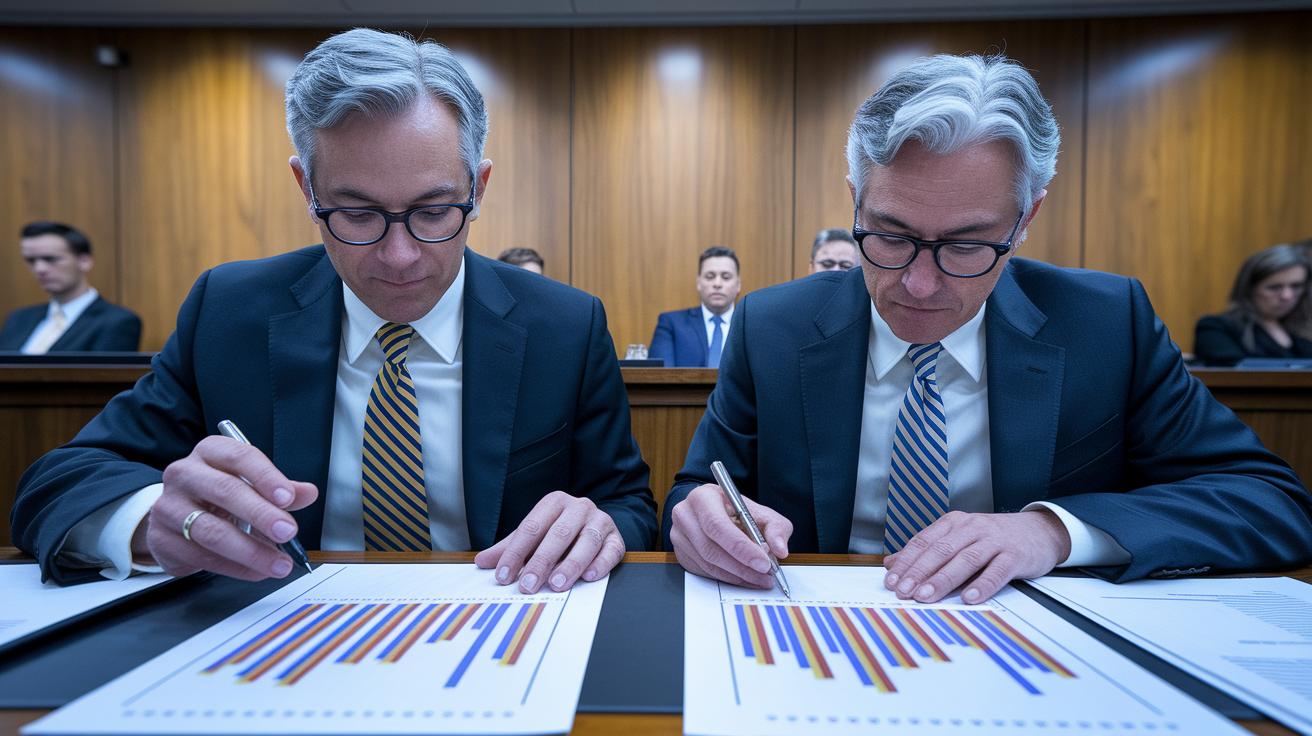
From June 11 to 12, the FOMC got together for a close look at whether to tighten up more. They talked about possibly raising the federal funds rate, but most members felt it was best to hold steady for now. One member even remarked, "Sometimes pausing can give us a clearer picture," which shows how careful they were in making the right call.
The group made it clear that they rely on solid data rather than quick guesses. They want to see how the economy behaves first before adjusting anything, kind of like checking the weather before stepping outside. They mentioned that any future changes would be "measured adjustments," meaning moves based on what’s happening in real life, not just feelings.
One big reason for keeping rates the same was the softening of headline inflation, which is now about 3.4% year-over-year. Prices are still going up, but the pace is slowing down, much like a car gently easing off its brakes on a long drive. At the same time, strong job growth is helping keep the economy humming along nicely.
The committee also shared a dot plot, a chart that shows where each member thinks rates should head in the future. The median view pointed to two rate cuts in 2024. This tells us that while rates will likely hold for now, there is room for easing later if the economic signs are clear. Essentially, they’re keeping an open mind, ready to act when the situation really calls for it.
Federal Funds Rate and Market Reaction Study
The Fed's recent rate decision sent a noticeable boost of caution through the financial world. Almost immediately, the S&P 500 fell by 0.8%, and the US 10-year Treasury yield nudged up to 4.10%. This jump shows that investors are rethinking risk, much like making a quick change in plans. Banking shares dropped 1.2%, hinting that banks are treading carefully when rates shift. Even the currency market wasn’t spared; the dollar gained strength by 0.5% right after the announcement.
Imagine feeling a sudden chill as you step outside, market players had a similar reaction. Shortly after the Fed’s move, a 1.2% slip in banking stocks reflected a wider mood of caution all around. Every part of the market acted like pieces of a well-tuned machine, each responding quickly to new information.
Investors and analysts keep a close watch on these movements to understand how stocks, bonds, and currencies interact. They study these shifts to get a clearer picture of the current climate and to guess what might happen next. It’s a bit like piecing together a puzzle, where every market move adds a new piece to the overall story.
Economic Rate Forecast and Federal Funds Outlook

The Fed’s latest report hints at two rate cuts in 2024 if the economy starts to slow down. It’s a bit like planning ahead to save money on your grocery bill, when rate cuts are expected, investors feel more confident.
For more details, check out the FOMC Meeting Analysis section. It dives into Bloomberg’s survey showing a 70% chance of a December cut, a forecast of 2.1% GDP growth, and how different sectors might be affected.
Historical Federal Funds Rate Cycle Analysis
Looking back on past rate cycles gives us a clear picture of how today’s monetary scene measures up to earlier times. Each period is like a chapter in a long story about how the market has handled money issues over the years.
Take the 2004–06 cycle, for example. Over just 24 months, there were 17 rate hikes, peaking at 5.25%. It was a time of quick changes. Then think about the 2015–18 cycle. Here, the changes came more slowly, 9 hikes over 36 months brought rates to a more modest 2.50%. It was like a gradual, steady climb that allowed for small adjustments along the way.
Now, in the most recent cycle from 2022 to 2024, we see something different again. In only 18 months, 11 hikes pushed rates up to 5.50% by June 2024. This fast pace suggests that different economic pressures and policy goals are at work today.
| Cycle | Hikes | Peak Rate | Duration |
|---|---|---|---|
| 2004–06 | 17 | 5.25% | 24 mo |
| 2015–18 | 9 | 2.50% | 36 mo |
| 2022–24 | 11 | 5.50% | 18 mo |
Each of these cycles shows us that the market's response to economic challenges can change over time. It’s a neat reminder that the heartbeat of monetary policy isn’t static, it moves and adapts, much like the ebb and flow of everyday life.
Policy Maker Insights on Federal Funds Trends
Experts are talking about how the Fed might change its approach in the next few months. Fed Chair Powell said, "We remain data dependent and patient." What he means is that any future moves will depend on clear signals from the economic data instead of rushed decisions. Vice Chair Clarida added, "Restrictive stance will persist until core inflation nears 2%." In simple terms, this shows that policymakers plan to slowly ease price pressures using careful, measured steps.
Other voices have some thoughts too. A representative from Goldman Sachs mentioned, "The terminal rate appears set." This suggests that once the current rate hits its peak, there might not be much more tightening. Meanwhile, the IMF Managing Director warned, "Global growth risks could alter timing." This means that any changes happening internationally could make policy strategies here shift as well.
Think of it like planning your day around the weather forecast. Policymakers are on the lookout for signs, both at home and internationally, that could guide their next moves. They are balancing caution and precision as new data comes in, much like deciding whether to bring a coat on a sunny day.
Final Words
In the action, our overview covered today’s federal funds rate decision, insights from policymakers, and market reactions that shaped investor sentiment. We broke down rate cycle history and shared expert views in clear, simple steps while outlining future trends. The analysis ties together risk management strategies, timely market news, and secure practices. By connecting every piece, this federal funds news report gives you a solid base to keep informed and confident in your investment choices. Keep moving forward with clarity and a positive outlook.
FAQ
Q: Why is the government shutting down tomorrow in 2025?
A: The government shutdown is planned because lawmakers haven’t agreed on a new budget, which leaves federal agencies without the funding needed to keep non-essential services running.
Q: What is the prediction for the federal funds rate?
A: The prediction for the federal funds rate suggests that current data and market trends may lead to two rate cuts in 2024 as the Fed responds to economic conditions and inflation trends.
Q: What does federal funding shutdown mean?
A: The term federal funding shutdown means that without a passed budget, many government agencies lose their operating funds, causing non-essential services to slow down or stop running temporarily.
Q: What closes if the government shuts down?
A: When the government shuts down, several federal offices, national parks, and other non-essential services temporarily close, leading to a pause in many administrative operations and public services.