
Ever notice how one headline can send stocks soaring or crashing in just a few minutes? Global events, such as sudden political crises or quick shifts in economic policy, can send the market into a spin. Imagine seeing a 12% drop followed by a fast rebound, leaving investors a little shaken. This article takes a friendly look at how these events move the market and shares new ideas for smart trading. Curious about what really drives market changes during wild times? Keep reading for some eye-opening insights.
Core Dynamics of Equity Markets Under Global Events
Global events, like political crises, economic shifts, and big system challenges, can send shockwaves through the stock market in no time. Studies show that when major news breaks, stocks often take a steep dive and then bounce back quickly. Imagine a sudden announcement that triggers a 12% drop in just minutes before rallying again, it really shows how fast investor moods can change.
Economic policies also have a big impact. When the government changes interest rates or rolls out a large fiscal stimulus, it can make the market feel unpredictable. These moves aren’t just about keeping the economy steady; they change what investors expect from future risks and rewards. In fact, many investors shift their funds to areas that seem safer during such turbulent times.
Investors often react by spreading out their investments or moving money into more stable options. They might:
| Action | Why They Do It |
|---|---|
| Rebalance their portfolio | To adjust quickly after major drops |
| Use hedging strategies | To guard against further losses |
| Shift funds to stable sectors | For more predictable performance |
In truth, worldwide stock market ups and downs aren’t just about how investors feel, they also come from real shifts in economic policy and the rapid effects of global events. Every decision, every policy change, pushes the market into an ever-changing dance where every move really counts.
Historical Case Studies of Global Events and Market Responses
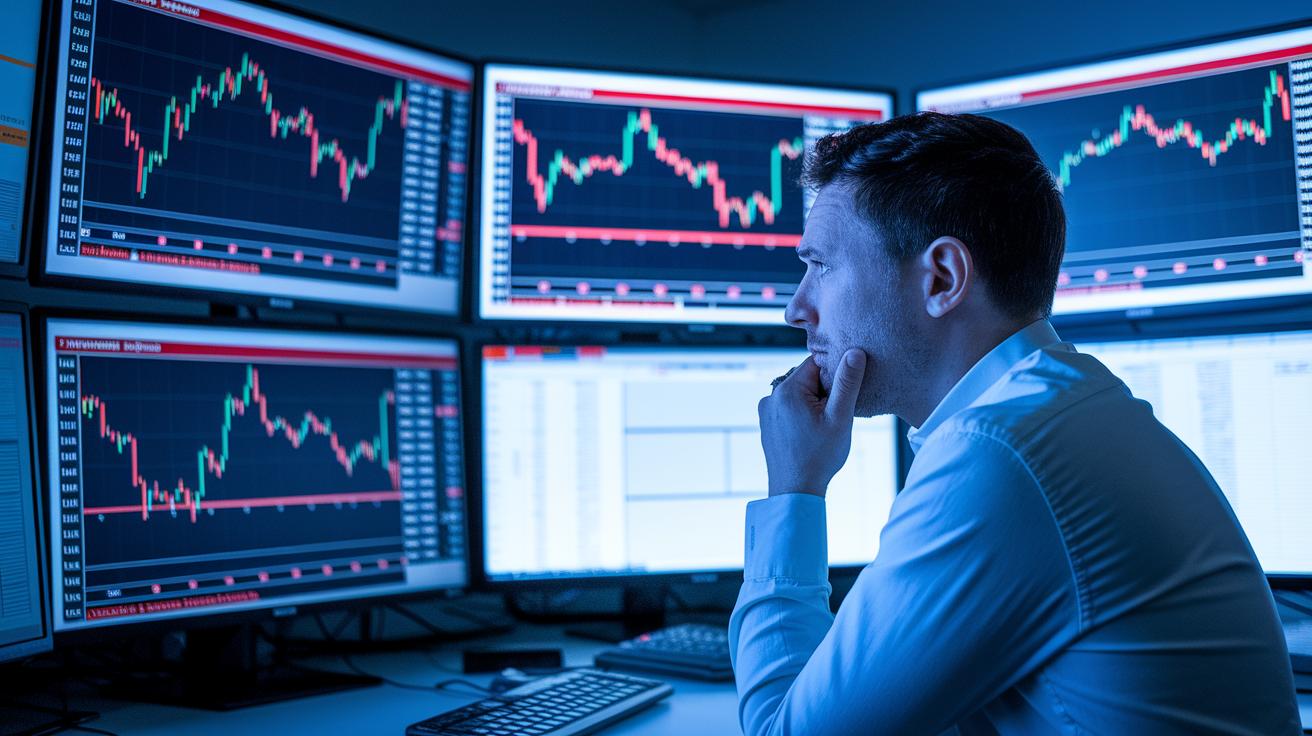
Global events can hit the markets hard and fast. For example, during the COVID-19 pandemic in 2020, the S&P 500 tumbled roughly 34% from its high in February to its low in March. It was the fastest market crash ever recorded. Just imagine waking up one day only to see that more than a third of your investments had evaporated overnight.
Another clear instance is the Brexit referendum in 2016. Uncertainty after the vote pushed the Dow Jones down by about 600 points, and the S&P 500 along with the Nasdaq 100 dropped by around 3.6% and 4.1% respectively. This shows how political decisions can swiftly shift investor sentiment and shake up markets worldwide.
Then came the collapse of Lehman Brothers in September 2008, which many believe triggered the worst financial crisis since the Great Depression. By March 2009, nearly 57% of the S&P 500’s value was gone as panic set in and investors hurried to cut their losses. It felt like the market’s foundation had crumbled almost overnight, a clear sign of just how closely linked our global financial systems are during times of stress.
The market also revealed its vulnerability after the September 11, 2001 attacks. Following a one-week shutdown, the Dow dropped 7.1% in a single session when trading resumed. This sharp decline reminds us that unexpected shocks can turn calm trading days into chaotic ones in an instant.
All these examples show that major global events can lead to rapid and steep market declines, reminding us that equity markets are very sensitive to political and economic upheavals.
Geopolitical Tensions and Equity Volatility Trends
Disagreements between countries can lead to quick swings in stock prices. For example, when the United States and China set up trade tariffs, production costs went up and supply chains got tangled. Did you know that some manufacturers saw their costs jump by double digits before investors moved their money elsewhere? This shows just how much international tensions can shake up the market.
When governments impose sanctions on key sectors like energy and technology, things can change fast. Investors tend to pull back from riskier stocks, causing overall values to drop. Think about it: if a major tech hub faces heavy sanctions, many companies might see their stock prices fall in a flash.
Events like terrorist attacks or conflicts, especially in oil-producing regions, bring similar shifts. A sudden conflict that pushes oil prices higher can quickly send ripples through related stocks. Picture a brief crisis that makes oil prices soar, prompting investors to adjust their portfolios on the spot.
When global tensions rise, risks in one part of the market can spill over into others. In response, investors might:
In short, a mix of trade disruptions, sanctions, and regional crises creates an environment where global events send strong, direct signals through equity markets.
Economic Policies and Central Banking in Crisis Management

When major global shocks hit, central banks often step in with quick interest-rate cuts. This helps keep money flowing and prevents markets from coming to a sudden stop. Imagine a stalled car getting a burst of energy – that’s what a fast rate drop can do, turning panic into a bit of cautious optimism almost immediately.
Then there’s the role of government spending. Big stimulus packages, like increased spending and tax breaks, aim to save jobs and keep stock prices from falling steeply. In past crises, these measures acted like a safety net, holding the economy up when it needed a lift. If you’re curious, check out the Fiscal policy decision-making process for a clearer look at these financial tools in action.
Regulators also help stabilize things. Sometimes, they relax some rules for a short time so banks have the breathing room they need during stressful moments. This extra space can help stop further declines in the market.
Investors protect themselves too by managing risk. They often mix up their portfolios or use risk-reducing strategies such as derivative hedges. Common tactics include:
- Rethinking asset allocation
- Using derivative hedges
- Spreading investments across different sectors
All these combined monetary and fiscal moves work hand in hand during tough times. They help ease market downturns and even spark small victories when challenges arise.
Sector-Specific Reactions and Commodity Price Shocks
When global events stir up changes in commodity prices, different sectors show clear reactions. For example, during the oil price crash of 2014–15, energy stocks tumbled hard, and even bonds tied to those companies felt the hit. It was a wake-up call, as one energy stock lost over 40% of its value, long-time investors started to question their approaches.
Then came COVID-19 in 2020, which threw supply chains into chaos. Factories shut down, shipping slowed, and tech companies struggled to find the parts they needed, putting a damper on growth. Businesses saw not only a dip in current earnings but also a shift in what they expected for the future.
Trade tensions, like the US–China tariff fight over steel and aluminum, added another challenge. Higher tariffs meant more expensive materials, squeezed profit margins, and forced companies to pass costs on to their customers. This pressure was felt across industrial stocks during those tense times.
| Sector | Impact | Example Event |
|---|---|---|
| Energy | Sharp stock declines | 2014–15 oil price crash |
| Manufacturing & Technology | Operational disruptions | COVID-19 supply chain issues |
| Industrials | Rising production costs | US–China trade tariffs |
Each shock makes investors pause and rethink both risks and opportunities, often leading to new strategies for building and managing portfolios.
Investor Behavior, Sentiment Shifts, and Risk Mitigation
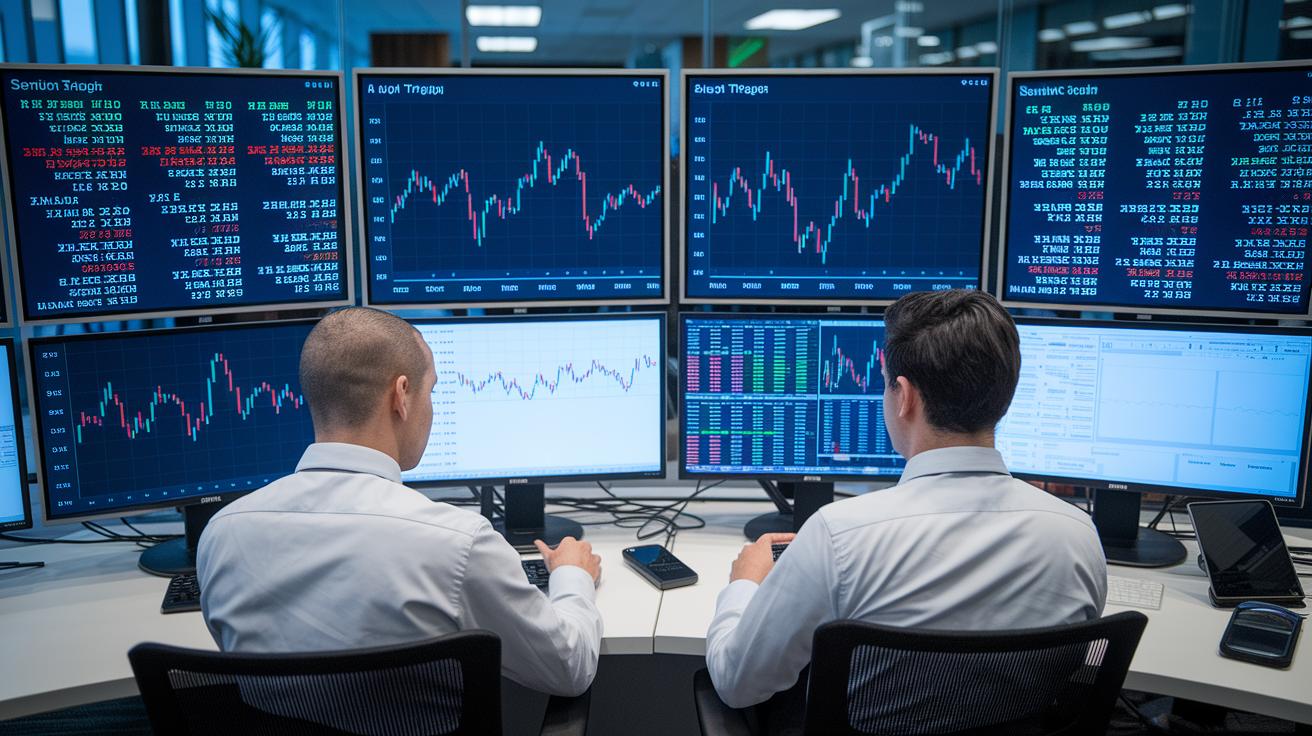
Technology is reshaping how investors feel and act. Today’s AI trading systems pick up market signals in real time, often faster than old-school methods. For instance, one study found that when these systems detected a 15% drop in positive chatter, investors moved quickly to adjust their portfolios.
Investors aren’t relying solely on traditional strategies like spreading risk across many assets or rebalancing their funds. They’re also tapping into real-time sentiment data. In one case, traders watched social media and news during a brief market dip; when a burst of negative posts occurred, they cut back on risky assets to secure their gains.
On top of that, many now use automated risk management tools. These tools work a bit like a thermostat, when AI spots rising market worries, it automatically triggers protective measures.
Key approaches include:
- Broad asset diversification
- Dynamic rebalancing supported by AI insights
- Automated hedging based on sentiment data
Final Words
In the action, our exploration covered market shifts driven by political crises, economic policy changes, and sector fluctuations. We saw how sudden shifts can send investors rethinking asset allocation and risk management methods.
Our discussion also highlighted how global events influence equity markets, prompting smart moves like diversification and timely rebalancing. With clear insights and data-driven analysis, you’re well-equipped to recognize opportunities amid market volatility. Embrace these insights and step forward with confidence in your investment decisions.
FAQ
How do global events influence equity markets?
Global events change equity markets by shifting investor sentiment and sparking volatility. Political crises, wars, and pandemics, for example, often lead to rapid market drops followed by rebounds as traders adjust risk perceptions.
How do geopolitical tensions affect financial markets?
Geopolitical tensions affect financial markets by shaking investor confidence and triggering quick shifts toward safer assets. Such tensions can disrupt supply chains and heighten market uncertainty, often leading to increased volatility.
What recent global events have significantly impacted the stock market?
Recent events like the COVID-19 pandemic, the Brexit referendum, and major trade disputes have led to sharp market movements, including rapid declines and swift recoveries as investors responded to heightened uncertainty.
Is the stock market influenced by economic factors?
The stock market is indeed influenced by economic factors. Sudden interest-rate changes and fiscal policies can either boost or curb market momentum by altering cash flows and investor expectations.
How do current events affect the stock market overall?
Current events affect the stock market by altering investor sentiment and risk allocation. News about wars, elections, or crises often prompts quick portfolio adjustments, impacting market trends rapidly.
What events tend to make the stock market go up?
The stock market tends to rise during periods of stable global conditions, favorable economic policies, and reduced geopolitical tensions that boost investor confidence and spur capital into riskier assets.