
Are trade wars stirring up hidden trouble in the stock market? When news about tariffs hits, even the sturdiest stocks can suddenly start to waver. A quick tariff hike can feel like an unexpected gust that sends prices tumbling, leaving many investors in a hurry to adjust. For instance, a potential 2.3% rise in inflation hints at wide-ranging impacts on company earnings and overall market value. In this chat, we'll dive into how these economic clashes push businesses and traders to quickly reshape their strategies.
Equity Market Responses to Trade Wars
Tariff news can shake up the stock market quickly. When officials announce new tariffs, stock benchmarks often jump and then drop sharply. For example, on a surprise tariff hike day, share prices can fall fast, and traders scramble to sell off their stocks as they reassess what to expect.
Big picture factors are a huge part of these market moves. Rising costs for materials, changes in earnings predictions, and supply chain stress all matter when companies face higher tariffs. Imagine a company already dealing with steep operating costs that suddenly has to revise its earnings forecast because of a new tariff. The higher prices on imported parts can slow production and make investors rethink how much a stock is worth.
Market reactions also differ by region. In the United States, tariffs can lead to steep drops in market indices along with a short-term inflation increase of about 2.3% and a forecasted GDP dip of 0.9 percentage points for 2025. In Europe and the United Kingdom, U.S. goods make up just a small piece of the economy, so the impact tends to be milder since these regions lean more on services. Meanwhile, the smaller and more open markets in the Asia-Pacific often face bigger challenges.
In short, key figures show that U.S. inflation might climb by roughly 2.3%, GDP growth could drop by 0.9 percentage points, and the overall economy might shrink by 0.6%. These numbers remind us that the effects of tariffs can vary widely from one region to another.
Historical Impact of Trade Wars on Equity Markets

Looking back, trade conflicts like the 1930s Smoot-Hawley case and the more recent 2018 U.S.-China dispute show us how markets react when new policies come into play. Both moments stirred up uncertainty and made investors rethink their risk. It’s like early trade moves paved the way for caution that we still see today in market behavior.
The U.S.-China tariff standoff, for instance, led to short-term drops in market indexes. This reminder from history shows why past trade fights can still shape how we approach risks and strategies today.
- Inflation went up noticeably after tariffs were imposed.
- GDP took a hit following these trade shocks.
- Regions like the EU and the UK kept a strict limit on buying U.S. goods, about 3% and 2% of GDP respectively, showing their focus on services.
- Smaller, open economies in the Asia-Pacific tend to feel the pressure of tariffs more sharply.
These trends remind us that market corrections during trade wars tend to follow familiar patterns, helping investors adjust their strategies based on signals we’ve seen before.
Sectoral Impact of Trade Wars on Equity Markets
When tariffs rise, every part of the market feels the squeeze. But the impact isn’t the same for everyone. Each industry faces its own set of challenges. This kind of deep look helps investors see which sectors might struggle and which could recover quicker. Think of it like watching the steady pulse of market activity, where changes in supply chains and raw material prices hit different areas in different ways.
Manufacturing Equity Performance
Manufacturing is one of the sectors that can feel a heavy hand from tariffs. When duties go up on steel, autos, or machinery, companies that depend on these materials often see their costs soar. Imagine a car maker suddenly paying more for imported parts. This extra cost can slow down production and lower profit expectations. Investors tend to react to these changes, and you might notice stock prices dipping as a result.
Technology Sector Declines
Technology firms also come under pressure when tariffs are in play. Many tech companies rely on parts from all over the world, and when prices go up, it hits their bottom line. For instance, a semiconductor manufacturer could see its profit margins narrow when the cost of key raw materials increases. This forces companies to rethink their budgeting, sometimes leading to lower market evaluations. It’s like adjusting a recipe when one ingredient suddenly becomes more expensive.
Energy and Commodity Price Shifts
The energy sector and commodity markets aren’t left out either. Tariffs on things like oil, gas, and metals can cause sudden shifts in prices. For a while, stock values might jump or dip as companies work out new cost strategies. Over time, the real impact depends on how fast these companies can change their methods or pricing. Each sector follows its own path to stability once trade tensions ease, with manufacturing benefiting from policy tweaks, tech firms re-aligning their supply chains, and energy sectors adapting to fresh pricing trends.
Investor Sentiment in Equity Markets Amid Trade Wars
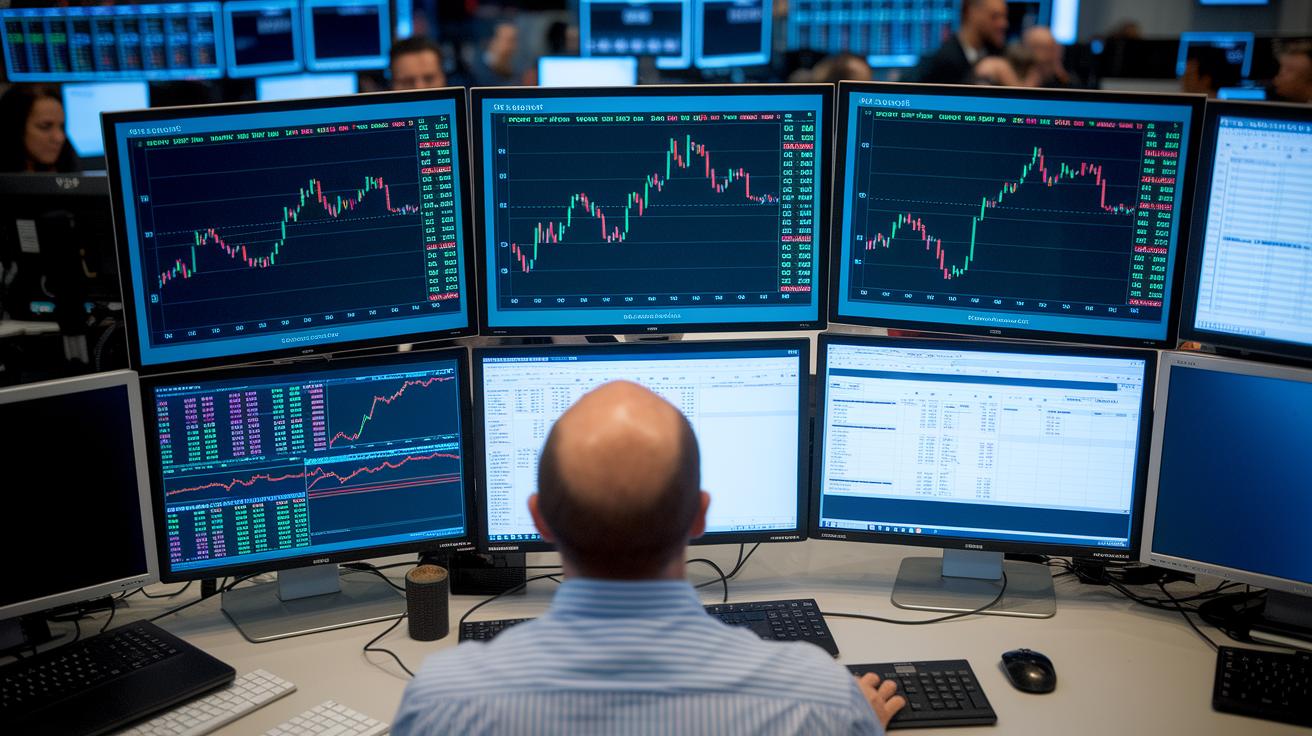
When fresh tariff news breaks, you can see market jitters almost immediately. Prices bounce around like a rollercoaster, and before you know it, investors pull back on their risk-taking. In many cases, traders quickly move their money into safer bets, and you might even notice a jump in the volatility index. This sudden move shows just how much policy surprises can shake investor confidence.
Research and surveys tell us that during these heated moments, folks tend to flock toward cash and defensive investments. When uncertainty creeps in, many investors lower their exposure to riskier stocks. You might see fund managers switching gears, shifting resources to bonds or steadier sectors, an approach they often rely on when trade policies stir up the market.
Other clues, like changes in put/call ratios and VIX values, also give us a hint about what might come next. Rising numbers here often signal that a market pullback is on the horizon. But when these indicators are calm, it can mean traders are slowly starting to feel comfortable taking risks again.
Forecasting Equity Markets Under Trade War Scenarios
When trade disputes heat up, investors often mix together different numbers and trends to picture the market's future. They combine ideas like tariff changes, hints about how fast the economy might grow (that’s GDP), and forecasts for rising prices (inflation) to sketch out a few possible scenarios. It’s like imagining small snapshots of the future, each showing a different outcome.
This method helps us see, step by step, how new tariffs might shake up a company’s profits and the overall mood of the market. Experts even look back at old market patterns to help connect the dots with what could happen next.
Quantitative tools play a big role in this process. Analysts use tools like regression models (which study past data to forecast future trends), volatility screens (which show how much prices bounce around), and leading indicators (early warning signals) to dig into previous trade conflicts. These number-based clues make it easier to guess when prices might swing or risks might grow, so predictions are grounded in solid data.
When uncertainty starts to hover, managing risk is key. Investors often put hedging strategies in place, simple techniques that help lessen losses if stocks suddenly drop. They might decide to spread their assets out or use stop-loss orders, which automatically sell a stock if it dips too far, to help cushion the blow when tariffs rise. These careful moves not only soften the shock from trade wars but also build a more balanced and resilient portfolio.
Final Words
In the action, this post broke down how tariff news sparks volatility and sends ripples through sectors. It explained immediate market jitters, macro shifts like rising input costs, and varied responses in the U.S., Europe/UK, and Asia-Pacific. Risk management strategies and market forecasting tools were also discussed to help guide investment decisions. The impact of trade wars on equity markets clearly shows that understanding these shifts can lead to smarter, more confident choices. Stay optimistic and keep an eye on changing trends.
FAQ
What is the impact of trade wars on equity markets?
The impact of trade wars on equity markets shows up as volatility spikes, index dips when tariffs are announced, higher input costs, earnings revisions, and overall market uncertainty affecting investment performance.
What are the negative consequences of trade wars?
The negative consequences of trade wars include economic slowdowns, inflation hikes, market instability, and stress on supply chains, all of which lower investor confidence and disrupt normal market operations.
How do tariffs and trade wars affect the stock market?
The effect of tariffs and trade wars on the stock market is seen through abrupt market volatility, dips in stock indexes, disrupted earnings forecasts, and a broader shift in investor sentiment towards defensive positions.
What effect does the U.S.-China trade war have on U.S. investment?
The effect of the U.S.-China trade war on U.S. investment is marked by increased tariffs and supply-chain disruptions, leading to a slowdown in GDP growth and prompting investors to reconsider their portfolio balances.
Can trade wars cause market crashes?
Trade wars can trigger rapid sell-offs and sharp market movements, but while they sometimes lead to significant corrections, full market crashes are less common as investors adjust to the new economic realities.
How do trade wars and policies like Trump’s tariffs affect U.S. financial markets?
Trade wars and policies like Trump’s tariffs impact U.S. financial markets by spiking volatility, pushing up inflation, straining GDP growth, and shifting investors towards safer assets amid heightened market uncertainty.