
Are you set to uncover hidden profits? Advanced portfolio tracking gives you an all-encompassing view of your investments and transforms your outlook. Smart dashboards and live updates allow you to quickly notice opportunities whether your income rises or market trends shift. In this post, you will learn two effective methods that empower you to fine-tune your strategy, respond swiftly, and increase your earnings. These techniques simplify complicated data, making it easier to spot opportunities and make more informed choices.
Holistic Approaches to Advanced Portfolio Tracking
Advanced portfolio tracking relies on unified dashboards that connect banking and brokerage systems through automated API links. These dashboards bring together all your data into one clear view while real-time feeds update asset values, rental income, occupancy figures and market trends. For instance, if a new lease increases rental income, the dashboard immediately shows the spike so investors can quickly see the benefits.
Modern investment monitoring also makes use of regression techniques and time-series analysis. These methods help keep your strategy in line with current market trends, allowing portfolio managers to adjust as economic conditions change. Intelligent analytics and scenario simulation tools further stress-test the portfolio, identifying weak spots before they affect performance. One scenario might simulate a sudden drop in occupancy, prompting a careful review of asset allocation.
The power of these techniques was demonstrated on 23 April 2025 during the launch of a major banking integration initiative involving more than 100 institutions. With dynamic reporting tools comparing performance to industry benchmarks, these advanced methods empower investors to make decisions that are both timely and data-driven, blending predictive insights with live metrics for solid portfolio management.
Leveraging Advanced Analytics and KPI Monitoring in Portfolio Tracking

Advanced analytics engines serve a crucial role by integrating regression analysis with time series studies to reveal profit opportunities. Modern platforms now feature smart recommendations for asset weighting and provide detailed investment checkup views organized by account, asset class, or security. In one instance, a tool might indicate, "Smart Weighting suggests reallocating funds from stagnant assets toward growth-oriented sectors," which enables managers to adjust their strategies on the fly.
At the core of these systems is the ongoing tracking of key performance indicators such as return on investment, net operating income, capitalization rate, and dividend yield. These critical metrics form the foundation of data-focused fund evaluations, allowing managers to benchmark performance against industry standards. This process swiftly highlights underperforming assets and pinpoints areas that yield exceptional returns, while automated alerts notify users of any deviations from expected performance, ensuring that unusual trends receive immediate attention.
Dynamic methods for fund analysis empower investors to review and adjust allocations nearly in real time, which has a direct impact on overall profitability. Evaluations based on solid data provide clarity and accuracy, supporting decision makers as they optimize portfolios with robust risk assessment models. As these systems continue to advance, they refine performance measurements and deliver actionable insights that keep investors ahead in a competitive environment. The combined application of these techniques ultimately leads to more informed decisions and improved profit margins.
Integrating AI and Automation for Real-time Portfolio Tracking
Advanced AI capabilities improve prediction accuracy by analyzing both historical and live data to uncover emerging trends and recurring patterns. Machine learning for fund evaluation helps platforms recognize subtle market shifts. For example, an AI-driven platform may activate a feature called TrendScout that alerts users to early signs of sector rotations long before benchmarks are affected. This approach lies at the core of algorithm-based investment oversight by consistently offering actionable signals that guide fast decision-making.
Automation further refines portfolio management by streamlining diversification, systematic rebalancing, and hedging recommendations. Automated asset allocation tools make near real-time adjustments possible, while strategy automation techniques adapt risk control as market conditions change. Portfolio managers benefit from AI-powered platforms that deliver prompt, data-backed recommendations, making asset reallocation efficient and timely. One example might state, "TrendScout indicates a shift in the technology sector, suggesting the need to rebalance toward more defensive assets." With these mechanisms in place, investors gain a powerful tool for optimizing portfolios and boosting overall returns.
Dynamic Risk Management Approaches in Portfolio Tracking
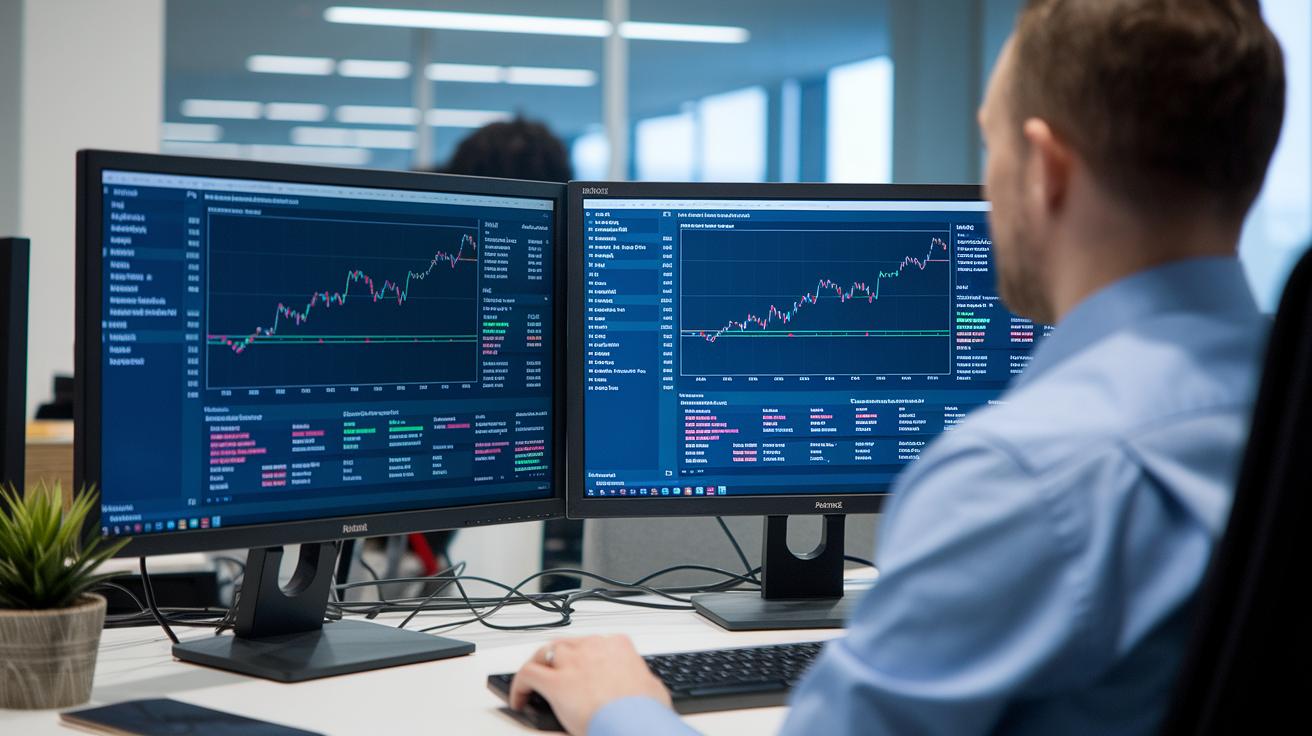
Modern risk management systems incorporate comprehensive methods that blend value-at-risk modeling with early warning signals. Advanced VaR models calculate potential losses over set time frames by examining market scenarios. In one case, a simulation indicated a 12% loss under stressed market conditions, prompting an immediate review of the portfolio.
Monte Carlo simulations further enhance risk detection by evaluating thousands of market situations. For example, after running 10,000 trials, the simulation revealed a 20% chance of a severe downturn, allowing portfolio managers to adjust strategies before a market shock occurred.
Diversification algorithms that rely on correlation checks and multifactor overlays also bolster quantitative risk prediction. These techniques continuously rebalance asset portfolios based on real-time performance data. A dashboard may even suggest shifting 15% of assets to less correlated instruments to reduce concentrated risk.
Additional frameworks, such as ongoing stress-testing and multifactor evaluation, quickly identify any deviations from expected performance. Overall, dynamic risk management merges these quantitative methods with real-time monitoring to protect investments and maintain profitable portfolios during volatile market periods.
Designing Custom Dashboards and Data Visualization for Portfolio Tracking Insights
Interactive dashboards are a crucial tool for transforming intricate portfolio data into clear, actionable insights. They let you explore information by account, asset class, security, or even custom time periods so that you focus on the metrics that matter most. For instance, one dashboard might include a heat map that instantly exposes performance trends across various asset classes. On a busy Monday morning, this same heat map revealed a distinct spike in rental income in one region, prompting an immediate portfolio adjustment.
In addition, using visualization techniques such as performance trendlines, correlation matrices, and KPI widgets greatly enhances decision-making. These visual elements offer a swift overview of financial benchmarks like ROI, net operating income, and capitalization rates. When combined with real-time asset data, they empower investors to quickly identify any differences between anticipated and actual performance metrics.
Mobile and cloud-based access further strengthen these tools by delivering dynamic portfolio snapshots and prompt alert notifications directly to Android and iOS devices. This adaptability ensures that important information is never out of reach, whether you are at your desk or on the move.
Best practices include creating dashboards that can be tailored to different data segments, incorporating visual aids like heat maps and trendlines for immediate clarity, and prioritizing mobile accessibility to enable on-demand portfolio analysis.
Essential Tools and Case Studies in Advanced Portfolio Tracking Strategies

PortfolioPilot is a leading example, supporting over 30,000 users across the United States and Canada as they manage a total of $30 billion in assets. The platform offers a consolidated view of performance, clear fee visualizations, and scenario simulations. For example, users might see a message stating "Unified performance update: Rental income increased by 4% following recent market adjustments," which clearly illustrates how real-time insights drive immediate actions.
Blooma's tracker, designed specifically for commercial real estate, shows the strength of tailored solutions. By automating deal screening and risk alerts and integrating seamlessly with InvestGlass CRM, it caters to the unique demands of CRE workflows. A typical notification might read "Risk alert: CRE asset nearing benchmark stress level," prompting investors to promptly reexamine their allocation strategies.
Robust backtesting modules give investors the ability to validate their strategies against historical data. In addition, advanced quantitative trading tools and backtesting systems help portfolio managers simulate various market conditions, allowing them to fine-tune their investments with precision. Mobile investment applications deliver real-time push notifications for rebalancing needs, while cloud-based monitoring systems and innovative market intelligence tools ensure decision-makers receive continuous, actionable data.
- Quantitative trading tools
- Backtesting trading modules
- Mobile investment applications
- Cloud-based monitoring systems
- Innovative market intelligence tools
These case studies and real-world examples clearly demonstrate that integrating sophisticated tracking tools can significantly boost profitability and enhance risk management.
Final Words
In the action of advanced portfolio tracking strategies, this article outlined holistic approaches to asset management with unified dashboards, real-time feeds, intelligent analytics, and dynamic risk controls.
The various sections delved into data integration, modern investment monitoring techniques, and custom visualization tools.
Detailed case studies and practical tools highlighted how comprehensive, real-time insights empower investors.
Embracing these advanced portfolio tracking strategies can help secure smarter, more agile decision-making in an ever-evolving market landscape.
FAQ
What are advanced portfolio tracking strategies?
Advanced portfolio tracking strategies involve integrating automated data feeds, real-time analytics, and high-level statistical methods to consolidate and monitor diverse asset information for improved investment decisions.
What are some examples of advanced portfolio tracking strategies?
Advanced strategies may include unified dashboards with API connections, regression and time-series analyses, and scenario simulations that provide real-time asset updates and predictive insights.
Are there free advanced portfolio tracking strategies available?
Some free advanced tracking options incorporate open-source visualization tools and community models while offering essential real-time metrics, though they may lack the comprehensive features of premium platforms.
What does portfolio management mean and what are its types?
Portfolio management entails overseeing investments through processes like active, passive, tactical, and strategic allocation, each tailored to meet different risk profiles and investment objectives.
What are the 70/30 and 60/40 portfolio strategies?
The 70/30 and 60/40 strategies denote asset allocations mixing equities and fixed-income securities, with a 70/30 focus on growth and a 60/40 blend balancing risk and stability.
What is the best portfolio monitoring tool?
The optimal portfolio monitoring tool offers real-time data integration, customizable dashboards, and automated anomaly alerts, providing actionable insights to adapt to market changes quickly.
What are the key elements of portfolio management?
Key elements include data consolidation, continuous performance reviews, risk assessment techniques, and strategic rebalancing protocols that collectively ensure effective asset and investment oversight.
What is project portfolio management?
Project portfolio management involves overseeing multiple projects, aligning them with strategic goals, optimizing resource allocation, and ensuring each project contributes to the overall business performance.