
Ever wonder if your business data is saying more than meets the eye? Some clever models can uncover hidden patterns that might boost your sales by nearly 30%. These tools smooth out the everyday ups and downs in your numbers, revealing clear signals you can act on. In this article, we break down how methods like time series analysis (tracking data over time) and predictive modeling (using current trends to foresee future changes) turn raw data into smart insights. Stick around to see how these techniques work and why they could be a game changer for your business.
Advanced Trend Analysis Models Spark Bold Insights
Trend analysis is all about spotting patterns and changes in data over time. Companies that rely on advanced models see sales growth up to 30% higher than their competitors. For example, imagine a business that uses time series analysis, a method that examines data over time, to predict sales for the next 3 to 6 weeks using a full year's worth of data. This smart technique helps leaders cut through random noise and focus on meaningful trends.
Predictive modeling is a big piece of this puzzle. It turns old, raw data into forecasts that you can actually use. One mid-sized retailer used to struggle with understanding customer demand, but once they refined their predictive models, they saw a 30% boost in sales. It’s a great example of how numbers and trends can translate into real-world benefits.
Time series analysis itself smooths out daily ups and downs, making seasonal patterns and emerging shifts clear. These forecasting models can highlight both long-term trends and sudden market spikes. By zeroing in on the steady pulse of market activity, analysts can better plan inventory, adjust pricing, or choose the best moments to enter the market.
Together, predictive modeling and time series analysis create a solid foundation for future decisions. In today’s competitive market, these straightforward tools do more than just predict, they offer bold insights that drive growth and lead to smarter investments.
Key Statistical Methods for Advanced Trend Analysis
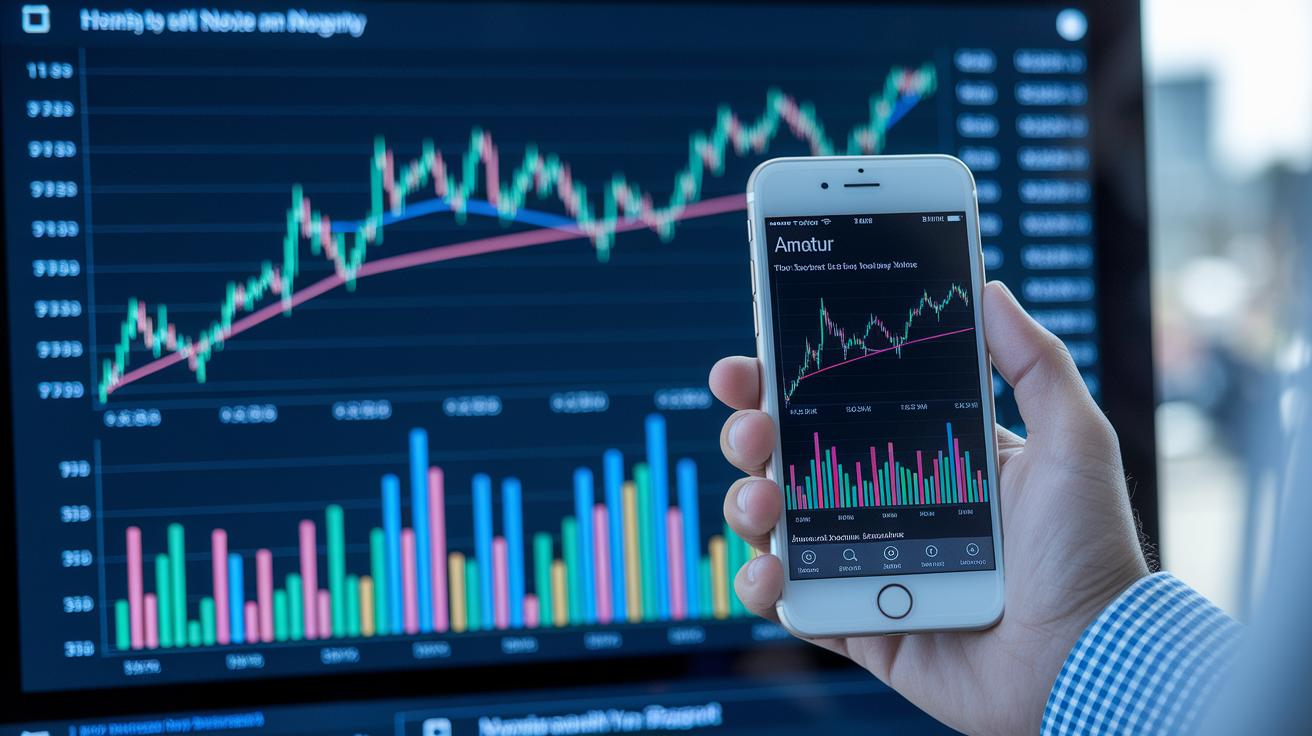
Moving averages are a simple way to smooth out the ups and downs you see every day. By averaging data over set periods like 50 or 200 days, you remove the daily chatter and get a clearer picture of the trend. Think of it like watching a ball bouncing on a gentle hill – the bumps become less obvious, and the overall slope stands out.
Exponential smoothing takes those averages a step further by giving extra weight to the most recent data. This makes the technique quicker to react when things change suddenly. Imagine a busy shop that tweaks its orders when sales spike overnight; exponential smoothing helps capture these fast shifts so you can stay on top of things.
Autoregressive models are like learning from the past to guess the future. They look at what happened before and use it as a clue to predict what might come next. Picture it like planning tomorrow’s picnic based on how weather patterns were all week – the past gives hints about the future.
Seasonality detection is all about recognizing the natural rhythm in data. Whether it’s higher sales during the holidays or a surge in energy use during summer, this method helps you spot those regular patterns. It’s like noticing that every year the ice cream truck shows up when the weather gets warm.
Time series decomposition breaks down the raw data into parts: the overall trend, seasonal effects, and random variations. This method is a bit like taking apart a puzzle to see each piece clearly, letting you clearly understand the steady movement and the regular cycles buried in the data.
Machine Learning and AI Techniques in Advanced Trend Analysis
Today, machine learning and AI are completely changing how companies predict trends. These smart tools dig through enormous amounts of data to spot patterns that older methods might miss. For example, techniques like Random Forest and Gradient Boosted Models can sort things into groups or forecast future numbers. They learn from past information to give a better guess of what comes next. Picture a system that checks previous sales and market signals to offer clear predictions for upcoming campaigns.
Deep learning methods, such as LSTM and recurrent neural networks, help us see links between events that aren’t obvious at first. Think of it like reading a story where every chapter matters. These models take past events into account to adjust their forecasts based on recurring themes. Using neural networks is a bit like trusting your gut when you spot a pattern. Remember how a top chef once experimented with surprising ingredient combos before finding that perfect recipe? That’s much like how LSTM models work, using several connected data points to get sharper insights.
Tools like Facebook’s Prophet and the Temporal Fusion Transformer mix fixed factors with hints of what’s ahead. This balance helps them consider long-term trends alongside sudden shifts in the market. They turn messy numbers into clear signals by taking note of regular events and changes. And then there are AutoML platforms, which make life a lot easier by automatically choosing the best model and fine-tuning settings. This means even teams without deep technical know-how can roll out smart analytics quickly.
Recurrent network methods are especially handy when dealing with fast-moving trades or continuous data streams. They work through information step-by-step, making sure nothing important slips by. All in all, these machine learning trends not only open up new ways to analyze data but also bring extra accuracy to decision-making. Ultimately, they give businesses the edge they need to keep up in today’s fast-changing markets.
Econometric and Bayesian Approaches to Trend Forecasting

Econometric forecasting leans on economic ideas to predict how things might perform based on past data. For example, regression analysis shows us how spending on advertising can relate to revenue. Imagine it like this: a company found that every dollar spent on advertising almost doubles its revenue. This kind of insight helps businesses see the clear impact of their spending.
Bayesian trend estimation takes things a step further by updating its predictions as new data comes in. It’s like having a friend who adjusts his advice based on the latest news. This makes forecasts flexible, especially when the market changes fast.
Monte Carlo simulations run thousands of "what if" scenarios. Think of them as trying out many different possibilities to see how uncertainty might affect the results. This tool gives decision-makers a clearer picture of all the potential outcomes.
There are also models that handle ideas working at the same time. Picture trying to guess the outcome when supply, demand, and pricing all work together – that’s what simultaneous equation models do. They help capture the way these factors influence each other.
Sometimes, the links between numbers aren’t straight lines. Nonlinear regression techniques step in when relationships get twisty and complex. With a mix of economic thinking, probability, and fun simulation tests, businesses can refine their forecasts and better understand the everyday uncertainties of the market.
Evaluating, Calibrating, and Managing Uncertainty in Trend Analysis Models
Forecasting models work best when they use clear numbers to compare predictions with real outcomes. Common measurements like MAE, RMSE, and MAPE help you understand how far off a prediction can be. For example, you could say, "Check the MAE, it shows the average error, like saying our model had a mean absolute error of 2.5 units during tests." These figures act like a window, giving you a clear view of how accurate your forecasts really are.
Rolling-window cross-validation is another useful method. It’s a bit like watching the steady beat of a machine to make sure everything hums along nicely over time. When you see that things stay steady, it builds your confidence in what the future might hold.
Calibration comes into play by matching current results with past trends. Think of it as tweaking a recipe based on earlier feedback to get that perfect dish. By aligning today’s numbers with historical data, calibration helps to bridge any gaps between what was expected and what actually happened.
When it comes to picking the best model, tools like AIC and BIC lend a helping hand. These tests balance how complex a model is with how well it performs. Then, by using confidence intervals and prediction bands, you can really see the range of uncertainty in your predictions.
By taking these steps, businesses can craft predictions with care and handle uncertainty more confidently.
Software Tools for Implementing Advanced Trend Analysis Models
Top platforms combine data setup, forecasting models, and deployment steps into one easy process. R, with handy libraries like statsmodels and forecast for crunching numbers, has earned trust for its solid statistical tools. Python stands out too, thanks to tools like scikit-learn, Prophet, and TensorFlow. These help you run predictions smoothly and fine-tune them as needed.
Think of Prophet as your forecast buddy that considers seasonal ups and downs, much like a weather report guiding your business decisions. Feature engineering turns raw data into useful bits, just like prepping ingredients before you cook, so teams can pick up on key patterns hidden in large sets of numbers. Filters like Butterworth and Kalman clear away random noise, giving you a clearer picture of the true trends, like cleaning a camera lens before snapping a crisp photo.
Big-data tools like Spark and Dask let you quickly process large volumes of fast-moving data, making forecasting a breeze in a busy setting. Automated pipelines also help by cutting down manual work, ensuring that fresh insights reach decision-makers in no time.
Overall, these tools are the backbone for turning raw numbers into clear, actionable forecasts. With smart trend analysis, businesses can keep a competitive edge in today’s constantly changing market.
Real-World Industry Applications of Advanced Trend Analysis Models
In retail, shops use smart models like ARIMA and LSTM to guess how much stock they need. Think about a store owner saying, "We predict demand almost like forecasting tomorrow’s weather!" This kind of precision helps keep just the right amount of product on hand so they avoid having too much or too little.
In finance, traders rely on moving-average crossovers to decide when to buy or sell. Imagine looking at a chart and seeing the 50-day average cross above the 200-day average, it’s like the market is giving you a friendly nudge. This clear signal cuts through the usual market clutter, making it easier to spot a potential win.
Manufacturing companies mix traditional stats with modern machine learning to keep an eye on their equipment. For example, a sensor on a production line might suddenly show unusual readings, alerting the team before a big problem happens. Real-time data streams work like a vigilant guard, catching even small changes that might indicate trouble.
Businesses are also turning to behavioral trend analysis to better understand their customers. They look at how you interact online, what you buy, and even your social media habits to tweak their marketing. One smart tip they use is to adjust campaigns when they notice even a tiny shift in customer feelings, sometimes that little change can boost engagement by 10%.
Across all these areas, advanced trend analysis transforms raw numbers into clear, helpful insights. Whether it’s managing inventory, trading stocks, fixing machines, or fine-tuning marketing, these tools help businesses make smarter choices every day.
Final Words
In the action, we explored how advanced trend analysis models turn raw data into smart forecasts, making market insights more accessible. We broke down core concepts, statistical methods, innovative AI techniques, and software tools that help filter out noise and anticipate market shifts. We also considered real-world examples where these models drove meaningful changes in business performance. Each section spoke to practical methods for managing risk, catching trends, and keeping investments secure. It’s exciting to see such clear, actionable strategies in play.
FAQ
Where can I find advanced trend analysis resources like PDFs, charts, and examples?
Advanced trend analysis resources often come as PDFs, charts, and examples. Many sites and analytical software providers share these materials to help break down various forecasting techniques and data visualizations.
What is a trend analysis example?
A trend analysis example might show how moving averages smooth out short-term data fluctuations, revealing clear patterns that assist in forecasting market directions and potential growth areas.
What trend analysis methods and types are used?
Trend analysis methods include techniques like moving averages, exponential smoothing, and autoregressive models. The main types often focus on linear, seasonal, and cyclical patterns to turn historical trends into forecasts.
What is the trend analysis formula?
The trend analysis formula usually involves computing a slope and intercept using least squares regression. This approach converts past data trends into predictions that inform business decisions.
What are the different models of trend analysis?
Trend analysis models range from classic statistical tools to modern machine learning and econometric techniques. Each model is designed to filter noise, capture patterns, and improve forecasting accuracy.
What is advanced trend analysis?
Advanced trend analysis upgrades standard methods using modern algorithms and data processing. It helps spot authentic data patterns and convert historical information into actionable business forecasts.
What is the best method for trend analysis?
The best method varies with data and goals. Many professionals combine statistical smoothing, machine learning, and econometric techniques to create robust and actionable trend forecasts.