
Ever wonder how companies set aside money bit by bit to pay off their debts? It's kind of like saving coins in a jar until you have enough. Companies use what they call a bond sinking fund to steadily save money instead of waiting for one big payment. This smart method helps lower risks and builds trust with bondholders. In this post, we'll break down how these funds work and why they give companies a strong financial edge. It shows how a simple, steady savings plan can lead to smarter debt management and better credit ratings.
Understanding Bond Sinking Funds

Imagine a bond sinking fund as a savings jar for a company. It’s money set aside little by little to make sure there’s enough cash available when bonds need to be paid off. Since this fund is meant for long-term debt, it shows up as a noncurrent asset on the balance sheet.
Before becoming a world-renowned scientist, Marie Curie used to carry test tubes of radioactive material in her pockets, unaware of the dangers that would later shape her legacy. In a similar way, setting up a sinking fund offers a steady, reliable method to handle debt over time. This approach lowers the risk of a big default and helps ease investor concerns.
When companies make regular deposits into their sinking funds, they demonstrate real commitment to paying their debts. This habit can boost their credit ratings and build trust among bondholders. In truth, saving up in this way not only builds financial discipline but also shields a company from sudden market changes, creating better conditions for everyone involved.
Mechanics of Bond Sinking Fund Implementation

When companies like ABC Corporation plan to pay off their debts, they create a sinking fund to make things run smoothly. They agree to set aside a fixed amount each year, say, $500,000, to slowly build a pool of cash. Every deposit goes to an independent trustee who invests the money so that the fund grows over time. This way, instead of facing one huge payment when the bonds mature, the repayment is spread out gradually, which keeps cash flow steady and the payment schedule predictable.
By contributing regularly, the company avoids the risk of having to come up with a large lump-sum payment all at once. Instead, the funds accumulate over time, making the whole process easier to plan and manage. It also reassures investors that the money for repayment is being set aside in an organized way.
The process usually follows a few simple steps to ensure that the fund is ready when needed. Here’s a quick guide:
- Plan out the deposit schedule
- Transfer the money to an independent trustee
- Have the trustee invest the funds wisely
- Regularly check on the fund’s progress
- Use the accumulated money to redeem the bonds at maturity
Sticking to these steps helps the company maintain financial discipline and steadily move towards full debt repayment. It’s important to review the trustee’s investment strategy periodically, since market conditions can change. By keeping a close eye on how the fund grows, everything stays on track. This smart approach not only reduces the risk of a payment shock but also builds stronger overall financial stability.
Practical Example of a Bond Sinking Fund

Imagine setting money aside bit by bit to cover a big future debt. For example, ABC Corporation released $20 million in bonds that last 20 years and sets aside $500,000 every year. This steady saving plan makes sure the money builds up until it pays off the full bond amount. Have you ever felt relieved knowing you planned ahead?
Now, consider a small retail franchisee with bonds worth $75,000. This business saves $750 regularly so that, over time, it gathers enough money to cover the bond's value. It’s a lot like putting money aside for a big purchase, you make small deposits instead of facing one huge payment.
| Issuer | Bond Amount | Term | Annual Deposit | Target Fund |
|---|---|---|---|---|
| ABC Corporation | $20,000,000 | 20 years | $500,000 | $20,000,000 |
| Retail Franchisee | $75,000 | N/A | $750 | $75,000 |
These examples show how putting money aside gradually can lighten the load of a big payment later on. It's like building a safety net, one deposit at a time.
Benefits and Drawbacks of Bond Sinking Funds

A bond sinking fund is simply a smart way for companies to set aside money bit by bit to pay off their bonds over time. Instead of facing a huge lump-sum payment, they save regularly. This steady saving process not only smooths out the repayment journey, but it also reassures bondholders that their investment is being managed carefully, often resulting in higher credit ratings for the company.
Here are some of the upsides of a bond sinking fund:
- It lowers the risk of default by having money ready when bonds are due.
- It boosts credit ratings thanks to a clear, disciplined approach to debt repayment.
- It lays out a structured plan that helps companies plan their finances over the long haul.
On the flip side, there are a few drawbacks to keep in mind. For one, the money saved in a sinking fund is tied up, which means it isn't available for other immediate business needs. Also, if the market views the fund as too cautious, it might lead to lower returns for investors. And if there are hiccups in keeping up with deposits or if the timeline changes, the whole plan might fall short of meeting its goals.
In short:
- Cash set aside in the fund isn’t available for other opportunities.
- A very conservative fund can sometimes mean smaller investor returns.
- Any mix-up in the deposit schedule might delay the repayment process, reducing the fund's overall effectiveness.
Accounting and Reporting for Bond Sinking Funds
Balance Sheet Presentation
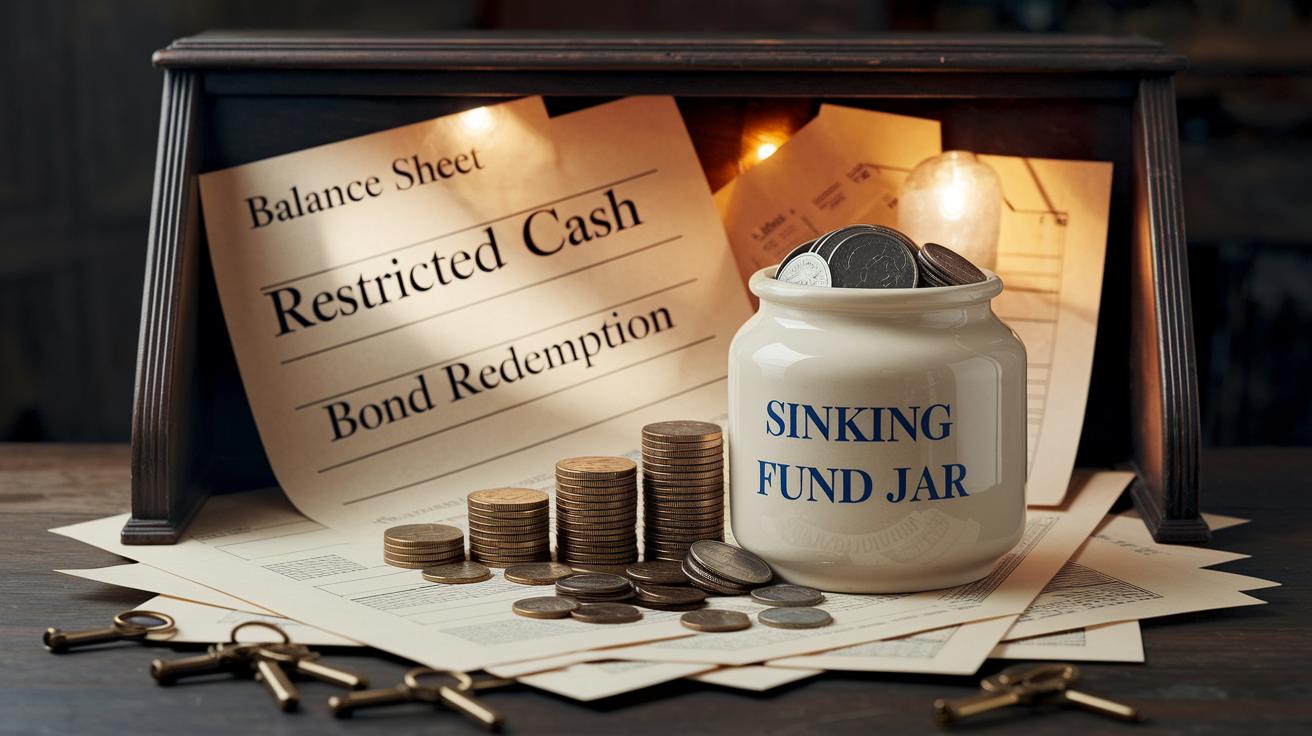
Sinking funds appear on the balance sheet as long-term, restricted cash. This means the money is set aside only for paying off bonds and isn’t mixed with cash you use every day. It’s like having a special savings jar just for a big bill, you know it’s there solely for bond redemption. This way, investors and auditors can easily see that these funds are off-limits for regular spending, making everything clear and trustworthy.
Notes and Disclosures
Financial statement notes give extra details about the sinking fund. Companies explain the schedule for deposits, the rules in trustee agreements, and the investment policies in these notes. This helps everyone understand how often money is added and how the trustee handles the funds. In short, these notes show that the fund is managed with care and strict guidelines, giving bondholders confidence that everything is in order.
Bond Sinking Fund: Secure Your Financial Edge

When it's time to tackle debt repayments, a sinking fund is one way to go. Sometimes, issuers prefer using a debt service reserve account instead. This is simply a dedicated pile of cash set aside for future payments, which can be adjusted easily if things change. It’s like having a backup plan that works well when cash flow isn’t always steady.
Bullet-redemption bonds take a different route. They pay off the entire principal in one go at maturity, offering a clear, lump-sum payment, a neat option for folks who like one-and-done results. Then there are escrow arrangements, where a neutral third party holds your money until the debt needs to be settled. Think of it as a secure waiting room for your funds, much like how retirement payments are organized.
Sometimes governments even use municipal fund reserves to cover their bonds instead of traditional sinking funds. This approach can make managing public funds a bit smoother.
Each strategy has its perks, like added flexibility and possibly fewer immediate hurdles. But they might not build up reserves as visibly as a classic sinking fund does, so issuers need to balance the need for cash on hand with a structured repayment plan.
Final Words
In the action, we explored how a bond sinking fund works by examining its setup, real-world examples, and accounting details. We saw how periodic deposits help smooth out large repayments and secure financial plans. Breaking down benefits, drawbacks, and alternatives gave a clear picture of risk management strategies. This discussion highlights the value of a bond sinking fund in managing financial commitments. With steady contributions and careful planning, investors feel more confident about meeting their long-term goals.
FAQ
Q: How does a bond sinking fund calculator assist with debt repayment?
A: The bond sinking fund calculator helps by estimating the periodic contributions needed to accumulate a designated sum for repaying bonds, making it easier to plan consistent, structured debt retirement.
Q: How is a bond sinking fund classified on the balance sheet?
A: The bond sinking fund is presented as a noncurrent, restricted asset rather than a typical cash or current asset. This designation reflects its use solely for redeeming debt, providing clarity for investors.
Q: How is the sinking fund formula used in planning repayments?
A: The sinking fund formula is used by considering factors like interest rate, time period, and target amount. This method ensures that regular deposits grow adequately to meet future bond repayment needs.
Q: How does a sinking fund example illustrate its practical use?
A: The sinking fund example shows a company making consistent annual deposits to steadily grow a pool of funds, ensuring that sufficient money is available at maturity to repay the bonds without a large lump sum.
Q: Are bond sinking funds considered long-term investments?
A: Bond sinking funds are regarded as long-term, restricted assets. They accumulate gradually over the life of the bonds, making them a strategic tool for orderly debt repayment rather than immediate, short-term investments.
Q: What exactly is a bond sinking fund?
A: A bond sinking fund is a strategic reserve where money is set aside over time solely for repaying or repurchasing bonds. This process helps lower the risk of default and builds confidence among investors.
Q: What is the main purpose of a sinking fund when issuing bonds?
A: The main purpose of a bond sinking fund is to reduce the default risk associated with large lump-sum payments by accumulating funds gradually, ensuring that the issuer can meet debt obligations comfortably at maturity.