
Have you ever wondered if the government's borrowing limit could stir up big changes in our economy? The latest debt ceiling news gives a spark of hope. Quick fixes are in place to keep key payments like Social Security and military salaries on track.
Congress is busy updating those limits to ease financial pressure. For now, temporary measures are holding things steady while lawmakers work on their next moves.
At its core, this update hints at a future with clear financial rules that help keep our money matters steady, building trust in our economic outlook.
Current Overview of Debt Ceiling News and Congressional Deadlines
Recent debt ceiling news brings a blend of cautious hope and a rush for swift action. The federal debt ceiling sets the cap on how much the Treasury can borrow, and now it’s the center of attention as Congress scrambles to update borrowing deadlines. Lawmakers are hurrying to pass rules that keep the Treasury able to cover key payments like Social Security benefits, military salaries, and interest on government debt, so we avoid a default. For now, temporary fixes, like pausing the G Fund reinvestment that freed up $270 billion in August 2021, are keeping things afloat.
- The Treasury paused the G Fund reinvestment, freeing hundreds of billions for a short time.
- Congressional talks are focused on expanding current borrowing limits and meeting key deadlines.
- Lawmakers are debating ideas that could raise the overall federal limit.
- Recent reports warn that without a new limit, vital payments might be at risk.
- Analysts are urging quick action by Congress to clear up legal uncertainties.
Key congressional moves are being watched closely as leaders work to set a new borrowing deadline. The Treasury’s stopgap measures underline how urgent the situation is and highlight the risks if Congress delays. Market watchers say that even a brief gap in updating the limit could slow down important payments and send ripples through financial markets. With Congress needing to act fast, everyone keeping an eye on debt ceiling news is hoping for a solution that steadies financial flows and reinforces trust in the government’s fiscal policies.
Political Brinkmanship in Debt Ceiling News: Congressional Negotiations
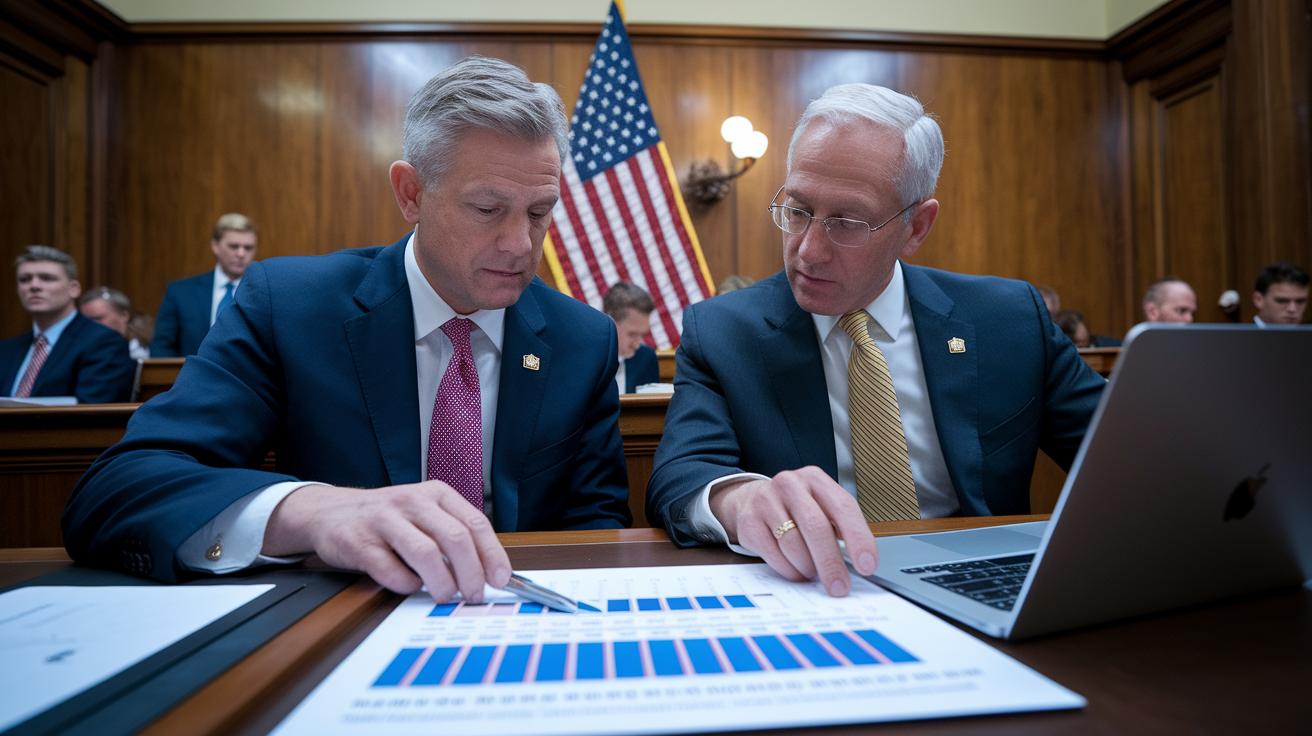
Lawmakers are deep in talks about including a debt ceiling hike with big spending bills. Some, like Rand Paul, are clear about not wanting to mix the two ideas. A few members think any boost to the debt limit should come with strict spending caps or budget fixes. They want to rein in government expenses while keeping the essential services running smoothly.
Tensions are growing in Congress as opinions split along party lines. Each side sticks pretty firmly to their demands, and the back-and-forth dialogue shows neither group is ready to budge too much. It really leaves the public wondering if a middle ground can be found before any crucial votes happen.
This debate isn’t just about the debt ceiling, it shows how these talks tie into bigger economic plans. Politicians are using this issue to push for far-reaching changes in how the government spends money. Their aim is clear: keep control over federal borrowing while matching fiscal policy to their dreams for the nation’s financial future.
Market Reaction in Debt Ceiling News: Economic Impacts and Credit Concerns
When we look back at past crises, it's clear that news about the debt ceiling can really shake up the markets. Take 2011, for example. Back then, Treasury yields quickly rose and there was a real drop in liquidity. This meant borrowing costs went up by about $1.3 billion just for the maturing debt that year. For a closer look at these market moves, check out this handy link on market trend analysis. At the same time, rating agencies started taking a hard look at the US credit rating since concerns about a potential default were on everyone’s mind.
Then, in fall 2017, a similar political standoff brought its own set of challenges. Yields went up and down, and funding costs started creeping higher, which flagged worries about defaults even more. Investors and policymakers paid close attention, and credit agencies stepped up their review of fiscal stability as the uncertainty spread.
| Year | Trigger | Market Impact | Cost to Treasury |
|---|---|---|---|
| 2011 | Debt ceiling impasse | Rise in yields and fall in liquidity | $1.3 billion increase |
| 2017 | Political standoff | Volatile yields and rising costs | Increased uncertainty |
More recent updates show a spark of hope even though credit worries still linger. Some market watchers believe that the steps being taken now might help ease default risks soon. While we still face some uncertainty, many are optimistic that smart moves in Congress could stabilize borrowing conditions and boost market confidence. It’s an encouraging sign that the old pattern of sharp market swings might be replaced by steadier economic growth if key policy fixes come into play.
Extraordinary Measures Explained in Debt Ceiling News: Treasury Strategies

Treasury plans during a debt ceiling standoff come from hard-learned lessons from past fiscal stops. Instead of just stopping the reinvestment of funds like the G Fund, officials now use strategies that mix old methods with detailed technical ideas. Think of it like a technique that has been honed over many years, back in the early 1990s, similar steps helped prevent a cash crisis by shifting money around at just the right time.
These extra steps help smooth out cash flow in the short run while also steering long-term decisions and market feelings. History shows that when earlier leaders moved funds and adjusted special securities, it nudged lawmakers toward more responsible budgeting over time. For instance, in 1992, some smart Treasury moves stopped a fiscal crisis and led to a long-lasting rethink of budget plans.
More than just an emergency fix, today's approach gives us a closer look at the balancing act of managing debt. While these tactics are only temporary, they bolster market trust and shape the way future policies are formed. In its refined form, this strategy shows that debt management is more than a quick fix, it’s a thoughtful, lasting plan for keeping our finances on track.
Historical Overview in Debt Ceiling News: Past Crises and Outcomes
Since 1960, Congress has had to step in more than 100 times to raise the debt limit. It might seem hard to believe that borrowing limits have been adjusted so often, but these changes have become a familiar part of our government’s money talks.
In 2011 and again in 2013, tensions ran so high that government work almost came to a complete stop. At the last minute, lawmakers agreed on increases to avoid a default. These moments remind us of the time-sensitive decisions made when political pressure builds up.
These standoffs did more than just slow government operations. The financial shake-up in 2011 even led to a credit rating drop by S&P, showing the dangers of putting off action. Experts have since learned from these events, adjusting risk strategies and reinforcing financial safeguards.
Looking back, each crisis eventually led to compromises that restored calm. The hard-earned lessons from these debates now help guide lawmakers to take careful, deliberate steps that rebuild market trust and spark hope for a stronger economy.
Expert Analysis in Debt Ceiling News: Forecasts and Policy Implications

Repeated fiscal face-offs have experts on alert, noting how these cycles only add to market ups and downs and cloud our financial future. Investors and lawmakers alike are eyeing new ideas like tying borrowing limits to the pace of GDP growth (a measure of a country’s economic output) and setting spending caps to help keep things steady.
Ratings Agencies Perspective
Credit agencies are watching the US borrowing scene very closely. They point out that any hold-up or political standoff shakes our trust in the government’s ability to manage its debt. When gridlock happens, these agencies often tweak their outlooks, which then nudges lending rates and can make markets unpredictable. In truth, their warnings show why quick, clear policy moves are so important for keeping our finances stable.
Economist Forecasts
Economists are speaking with a mix of caution and hope. Some believe that automatically linking borrowing limits to economic growth can lessen the stress caused by sudden policy changes. Others back strict spending caps to form a steady framework that calms market jitters. Their views suggest that if decision-makers can agree on a clear fiscal direction, it might smooth out the wild swings we’ve seen lately.
Experts advise both investors and policymakers to stick to a strong risk management plan. In tough times like these, careful planning and steady policy choices can help ease fiscal worries and boost confidence in our economy.
debt ceiling news: Optimism Sparks Economic Update
Experts are warning that delays in key payments, like Social Security checks, military pay, and contractor funds, could lower spending in some areas by around 2%. One analyst explained, "A week-long delay in Social Security payments may slow down how much people are buying services and goods in their neighborhoods," meaning local shops and services might feel the pinch right away.
Recent surveys show that small businesses could also see a drop in cash flow, with some models suggesting their work capacity might shrink by about 1.5% if the payment issues linger for just a few days. This change could make it harder for these businesses to keep up with daily expenses.
New findings point out that when agency budgets freeze, programs like health care and public infrastructure could take a hit over time. One expert shared that when funds are delayed, it can lead to a drop in trust in federal services, urging lawmakers to handle the situation carefully.
For example, in a recent briefing, an economist mentioned that even a seven-day delay might lead to noticeable drops in community spending. This shows just how important it is for payments to be on time to keep our local economies strong and steady.
Final Words
In the action with our deep dive into the latest debt ceiling news, we explored everything from congressional deadlines to Treasury strategies. We saw how political decision-making can sway market sentiment and impact government services.
This recap ties together how understanding borrowing limits and market reactions can help investors manage risk and stay prepared. It’s been a clear, practical look at current trends and strategies, leaving us ready to face the challenges and opportunities ahead with confidence.