
Ever wonder how a quick press conference can brighten up market moods? When the Fed shares its statement and live updates, it gives investors a fast snapshot of economic trends. The clear FOMC update and the engaging Q&A that follows both send strong signals about where the market is headed. In this article, we break down these insights in simple terms and show how the Fed press conference can spark a renewed sense of optimism for both seasoned traders and everyday investors.
Fed News Conference: Market Moves Inspire Optimism
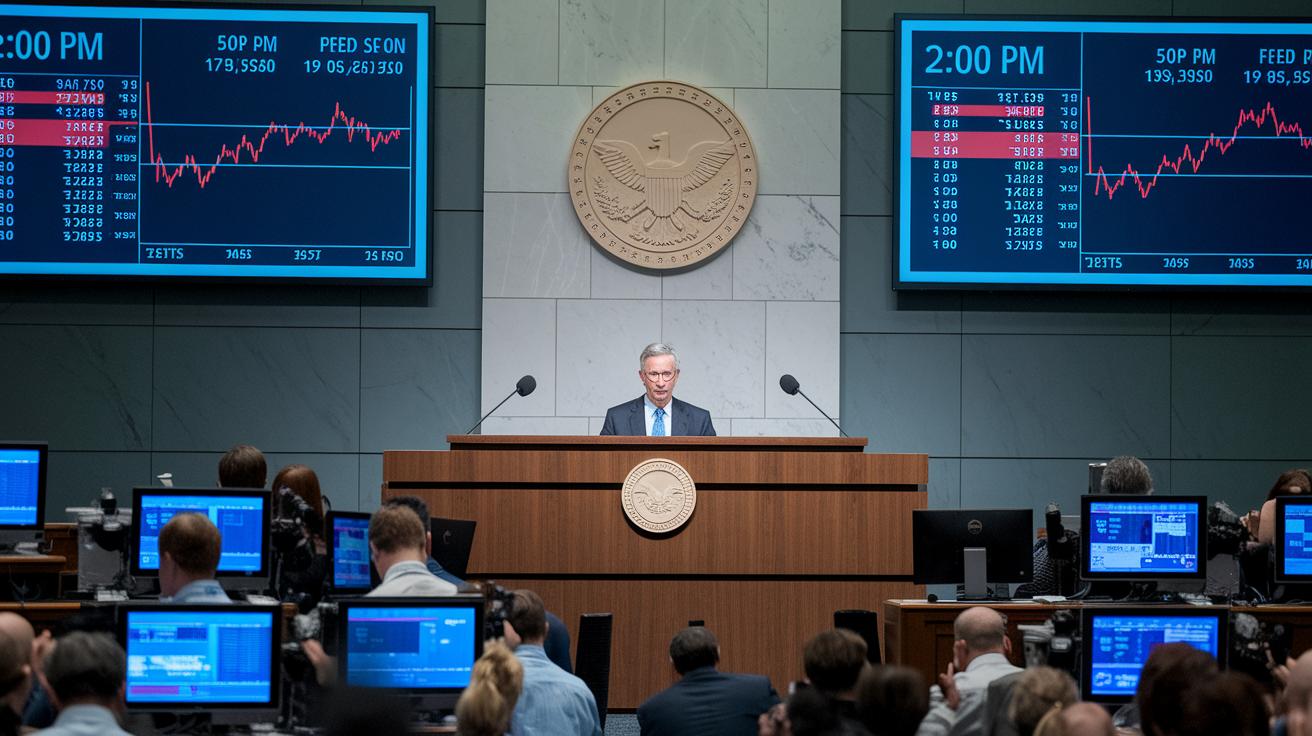
Fed news conferences give us a quick look at the decisions that shape the markets. Ever since Chair Bernanke’s first session in April 2011, these briefings have grown into a trusted source for real-time insights on money policy and economic outlooks. At 2:00 p.m., the FOMC statement is released with the key details for the day. Then, at 2:30 p.m., the press conference starts, where the Chair shares opening thoughts and personal insights that can immediately sway market mood.
This mix of planned remarks and spontaneous analysis makes the briefing feel both clear and lively. Investors and curious onlookers alike appreciate having immediate access to session transcripts and video or audio recordings. It’s a handy way to go back over the details and understand what’s driving market moves.
Key parts of a Fed news conference include:
- FOMC statement release
- The Chair’s opening remarks and commentary
- A live Q&A session
- Official transcript publication
- Video and audio webcast links
By blending real-time updates with accessible recorded content, these conferences help everyone, from market pros to newcomers, feel more confident about their financial decisions. The clear schedule and ready-to-use materials build optimism and make it simple to grasp the nuances of Fed actions.
Fed News Conference Schedule and Digital Coverage

Every day starts with a burst of activity. At 2:00 p.m., the FOMC drops its statement, a clear sign that the market is about to shift gears. Then, just a half-hour later, at 2:30 p.m., a press conference kicks off, giving everyone a chance to tune in and catch the latest insights.
Studies have shown that these moments cause a quick, excited jump in market returns. It’s almost like taking the market's pulse at exactly the right times.
| Event | Scheduled Time |
|---|---|
| FOMC statement release | 2:00 p.m. |
| Press conference start | 2:30 p.m. |
Live video and audio streams are available on official public platforms. You might see a pop-up on your favorite financial news website or brokerage dashboard as the live event begins. To make sure you never miss a beat, sign up for calendar alerts; you could get notified by email or on your phone just minutes before the event. This simple setup helps you plan your day around these key market moments and keeps both investors and casual followers in the loop about the latest in monetary policy.
Fed News Conference Market Volatility and Reversals
Under Chair Powell, market reactions during Fed news conferences have become much sharper. Studies show that during these events, the market moves nearly three times more than in the past. In six recent meetings, researchers found that the S&P 500 swayed over 1%, which meant about $300 billion in value was affected. Often, the strong initial move from the FOMC statement is later softened during the Q&A when more details are shared.
This sudden burst of market activity can feel like an unexpected heartbeat. Investors might be taken aback by the rapid changes until the Chair’s follow-up comments bring clarity and calm. In other words, the first reaction is sometimes too extreme, and the later Q&A helps bring things back in balance.
Here are some clear examples:
- Sept. 21, 2022: Positive comments sparked a rise in stocks and led to an eight-basis-point drop in 2-year Treasury yields.
- Nov. 2, 2022: A careful tone was linked with nearly a 2% fall in stock indexes.
For more details on similar market moves, check out the market trend analysis at this link.
These pauses during the Q&A are very important. They give investors a chance to process the extra information and adjust their strategies more thoughtfully. It’s almost as if the market takes a deep breath after the initial rush. This pattern of overreaction followed by a steadying influence is a big clue that many analysts watch during these high-profile events.
Research Methodology for Assessing Fed News Conference Impact
Researchers look at things in a very hands-on way. They take what's called a placebo approach by comparing the market's reaction during the Fed news conference with the same time slot a week before. This helps them see if it’s really the timing of the conference that sets the market moving or if similar changes happen on other days.
They base their work on intraday returns, which basically means they study the market's ups and downs throughout the day. Researchers zero in on spikes in average squared returns, a fancy term for measuring how wild the market is, especially right at 2:00 p.m. when the Fed statement comes out and again at 2:30 p.m. when the press conference starts. These spikes are like clear signals that the Fed's news is stirring things up.
By comparing these moments, analysts can tell that the turbulence isn’t just random jitters. Instead, it directly links back to the Fed’s announcements. This method gives experts a clear look at how updates on monetary policy can move the market, letting everyone get a better feel for what’s happening when big financial news drops.
Influence of Chair’s Commentary in Fed News Conferences
We merged this part into the Fed News Conference Market Volatility and Reversals section. This way, we keep the discussion clear, avoid repeating examples, and ensure the analysis stays focused.
Trends and Future Outlook for Fed News Conferences

The Federal Reserve is adding more press conferences every year, and it's pretty exciting. They’re leaning into digital tools, richer Q&A sessions, and more detailed data releases. In plain terms, this means they want to give us clearer, more straightforward insights about the economy.
In upcoming press events, we might see a few cool new features. For instance, there could be real-time data feeds, so you could watch key market stats as they’re announced. Imagine having live numbers pop up right on your screen! They’re also likely to dive deeper into economic forecasts, explaining what changes in policy might mean for everyday people. And with better interactive features, the Fed could open up more direct conversations with the public, making these gatherings even more engaging.
• Real-time data feeds
• In-depth economic commentary
• More interactive discussions
All these updates are geared toward making the sometimes complex world of policy feel more immediate and understandable. As these press conferences evolve, they’re set to deliver dynamic, yet accessible, insights that help keep everyone in the know.
Final Words
In the action, the article broke down what happens during a Fed news conference. It outlined key steps like the FOMC statement release, Chair’s commentary, live Q&A, transcript updates, and webcast availability.
It also explored market volatility, research methods comparing actual events with placebo conferences, and trends in digital engagement. By connecting these dots, the post shows how a Fed news conference drives market movements and informs smarter investment moves, leaving you better prepared and positive about future opportunities.
FAQ
Q: What does the Fed announcement today include?
A: The Fed announcement today includes the FOMC statement release at 2:00 p.m. followed by a live press conference at 2:30 p.m., where key policy details and market outlook are discussed.
Q: How can I watch Powell’s speech live today?
A: Powell’s speech is broadcast live via official webcast platforms, giving viewers real-time access to his comments and the subsequent question-and-answer session.
Q: What time does the Fed announcement or news conference start today?
A: The Fed event starts at 2:00 p.m. with the FOMC statement and continues at 2:30 p.m. with the news conference, making it simple to catch every update.
Q: When is the next Federal Reserve interest rate meeting scheduled?
A: The next Federal Reserve interest rate meeting is scheduled in advance, with the date publicly released to help investors plan during key policy review times.
Q: Will the Fed cut rates in October?
A: Whether the Fed will cut rates in October depends on upcoming economic data and policy reviews, with any changes announced during the official Fed press conferences.
Q: Has the Fed announced a rate cut today?
A: If a rate cut were made today, it would be clearly stated in the FOMC announcement and discussed during the live press conference, providing immediate guidance to the market.