
Have you ever thought that a low stock price might hide a real bargain? Sometimes solid companies lose a bit of shine when the market overreacts to short-term news, and they end up being hidden treasures waiting for their moment.
Smart investors tend to notice these opportunities by checking key ratios and steady growth numbers. In this post, we'll share some simple tips and clear insights that help you pick out these overlooked chances and turn them into profitable, long-term investments.
Key Criteria for Identifying Undervalued Stocks
Undervalued stocks are like hidden gems that the market temporarily overlooks. They often sell for less than they're really worth, providing the chance for long-term growth. This can happen when there’s a general market slump from rising interest rates, inflation, or global worries, or even a brief setback like missing earnings targets. It’s a bit like hearing an unexpected tune on the radio that turns out to be a real standout.
Sometimes, the market overreacts to short-term news, pushing stock prices down even when a company is fundamentally strong. That gap between price and potential gives savvy investors a great opening to buy in after doing their homework. Even if a company hasn't been in the spotlight, it might be gearing up for a strong comeback.
Here are some key numbers to keep an eye on:
| Metric | Description |
|---|---|
| P/E Ratio | Gives insight for stable, profitable companies |
| P/B Ratio | Useful for businesses with significant assets |
| EV/Revenue Ratio | Helps identify companies with high growth potential |
| EV/EBITDA | Best for capital-heavy firms |
| Discounted Cash Flow Analysis | Estimates the value based on predictable cash flows |
| Analyst Price Targets | Offers an extra check against other metrics |
For more details on these metrics, check out the guide at Key metrics for value investing.
A genuine bargain isn’t defined by a low price alone. It also comes from strong financial health, steady earnings growth, and a competitive edge that bodes well for the future. On the flip side, a low P/E ratio might be a red flag if the company also has heavy debt or declining revenues. The real value of an undervalued stock shines when market sentiment improves, providing a safety cushion and the potential for rewarding returns for patient investors.
Using Stock Screeners to Identify Undervalued Stocks
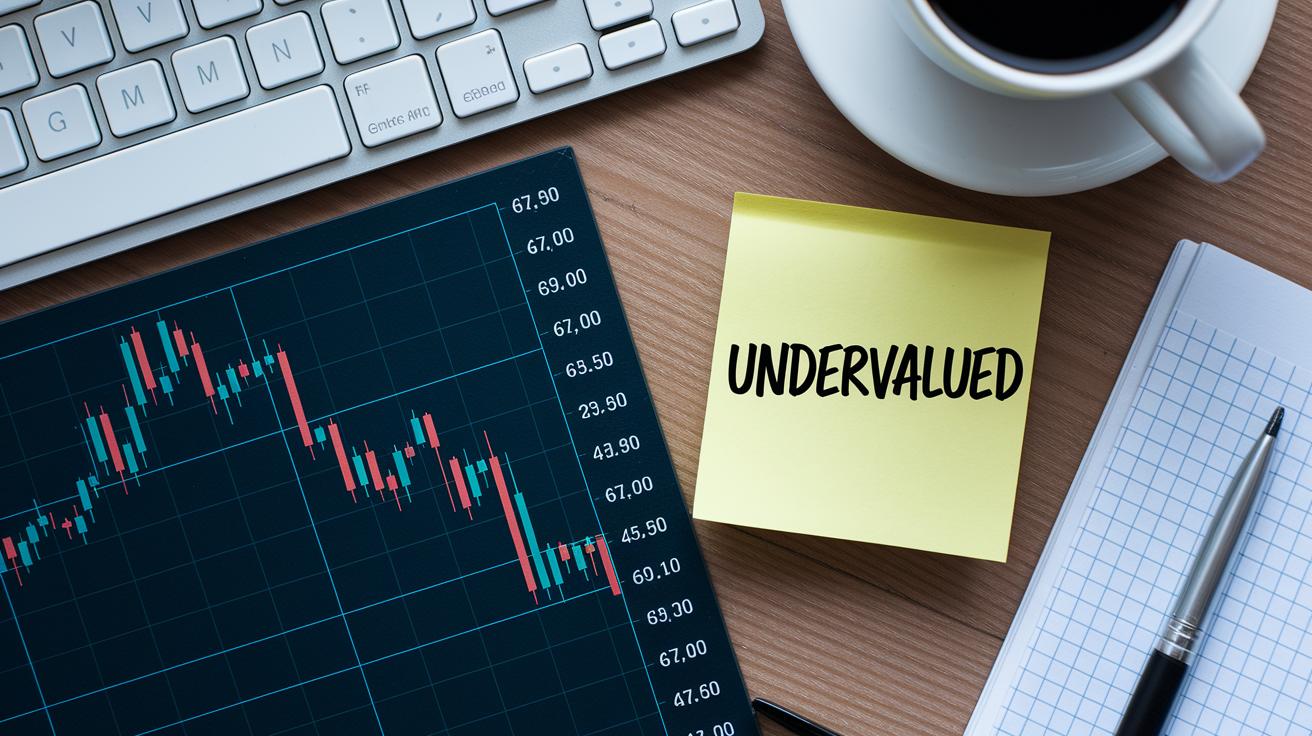
Stock screeners give you a quick and simple way to sort through many stocks to find those hidden bargains. They work like a filter, helping you spot companies that might be overlooked by the wider market. When things get a little choppy, this tool keeps your search clear and straightforward.
Value Screener
The Value Screener hunts for stocks that have dropped more than 20% over the last year. Even though these stocks have fallen in price, many still show steady revenue growth and healthy earnings margins. Imagine a stock that tumbles by over 20% but quietly keeps growing in revenue and profit margins, that could signal an unseen opportunity.
ROIC Champs Screener
The ROIC Champs Screener zooms in on companies with a strong return on invested capital (ROIC is a measure of how well a company uses its money to make profits). It filters for firms that have achieved more than a 25% ROIC over the past year. Think of it like watching an engine that turns nearly every dollar it gets into profit, this hints at solid financial strength.
High-Growth Screener
The High-Growth Screener is all about spotting companies with big potential. It looks for those predicted to grow their revenue by over 25% each year. Picture a company with revenue that shoots up like a burst of fireworks. That kind of rapid growth is a clear sign of exciting prospects.
| Screener Type | Criteria | Purpose |
|---|---|---|
| Value Screener | Price falls over 20% in a year with ongoing revenue and earnings margin growth | Spot undervalued stocks with solid fundamentals |
| ROIC Champs Screener | ROIC above 25% in the past year | Identify companies that turn investment into profit efficiently |
| High-Growth Screener | Expected revenue growth over 25% annually | Highlight fast-growing, dynamic companies |
Fundamental Analysis Strategies for Undervalued Stocks
When you're on the hunt for a undervalued stock, start by diving into the numbers. Look at the basic financial statements to see if a company is showing steady revenue growth, healthy profit margins, and good liquidity (that’s how easily an asset can be turned into cash). Also, check out the debt-equity ratio to understand how balanced the company's finances really are. These basic checks can tell you if the stock is priced lower than it should be.
Now, it’s time to pay attention to free cash flow. Free cash flow is the money a company has left after covering its daily operating expenses. Think of it as extra cash that can be used to invest back into the business or help during tough times. When you compare this cash flow to the current market price, you might find clues that the stock is undervalued compared to its real potential.
Next up, don’t forget about the qualitative side of things. It’s important, too, to look at the company’s competitive edge, how effective the management is, and the overall governance of the firm. These factors show whether a company can hold its ground even when the market gets rough. For more insights on how to evaluate these aspects, you might want to check out the "Value investing blueprint" at TradeWisely.com. By understanding these key qualities, you can spot hidden opportunities that might not be obvious from the numbers alone.
Finally, mix the numbers with the story behind them to get a full picture. Look beyond the raw data to assess the quality of leadership and the overall direction of the company. A strong free cash flow, paired with solid management and clear strategy, gives you a much better view of a company’s real potential. This balanced method helps you find stocks that are genuine bargains instead of hidden risks.
Assessing Risks and Avoiding Value Traps in Undervalued Stocks

Sometimes a low stock price might look like a bargain, but it can hide big problems. A low price-to-earnings ratio might sound nice, yet it could mean the company has too much debt, dropping sales, or cash flow issues. It’s easy to get tricked by numbers if you don’t dig a little deeper.
Instead of looking at financial reports all by themselves, try checking them alongside facts about the company’s debts, revenue trends, and cash flow. This way, you can tell if a low price is just a market mood or a sign of real trouble.
It also helps to listen closely to what a company’s leaders say. For instance, if they claim, "We expect solid growth" during a call but then your numbers show slowing sales, that mismatch might be a red flag. Little hints like that can warn you before the issues become obvious.
Another smart approach is to watch for sudden changes in how investors react or shifts in trading volume around earnings time. Mixing solid risk models with these soft hints can help you spot stocks that might deliver long-term rewards, while steering clear of traps that plain numbers might miss.
Case Studies of Successful Undervalued Stock Investments
Real stories help us see how valuation ideas work in everyday life. These case studies show how companies that were once undervalued turned things around, rewarding those who stuck with them.
One case took place in 2022 during a tech rebound. Imagine a tech company that trimmed costs and invested in new AI tools (AI means using intelligent computer programs to make decisions). These changes boosted its stock price in a big way. It’s almost like a friend saying, "I never expected those money-saving steps to spark this growth," while you watch the stock steadily climb.
Another story involves an e-commerce giant that many had overlooked. When its cloud services started performing well, the company’s true value came to light. Picture finding a secret bonus track on your favorite album, the company quietly improved, and investors saw the potential in its low stock price.
There’s also an energy example where things took a turn for the better. After a respected investor increased his stake, the company’s shares quickly jumped. It felt like watching a clear sky suddenly light up with a burst of sunlight, mispriced stocks started to reflect strong fundamentals, and early believers reaped the rewards.
Tools and Techniques for Estimating Intrinsic Value of Undervalued Stocks

When trying to uncover a stock’s true worth, a bunch of smart valuation tools come into play. Tools like calculators and DCF (discounted cash flow) modules, where DCF means adjusting future cash flows to today’s dollars, make the process easier, especially for companies with steady, predictable cash flows. This method not only reveals a stock’s fair value but also builds in a margin of safety to help cushion against sudden shifts. Today’s platforms can blend fundamental data with technical signals swiftly, giving you a clear picture in just a couple of minutes. Imagine a tool that gathers current balance sheet details and market trends to spotlight that underrated stock you’ve been eyeing.
These techniques turn complex data analysis into a more straightforward, step-by-step process. Modern intrinsic value calculators break down key figures and neatly tie together financial statements with easy-to-follow dashboards. This way, you get a comprehensive view of a company’s assets, growth potential, and earnings forecasts without getting lost in the numbers. If you’re curious about more precise methods, resources like Intrinsic value calculation in value investing explain the DCF approach, and other financial analysis tools offer extra features to deepen your review. By using these techniques, you’re better set to spot genuine bargains and steer clear of potential pitfalls.
Final Words
In the action, this article explained key criteria for spotting bargain stocks. It covered valuation metrics, stock screeners, deep financial reviews, risk control, real case studies, and the tools for quick intrinsic value checks.
These insights aim to boost confidence and help you see how to identify undervalued stocks. The strategies discussed bring clarity to complex market data, empowering you to make smart, informed investment choices with enthusiasm.
FAQ
How to identify undervalued stocks using Reddit and screeners?
The question means you can tap into Reddit discussions for real-time insights while using stock screeners that filter stocks trading below their real value based on metrics like P/E and P/B ratios.
How can one tell if a stock is undervalued or overvalued?
The question explains you can tell by comparing the stock’s market price to its intrinsic value using ratios such as P/E and P/B, alongside reviewing growth potential and cash flow trends.
What goes into lists like the “10 best undervalued stocks to buy now” or cheap undervalued stocks?
The question means these lists are built by selecting stocks priced low relative to earnings or assets, supported by solid growth potential and strong financial health indicators.
How can I find undervalued stocks in simple steps?
The question outlines a process: screen stocks with key financial metrics, check for sustainable earnings growth, and compare market price to a calculated intrinsic value.
What is the 7% rule in stocks?
The question indicates that the 7% rule suggests a target annual return, meaning stocks generating roughly a 7% yield can be considered attractive investments from a value standpoint.
How does Warren Buffett find undervalued stocks?
The question means Buffett looks at solid financial statements, steady cash flows, and competitive strengths to estimate intrinsic value before making long-term investments.
What roles do Yahoo! Finance, TradingView, and Morningstar play in finding undervalued stocks?
The question shows that platforms like Yahoo! Finance, TradingView, and Morningstar provide key data, screening tools, and analysis to help investors quickly assess if a stock is trading below true value.