
Have you ever thought that a few key numbers could actually spark smarter trading decisions? Stock screeners use technical indicators to turn small price moves into clear signals that help you spot trends. Imagine noticing a change in a moving average or seeing a dip in a familiar indicator like the RSI (which tells you if a stock might be too high or too low). These tools sift through thousands of stocks, giving you a neat, focused list to check out. With those insights at your fingertips, you can zero in on the trades that really matter and give your trading success a boost.
Integrating Technical Indicators in Stock Screeners

Technical indicators turn a stock’s price and trading volume into clear, practical insights. Think of it like watching a moving average crossover, when a short-term average rises above a longer one. In plain language, it can signal a shift in market momentum, kind of like noticing a change in the heartbeat of the market.
Stock screeners are built to use these clues. They sift through thousands of stocks using fixed rules, so you don’t have to scan every single chart manually. Instead, you get a ready-made list of stocks that might be worth a closer look. For example, a screener might flag stocks where the Relative Strength Index (RSI) falls below 30, hinting that these stocks might be oversold and ready for a potential rebound.
These tools rely on measurable data and known market behaviors, helping traders focus on short- to medium-term moves. They gather insights from familiar indicators like RSI, MACD (which helps track momentum) and volume-weighted metrics (which show you how many shares are moving). This makes it easier to spot trends and possible shifts in momentum.
Key benefits include:
| Benefit | Why It Matters |
|---|---|
| Quickly filters out unsuitable stocks | Saves time so you can focus on promising opportunities |
| Clear view of market trends | Makes it simpler to spot potential moves |
| Focused technical setups | Helps zero in on stocks with real potential |
In truth, many traders love these screeners because they cut through the noise and highlight opportunities fast. It’s like having a smart financial friend who points you toward promising trades without all the extra work.
Essential Technical Indicators Used in Screening

Moving averages help smooth out price data so you can see new trends more easily. For example, when a 50-day moving average crosses above a 200-day moving average, it’s as if the market is setting a fresh rhythm. Have you ever noticed that sudden shift when shorter averages overtake longer ones? It’s a simple way to spot when the market might change direction.
The Relative Strength Index, or RSI, is another handy tool. It tells you when a stock might be too high or too low, almost like a gentle warning. If the RSI rises above 70, it’s a cue that the stock could soon drop. Conversely, if it dips below 30, there might be a chance it will bounce back.
Next up is the MACD, which stands for Moving Average Convergence Divergence. This tool looks at two different moving averages to catch shifts in momentum. Picture this: when the MACD line crosses above its signal line, it’s like a brief alert that things might be changing in the market.
VWAP, or Volume Weighted Average Price, mixes in the volume of trades to give you a clearer picture of what’s happening throughout the day. It shows if a stock’s rise or fall is backed by strong trading interest by considering not just the price, but how much of the stock is being traded.
Bollinger Bands wrap a moving average with upper and lower limits based on statistical calculations. Think of these bands as flexible boundaries that widen when the market gets busy and narrow when it calms down. They help you understand how volatile a stock might be.
Each of these indicators plays a special role in screening stocks. They all offer clear, actionable signals that can guide you in making smart trading choices.
Assessing Indicator Settings and Performance in Screeners
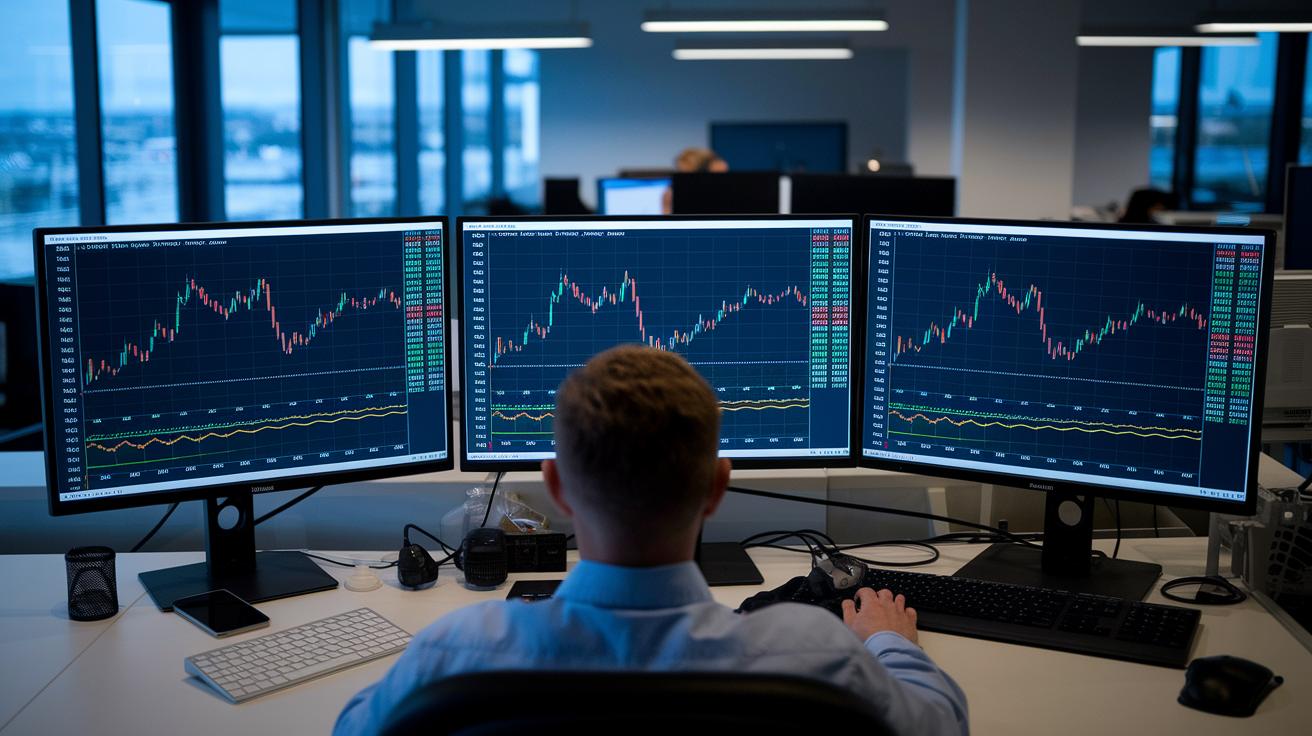
Traders rely on screeners to adjust their indicator settings and zero in on the stocks that truly matter. Picture yourself picking a moving average timeframe, maybe 10, 20, 50, or even 200 days, to match the trends you want to catch. By dialing in values like an RSI limit (which shows if a stock is overbought or oversold) or spotting a minimum volume spike, you get a clearer feel for the market’s rhythm.
Screeners mix price and volume filters in a smart way. For example, you might set up a filter so that a sudden bump in volume happens right when the RSI crosses a key level. This helps cut out all the extra noise and lets you focus on signals that really have potential.
Some advanced platforms even update in real time and let you adjust extra sensitivity settings. That means your setup stays in tune with the ever-changing market, reducing the chance of false signals.
Many traders also keep an eye on performance measures like win rate and drawdown to check if their setups have worked well in the past. Reviewing these numbers helps you see if your screening criteria consistently pinpoint promising trades.
- Tune indicator timeframes
- Set clear thresholds for price and volume
- Monitor key metrics like win rate and drawdown
Chart-Based Technical Filters: Support, Resistance and Patterns

Chart-based filters show you important price points and clear patterns in the market. They help you see when stocks bounce off or break through flat price levels that matter. Imagine a stock that keeps hitting a price floor and then bouncing upward. For example, if a stock bounces off $50 several times, it tells you there's strong support at that level and might warn of a change coming soon.
Fibonacci retracement filters add extra clues. They look for moments when the price pulls back to key levels like 38.2%, 50%, or 61.8% after a strong run. This can mean that a brief dip might be followed by the price moving back in the same direction as before.
Trendline event detectors keep an eye on when prices cross trendlines drawn from recent highs or lows. If a rising or falling trendline is broken, it might signal a breakout or breakdown even before the overall trend changes.
Candlestick-pattern filters focus on specific chart shapes like doji, engulfing bars, hammers, or shooting stars. These patterns can hint that the trend is about to reverse. For instance, after a long downtrend, a hammer might show that sellers are losing strength, suggesting a possible turnaround.
- Support/resistance scans to mark major price levels
- Fibonacci retracements to measure how far prices might pull back
- Trendline detectors for early warnings of breaks
- Candlestick-pattern filters to signal potential reversals
Each of these methods fine-tunes your screening process, helping you catch even the smallest but significant market signals.
Comparing Stock Screeners with Advanced Indicator Features

Traders looking for advanced screening tools have plenty of user-friendly choices these days. Many platforms offer you smart, automated screening, flexible filters you can tweak, and charts that work seamlessly with your scans. This means you can easily set up filters using tools like moving averages, RSI (which shows how fast prices change), MACD (a trend-following tool), and Bollinger Bands (which highlight market volatility). It’s a bit like having a built-in sensor that picks up signals before they even show up on your charts.
Each platform brings its own unique twist. StocksToTrade, for example, shines with a wide array of indicators and real-time updates, a perfect pick for those who want a full picture. StockMonitor lets you create custom scans with multiple technical markers, while ChartMill offers advanced chart filters along with detailed indicator breakdowns. If you're just dipping your toes in, Finviz gives you the basics for free, making it great for testing the waters. And TradingView? It provides a huge library of indicators, smooth chart integrations, and live alerts, making it a versatile choice.
| Platform | Indicator Availability | Customization Options | Pricing Tier |
|---|---|---|---|
| StocksToTrade | Extensive & real-time | Highly customizable | Premium |
| StockMonitor | Diverse technical criteria | Advanced custom scans | Subscription |
| ChartMill | Comprehensive | Advanced chart filters | Tiered pricing |
| Finviz | Basic (moving averages, RSI, MACD, Bollinger Bands) | Limited customization | Free/Premium |
| TradingView | Extensive | Flexible integrations | Various plans |
This quick overview lays out each platform’s strengths, helping you choose the right screener for your technical analysis needs.
Backtesting Technical Indicator Strategies in Stock Screeners

Backtesting tools let you try out your trading ideas on past market data before using real money. Think of it as watching a replay of your favorite game to see which moves worked best. For example, if you set up an RSI-based oversold signal, backtesting shows if it has a history of success.
When you backtest, you look at simple numbers that show how well your plan worked. You check the win rate, average return, how much the strategy might drop in value (maximum drawdown), and how often the signals pop up. Imagine a strategy that buys when the RSI drops below 30. Backtesting can show if this method really finds the right time to buy or if it needs some adjustments.
Tweaking your indicator settings with backtesting data can help you balance potential profits with risks. You might change the RSI threshold or adjust moving average periods. This review of past performance guides you in making your strategy more solid and easier to manage.
- Review win rate and average returns
- Check maximum drawdown figures
- Count qualifying signal frequency
Using backtesting information in your screening process can boost your trading confidence by spotlighting strategies that have proven effective in the past.
Final Words
In the action, we explored how technical indicators help shape stock screeners. The details covered everything from moving averages and RSI to more advanced chart filters like support and resistance. Breaking down settings and backtesting strategies showed how traders fine-tune their approaches while managing risk. Each step reveals a way to save time and boost confidence in every trade. Embracing these tech-driven insights helps you stay agile and secure your investments using technical indicators in stock screeners.
FAQ
Q: What free stock screeners offer technical indicators?
A: The free stock screeners like Finviz and TradingView Basic offer key tools such as moving averages, RSI, MACD, and Bollinger Bands, helping you spot trends and reversals without extra fees.
Q: Which technical indicators are considered the best for stocks?
A: The best indicators depend on your strategy, but many traders favor moving averages, RSI, and MACD for identifying trends, overbought or oversold conditions, and potential trading opportunities.
Q: Where can I find a PDF list of technical trading indicators?
A: PDF lists often include popular trading tools like moving averages, RSI, MACD, VWAP, and Bollinger Bands, offering a ready reference to refine your screening and trading setup.
Q: What types and key groups of technical indicators are commonly used?
A: Technical indicators generally fall into four types: trend, momentum, volatility, and volume. A common set includes five main indicators, with moving averages, RSI, and MACD seen as essential.
Q: How can screeners be used for technical analysis?
A: Technical analysis screeners let you filter stocks by price, volume, and indicator criteria, quickly highlighting setups that match your strategy for more efficient chart reviews.