
Ever thought about what owning a piece of a company really means? Imagine walking into a busy town square where investors trade shares like friendly conversations. Every trade tells a small, unique story and helps companies grow, sparking fresh ideas along the way.
Today, let's break it down in simple, clear language. We’ll explore how these markets work and why understanding them can be a game-changer for your financial journey.
Equity Markets Explained: Core Definition and Function
Equity markets are like a bustling town square where people buy and sell little pieces of companies. When you purchase a stock, you're grabbing a small share of that business, much like owning a tiny piece of a giant pie. Think about the curious story of Marie Curie who once carried test tubes filled with radioactive material in her pockets, not knowing the risks, just like investors who take a brave step when betting on a company's future.
These trading spots come in two flavors. There are big public exchanges where companies show off their shares for many investors, and then there are over-the-counter setups where deals happen directly between buyers and sellers. Companies use these markets to gather money for things like growing, researching new ideas, or paying off debts. Imagine a local shop inviting community members to invest, it’s a simple way to grow while everyone chips in.
Trading in these markets works like a dance between supply and demand. Buyers shout out the prices they’re ready to pay, and sellers set their own target prices. When the two meet in the middle, a trade happens, revealing the stock’s value right then and there. It’s a neat little process that sets the pace for everyday market activity.
This lively system does more than just fill company coffers, it also gives investors the freedom to swap their stocks easily whenever they need cash. Picture it as a friendly market where every trade gently nudges the true value of what’s up for sale, keeping the system balanced for everyone involved.
Primary vs Secondary Equity Markets: Structure and Differences

When a company needs new money, it turns to the primary market. This is where fresh shares are sold to the public through initial public offerings (IPOs) or follow-on offerings. Companies team up with underwriters and regulators to set the share price using either a fixed-price method, like labeling a rare collectible at a set price, or a book-building process where they gather bids to find the right price. The funds raised in this way help the company grow and invest in its future.
In the secondary market, investors trade shares that are already out there. Think of it as a busy marketplace, like your local fair, where buyers and sellers meet on platforms such as the NYSE and Nasdaq. Prices in this market change with every trade, depending on how many people want to buy or sell. For example, an investor might sell shares shortly after buying them, similar to passing on a favorite toy when its value rises in a bustling trading session. This constant trading helps keep the market liquid, meaning you can buy or sell shares easily whenever you want.
Both markets serve unique but important roles. The primary market helps companies get the capital they need by selling new shares, while the secondary market keeps trading active and prices clear. Together, they make sure that businesses can grow and that investors have the flexibility to adjust their investments as market trends change.
what are equity markets: Bright, Simple Basics
Global equity markets are where investors buy and sell shares of companies. Big exchanges like the New York Stock Exchange, started in 1792, and Nasdaq, which kicked off in 1971, play a key role in showing us how the market feels right now. Imagine starting your day in New York at 9:30 am Eastern Time, when every trade reflects the mood of the market.
The Tokyo Stock Exchange started way back in 1878 and runs from 9:00 am to 3:00 pm Japan Standard Time, each session having its own energy. Over in London, the Stock Exchange opens at 8:00 am and finishes by 4:30 pm local time, setting the beat for European trading hours. And then there's the Shanghai Stock Exchange, open from 9:30 am to 3:00 pm China Standard Time, where local rules mix with global trends to create a distinctive trading rhythm.
Other important spots include Euronext, which began in 2000, and the Hong Kong Stock Exchange, around since 1891. Each platform has its own rules, like different listing requirements or ways trades are handled, some use dedicated market makers, and others use electronic matching systems. This also changes how easy it is to buy or sell stocks, which we call liquidity (that’s just a fancy word for how quickly you can turn an asset into cash).
Global stock action is also shaped by factors like overlapping time zones and differing currencies. Picture one market’s closing bell setting the stage for another’s opening call, a cycle that creates a lively, real-time mix of buying and selling.
Equity Market Mechanics: Trading, Clearing, and Settlement

Investors kick things off by placing orders to buy or sell shares at a specific price. It's sort of like making a bid at your local auction. They might use a traditional order book or a sleek, modern electronic platform that quickly pairs buyers with sellers. Picture a trader entering a buy order for 100 shares, and when a seller's order matches up, the trade happens right away with a price set by market demand.
After a trade is executed, all the details zip over to a clearinghouse. Think of a clearinghouse as the friendly middleman that makes sure both sides of the deal keep their word. In plain language, it helps lower the risk of someone not following through. A common process here is the T+2 settlement cycle, meaning that two business days after the trade, cash swaps hands for the shares, keeping everything safe and secure.
Risk control measures are built into the system to help keep the market steady. For example, margin requirements mean you need to deposit some cash to support your trading positions. And then there are circuit breakers and daily price limits, which jump in to pause trading if prices start to swing too wildly. Ever seen a stock price take a nosedive? These rules can temporarily halt trading to give the market a moment to catch its breath.
Traders and analysts also look closely at metrics like trading volume and performance indicators. They check the number of shares traded and their price levels to get a feel for the market’s depth and liquidity (which simply means how easily an asset can be turned into cash).
| Step | Description |
|---|---|
| Order Matching | Electronics pair buy and sell orders quickly. |
| Clearing | A middleman lessens the risk of someone not following through. |
| T+2 Settlement | Two business days later, cash and securities are swapped securely. |
| Risk Controls | Margin rules and circuit breakers keep the market stable. |
Every step, from placing orders and matching them to final settlement, is designed to make equity trading smooth and secure. It’s a bit like following a well-rehearsed routine that ensures each investor ends up with exactly what they expected.
Role of Equity Markets in Corporate Financing and Growth
Companies use equity markets to gather money for big projects like growing their business, improving research, or lowering their debt. When a company sells shares, it brings in investors who then own part of its future. Think of a small tech startup that sells shares to fund its latest idea, those investors get to share in the profits as the company takes off.
Equity financing gives people a chance to earn through dividends and price increases. It’s like choosing between owning a piece of a fast-growing pie versus receiving a steady paycheck. This helps investors decide if they want to join in the company’s growth or stick with the safety of regular returns. For more details on these differences, you might want to check out financial analysis online.
Another important point is creating shareholder value. Investors look at things like dividend yields and company earnings to see how well a company is doing. Picture a company making another stock offering, as if a home renovation adds new charm to a house. With more companies taking this step and listing stocks in different regions, they’re reaching out to a larger group of investors, spreading their appeal far and wide.
In the end, equity markets offer a lively way for companies to get funds while sharing both risks and rewards. By selling shares instead of borrowing money, companies build a solid, long-lasting relationship with their investors. And that means everyone can grow together over time.
Investment Strategies and Risk Management in Equity Markets
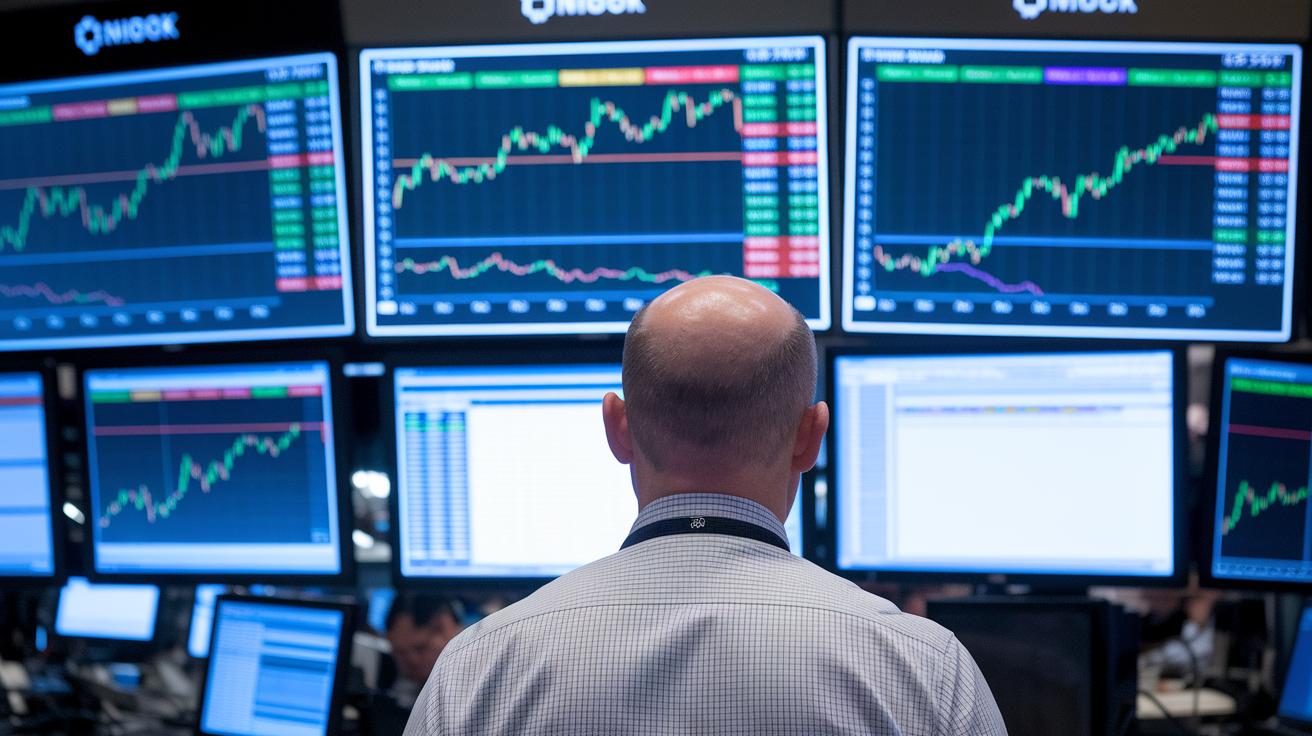
Traders use a mix of techniques when they invest in stocks. One popular method is value investing, looking for stocks that are priced lower than they should be. Picture a trader scanning the market saying, "This stock is a bargain; it’s ready to bounce back!" Then there's growth investing, which zeroes in on companies that could earn a lot in the future. And if you prefer a broader approach, index tracking lets you follow overall market performance. Some traders even trust computer programs to help spot trends and decide the best time to act.
Fundamental analysis means checking numbers like the price-to-earnings ratio and return on equity. These figures help you decide if a stock’s price is fair. On the other hand, technical analysis looks at chart patterns and moving averages to hint at where prices might go next. Imagine a chart where a moving average moves above the current price, that little signal could be a cue to buy.
Managing risk is a big part of smart investing. One effective method is diversification, spreading your money across different sectors so that a dip in one area might be balanced by stability in another. Dollar-cost averaging, where you invest a fixed amount regularly, can also soften the impact of market ups and downs. And using stop-loss orders helps by automatically selling a stock if its price drops too much.
Investor behavior plays a huge role too. Our moods and feelings can really move the market. For example, a burst of optimism among investors can send stock prices soaring, just like a wave of cheers lifts everyone up.
| Risk Management Technique | Description |
|---|---|
| Sector Diversification | Spreads risk across different industries. |
| Dollar-Cost Averaging | Invests a fixed amount at regular intervals. |
| Stop-Loss Orders | Automatically sells stocks to limit losses. |
Finally, there are cost-effective ways to keep your portfolio stable. For instance, using low-cost index funds instead of target date funds can make a big difference in managing risk over time.
Key Performance Metrics in Equity Markets
Investors depend on simple performance measures to cut through all the extra noise. One key metric is the price-to-earnings ratio, which tells you how much you pay for every dollar of profit. For instance, if a stock has a P/E ratio of 15, you’re paying $15 for every $1 in earnings.
Dividend yield shows you the cash return a company gives back to its investors. Imagine putting in $100 and getting $2 back, that’s a 2% yield. Measures like return on equity and market capitalization also help you understand a company’s strength and overall size.
Technical tools smooth out the raw numbers to reveal clearer trends. Moving averages, for example, highlight price patterns that can hint at a good time to buy. And if the relative strength index rises above 70, it might be a signal that the stock is getting overbought.
Other aspects like trading volume and volatility offer real-time views of market liquidity and risk. Plus, analyzing earnings reports along with broad market indices can guide your overall direction in the market.
| Indicator | Description |
|---|---|
| P/E Ratio | Shows the price paid per dollar of profit. |
| Dividend Yield | Reflects the cash return on your investment. |
| Moving Averages | Smooths data to reveal clearer price trends. |
| Relative Strength Index | Signals shifts in stock momentum. |
Final Words
In the action, we outlined the basics of equity markets, from share trading and the roles of primary and secondary segments to the clearing and settlement process. We broke down how exchanges around the world work and discussed key metrics and strategies for managing risk. Each part helps build confidence in planning investments. The insights shared can guide investors in making decisions with ease, showing that understanding what are equity markets is a smart way to stay ahead and secure your financial future.
FAQ
What are equity markets today, and what is meant by equity market?
The equity market today is a trading venue where buyers and sellers exchange company shares. It helps companies raise capital and gives investors liquidity and a chance to share in a company’s growth.
What are equity markets examples and types of equity market?
The equity market features public exchanges like the NYSE, Nasdaq, London Stock Exchange, and Tokyo Stock Exchange, along with over-the-counter platforms. These examples represent different types of trading venues for company shares.
What are equity markets vs stock market?
The equity market versus the stock market distinction is minor. Both involve trading company shares, but “equity market” emphasizes ownership stakes and capital-raising processes.
What are equity markets stocks?
Equity markets stocks are shares that represent ownership in companies. Buying these shares gives investors a stake in company earnings and assets, aligning with long-term growth and income potential.
What are equity markets investing?
Equity markets investing involves buying company shares with the aim of earning returns through dividends and capital gains, while also providing companies with the funds needed to expand and innovate.
What is an equity market PDF?
An equity market PDF is a document that explains how trading venues operate, covering topics like share valuation, order matching, and trading processes, and serves as a handy educational reference.
What is the importance of the equity market?
The equity market is crucial as it enables companies to raise funds, offers investors liquidity, and facilitates real-time price discovery, all of which support overall economic growth and market stability.
What is the difference between stocks and equities, and between equity and share?
The difference between stocks, equities, and shares is mainly in terminology. They all describe ownership stakes in a company, though the terms might be used in slightly different contexts by various sources.
What is the difference between fixed income and equity markets?
The difference between fixed income and equity markets lies in the types of investments. Fixed income deals with bonds offering regular returns, while equity markets involve shares that reflect company ownership and variable returns.