
Have you ever wondered if Asian equity markets might offer a brighter future than most people think? Some experts believe there's untapped potential hidden behind the ups and downs.
Take Japan and India, for example. Even when their numbers fall, exciting signs still peek through. Recent policy changes and steady market moves hint that there are smart opportunities waiting for those who are ready.
In this chat, we break down a few key signals and new chances that could reshape your investing plan. Ready to dive in and see what might bring rewarding results?
Performance Overview of Asian Equity Markets

Asian stock markets have been a bit of a mixed bag lately. Market ups and downs, shifting global tensions, and big-picture economic trends are shaking things up. Investors are keeping a watchful eye on policy moves that send ripples through the Asia-Pacific arena. In fact, Morgan Stanley’s top Asia Economist recently pointed out that India is bouncing back strongly and is handling trade challenges better than some of its neighbors.
When you look closely at different companies, sectors, and even whole economies, you see that some markets are experiencing choppy waters, while others show a steady spark of promise. It’s a fascinating scene where pockets of opportunity pop up even during slowdowns, blending cautious optimism with new investment strategies.
Take a moment to consider this: each day, key market indicators are being re-evaluated, guiding investors to spot hidden growth areas. Staying on top of these trends could lead to some smart moves. For those craving a clearer perspective, detailed cross-market data is available through global insights (check out the link at TradeWisely.com).
In truth, the evolving pace of market activity shows that a well-timed strategy and a keen eye might just uncover bright opportunities in the near future.
asian equity markets: Bright Trends Ahead
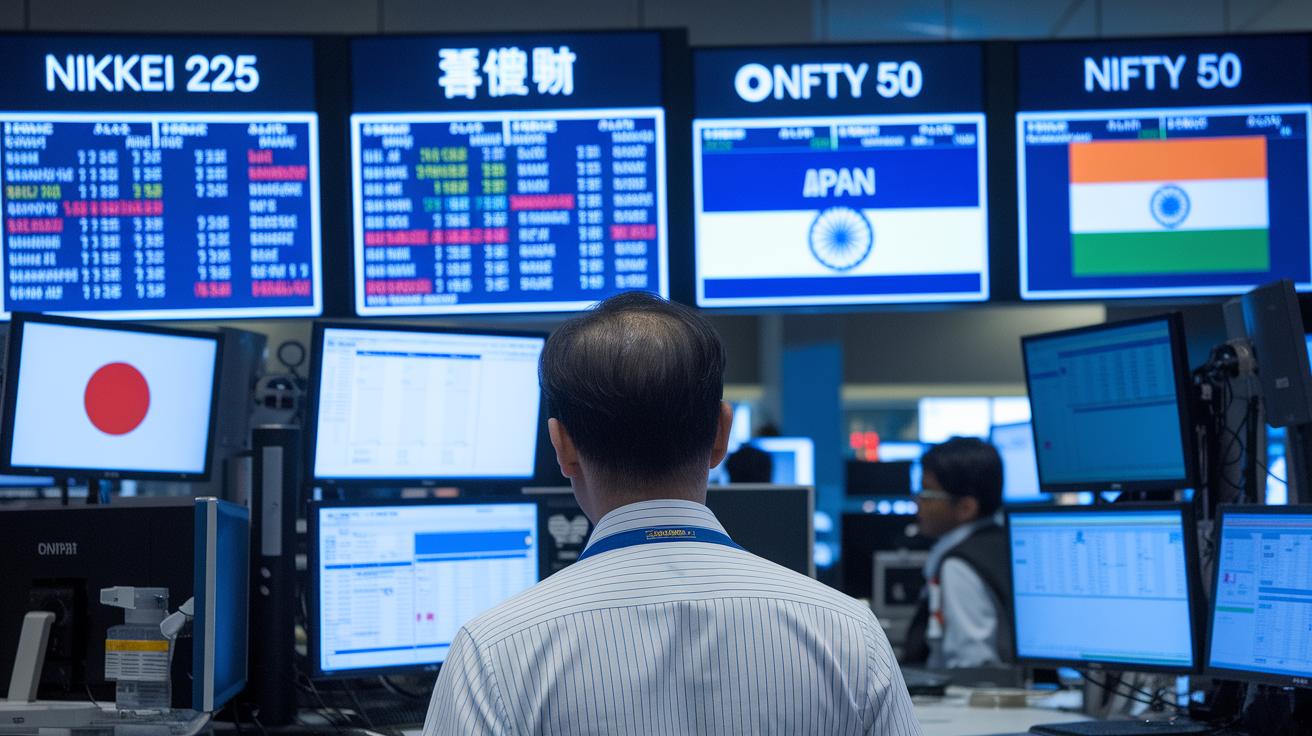
Asian equity markets have kept investors on their toes these days. Big indices like the Nikkei 225 and the NIFTY 50 give us a clear look at how the market is doing, reflecting real shifts in the region. For instance, even though Japan’s index stays steady, Indian shares have seen a lot of movement during the day. At one point, the BSE Sensex closed at around 80,710.76, showing a slight dip despite strong overall performance boosted by optimism from GST reforms.
| Index Name | Country | Recent Close |
|---|---|---|
| Nikkei 225 | Japan | Varies |
| NIFTY 50 | India | Varies |
| BSE Sensex | India | 80,710.76 |
When you compare key exchanges in China, Japan, and India, you'll notice that the market sizes and industry mixes differ a lot. Investors watch these figures to decide where to spread their money in a balanced portfolio. Even with ups and downs during the day, the overall trends hint at strong long-term potential. Japan’s market consistently delivers steady performance, while specific parts of Indian equities suggest there might be great opportunities as positive investor sentiment overcomes short-term jitters.
Looking at these indices side-by-side makes it clear how economic policies and global events are shaping each market. The differences in sector strengths and sizes point to where future growth could pop up, reminding us that this dynamic region holds promise for both seasoned investors and newcomers alike.
Economic Indicators Influencing Asian Equity Markets

Asian stock markets are showing how local government changes blend with broader economic trends. In India, new GST rules are boosting local investor confidence and shifting attitudes across the region. Consider this surprising example: before becoming world-famous, Marie Curie once carried test tubes of radioactive material in her pockets, not knowing the risks, a small habit that hinted at big outcomes later on. In a similar way, these initial GST tweaks are hinting at important market shifts.
Key drivers shaping markets in Asia include:
- Investor confidence growing thanks to GST reforms, which are sparking progress in industrial sectors.
- Global market signals that work together with local policies, causing quick reactions on Asian exchanges.
- Expectations of a U.S. Federal Reserve interest-rate cut, where recent trends show money moving rapidly between different types of investments.
- Intraday market swings that become clearer with real-time data, as seen in a recent example on a major Japanese exchange where fast price changes mirrored new economic outlooks.
- GST reforms boost investor optimism and improve market sentiment.
- Global cues mix with local changes to influence share prices.
- Anticipated Fed cuts are shifting how money flows between investments.
- Real-time movements reveal emerging trends in investor behavior.
Investment Strategies for Asian Equity Markets

If you're looking to dive into Asian stocks, you can start by mixing different strategies like rotating sectors, keeping a keen eye on risk, and spreading your investments. Think of it like preparing a balanced meal, each part plays its role to help secure long-lasting stability.
Big names like Morgan Stanley offer a full suite of services, from wealth management to investment banking and sales & trading. They give you tailored insights that fit your individual needs, almost like having a smart friend in the financial world.
By using smart technology and secure online platforms for your portfolio, you can adjust your strategy as the market moves. It’s a simple, personal approach that helps you stay on top of those market shifts. Have you ever felt the thrill of catching the right moment?
Picture sector allocation like setting a balanced table. Every piece, each sector, has its own role in keeping your portfolio healthy over time.
Actionable portfolio tactics include:
- Rotating your investments across fresh, emerging sectors to catch regional growth spurts.
- Using straightforward risk-control methods to help lower the impact of market ups and downs.
- Building a diverse mix of assets so that not every investment reacts the same way when economic trends change.
- Taking advantage of digital platforms that give you real-time market updates, keeping you informed whenever you need it.
If you’re curious about new methods, check out best investment strategies. Also, when you're putting together your portfolio, consider effective portfolio construction tips that spread out your risk across different asset types. Every step is designed to help you handle shifts in Asian market dynamics while seizing opportunities for solid, sustainable growth.
Future Outlook and Growth Trajectory in Asian Equity Markets

Looking ahead, Asia’s equity markets are stirring interest with fresh growth ideas and changing business trends. Morgan Stanley’s top Asia economist sees strong potential in India, pointing out that its solid market basics might boost the whole region's performance. Investors are keeping a close eye as trends in hardware, software, and older industries mix together to shape next year’s market. Have you ever noticed how a new piece of technology can quietly change the market's pulse?
Adapting to shifts in supply chains and updated rules is key to steady returns. Those who react swiftly to these changes are often the ones who drive both new ideas and lasting growth. Companies are slowly moving towards modern ways of working, improving efficiency with smarter supply-chain moves while new rules create fresh opportunities. Industry leaders are rethinking their methods to make sure their investments stay in step with the latest trends and solid growth signals. With these fresh insights coming into play, Asia investments look ready to deliver promising returns and steady progress.
Final Words
In the action, we explored the pulse of asian equity markets, highlighting performance trends, key indices, and economic indicators that shape daily trading. We unpacked how global shifts, like interest rate cuts and India's GST reforms, influence both risk and opportunity. We also looked at investment strategies that align with new industry data and forecasted emerging growth sectors. This analysis ties together current market dynamics with practical strategies, giving you a well-rounded view to stay ahead and invest with confidence.
FAQ
What is the current status of Asian equity markets today?
The current status of Asian equity markets today reflects a mix of volatility and steady trends influenced by global and regional economic shifts. Major indices offer a snapshot of investor sentiment across the region.
What influences the Asian stock market open?
The Asian stock market open is influenced by overnight global events and regional economic news, setting the tone for the day as traders respond to early market signals and adjustments in sentiment.
What insights do Asian equity market graphs and charts provide?
Asian equity market graphs and charts provide a visual representation of price trends, trading volumes, and volatility. They help investors spot patterns and assess market momentum for more informed decision-making.
What does the latest Asian stock market news, including Reuters updates, indicate?
The latest Asian stock market news, including Reuters updates, highlights performance changes, index movements, and key economic developments, offering investors current analysis to understand market dynamics.
What does the Asia stock market index represent?
The Asia stock market index represents a combined indicator of leading exchange performances, serving as a benchmark that reflects overall market health and investor sentiment across diverse economies.
How do European markets today compare with Asian equity markets?
European markets today provide a contrasting backdrop to Asian equity trends. Evaluating both regions helps investors gain a complete view of global market activity and better understand differing economic influences.