
Ever wondered what money used to look like? Back in the day, people used things like gold and silver, not just paper bills. This type of cash, called commodity money, gets its value from the material itself.
Imagine holding a shiny gold coin and feeling its solid weight. Early traders trusted this money because you could see and feel its worth right away.
Today, we’re taking a closer look at the history of commodity money and exploring why its tangible value still grabs our attention.
Core Definition of Commodity Money
Commodity money is cash made from physical stuff like gold or silver. Its value comes from what it is, not from a government note or a market trend. Imagine a shiny gold coin catching the sunlight; its worth is built into the metal itself, whether you’re trading it or stashing it away.
It works just like regular money. You can use it to buy things, save it for a rainy day, or even check your balance. Because its value lies in its physical properties, it stays strong even when it’s not in active use. Unlike paper money, which only holds value because the government says it does, commodity money stands on its own. People trust precious metals because they’re tangible and have a natural, steady worth. That’s why many see buying gold or silver as a smart, long-lasting financial move.
Key Characteristics and Intrinsic Value of Commodity Money
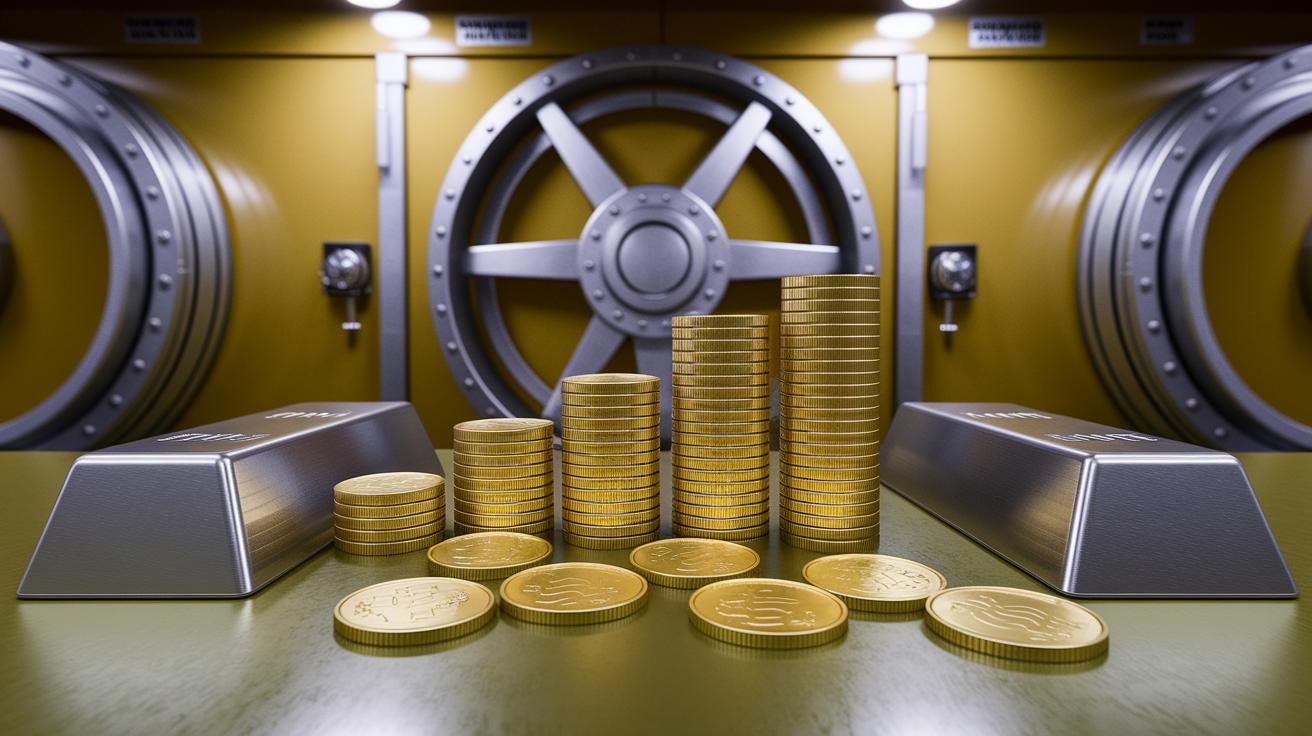
Commodity money is money whose value comes from the raw material it’s made of. Think of gold, silver, or other precious items. They are valuable on their own, even if you’re not using them to buy things. Since these materials are naturally scarce, their worth stays steady. In other words, you can’t just create extra gold out of nowhere, which helps keep inflation low.
Another big advantage is durability. For example, a gold coin won’t rust or wear away like paper money might over time. Plus, these metals can be melted and divided into smaller pieces when needed, making trades easier. And portability counts too. Imagine a traveler who only needs a few small, heavy coins compared to carrying bulky goods like livestock or grain.
Back in the day, traders and merchants trusted these metals because their value was clear from their weight and purity. They often measured coins on a scale and ran simple tests to spot fakes. A seasoned trader might say, "A coin’s weight tells you its true worth." This shows that even long ago, the physical feel and heft of a coin were a reliable sign of its value.
All these traits, real, tangible value, a fixed supply, lasting durability, the ability to be split up, and easy verification, are why commodity money has lasted through the ages and still shapes our ideas about what’s truly valuable.
Historical Evolution from Barter to Commodity Money
Trade started as a simple swap of goods and services among early communities. People exchanged items without using a standard way to measure value. Imagine swapping a handful of berries for a handcrafted tool, this is a clear picture of direct barter. But as time went on, folks began looking for something steadier. They turned to items like livestock and salt as early forms of money. Livestock wasn’t just a sign of wealth; it also offered practical benefits. And salt? Its value was so high that even the word "salary" comes from it, proving its importance as an early commodity.
As societies grew and got more connected, the Bronze Age brought a fresh idea. People started using copper and bronze pieces for trade. These metals were much more consistent than perishable goods, which made trading easier and more trustworthy. By about 700 BCE, communities in Lydia were minting coins from silver and gold. This innovation soon spread to regions like Greece and Persia. Metals then became valued not just for practical purposes but also for their rarity and durability. You might think of those early coins as nature’s little receipts, each one promising a secure value.
Later on, during medieval times in Europe and parts of Asia, carefully made metal coins became the true starting point for commodity money. These coins were accurately weighed and tested, so both buyers and sellers knew they held real value.
| Era | Primary Medium | Region |
|---|---|---|
| Barter Era | Goods & services | Global tribal societies |
| Early Commodity Exchange | Livestock & salt | Ancient Rome, Near East |
| Metal Age Coinage | Copper, bronze | Mesopotamia, Egypt |
| Precious Metal Standard | Gold, silver coins | Lydia, Greece, China |
Common Forms of Commodity Money: Precious Metals and Natural Resources

Gold has always been a trusted form of money. People liked gold because it was rare, easy to shape, and didn’t rust. Imagine an ancient Roman merchant gently weighing a gold coin in the soft early light, it really shows why gold has always been special.
Silver also played a big role. Since silver was more common and could be divided into smaller pieces, it made everyday transactions easy in places like medieval Europe and Asia. Picture a bustling market where silver coins pass quickly from hand to hand, each one trusted by buyers and sellers alike.
Natural resources found their way into trade too. For example, cowrie shells were popular in parts of Africa, Asia, and the Pacific because they were easy to carry and hard to fake. In some regions, even grain or livestock served as money when metal was hard to come by.
These forms of commodity money worked well because they were durable, easy to verify, and naturally resisted inflation. Their physical presence gave people a clear and reliable standard of value, a practice that has influenced monetary systems across cultures, even today.
Advantages and Drawbacks of Commodity Money
Commodity money has a real, built-in value because it comes from materials like gold or silver. Its worth comes directly from the substance it’s made of, so many people across different cultures have trusted it for trading over the years. Since items like gold and silver are rare, their limited supply helps protect against inflation by keeping their value steady.
But using commodity money isn’t without its challenges. Merchants often needed special tools and know-how to measure the weight and check the purity of these precious metals. On top of that, securely storing and transporting them could be quite expensive, making everyday transactions more complicated.
Benefits include:
- Holds real value because it’s made of precious materials.
- Earns trust across many cultures.
- Naturally fights inflation due to its limited supply.
- Remains durable and reliable over time.
Drawbacks involve:
- Expensive costs for safe storage and transport.
- Difficult to split into smaller amounts for tiny transactions.
- Needs special methods to verify weight and purity.
These points show why commodity money has long been seen as a steady store of value, even though it comes with a few practical hurdles.
Comparing Commodity Money with Fiat Money

Fundamental Distinctions
Commodity money gets its value from the material it’s made of. Think about a gold coin, its worth is tied directly to the gold inside. Gold is rare by nature, so you can’t just make more, which keeps its value steady. On the other hand, fiat money only has value because the government says so and because we trust the system. For example, while a gold bar holds lasting worth, printing too much paper money can quickly dilute its value.
Role of Government and Trust
Fiat money depends on government rules and monetary strategies. Governments adjust the money supply to keep the economy running, but too many bills can spark inflation. Commodity money doesn’t lean on any government backing, it controls its own supply naturally. This built-in limit helps keep public trust steady, even when policies shift.
Legacy and Modern Relevance of Commodity Money
Long ago, banks kept gold and silver safe and gave out certificates that later turned into the paper money we use today. The idea is pretty simple: something valuable supports a promise to pay, and that notion still influences how our money works now. Think of it as the steady pulse behind modern financial systems, where scarcity (a limited supply helping to keep value) guides decisions even today.
Back in the day, people trusted gold and silver precisely because they were rare. And now, digital assets like Bitcoin get a lot of attention because they share that same quality. Bitcoin is often called digital gold since it has a capped supply and relies on a network of computers to confirm transactions. Isn’t it interesting how modern tech echoes the old ways of safeguarding value?
When you look at how money has changed, from tangible metals to digital tokens, you see a common thread: trust, limited availability, and real worth. Traders always look for something that holds its value, whether it’s a shiny coin or a digital token confirmed by math. In essence, the lessons from commodity money help shape everything from central bank policies to how we view the promise of innovative digital currencies.
Final Words
In the action, we explored how commodity money carries intrinsic value thanks to its physical basis. We tracked its evolution from barter to powerful precious metals, illustrated its key traits like durability and divisibility, and weighed its benefits against challenges. This deep dive offered a side-by-side look at commodity versus fiat money, showing how history shapes today’s financial ideas. Keep in mind that smart investors continue to seek ways to explain commodity money as a tool for preserving wealth and seizing opportunities.
FAQ
What is commodity money and can you provide an example?
Commodity money is currency made from a physical item that holds real value, like gold coins. Its value comes from the metal itself rather than a government decree.
How is commodity money explained in economics?
In economics, commodity money is defined as money made from materials that have intrinsic worth, meaning it preserves value even outside its role in trade.
How is commodity money presented in high school classes?
High school lessons often depict commodity money by using examples such as gold or silver coins to show how physical materials serve as trusted money in trade.
What is representative money?
Representative money is a certificate or token that stands in for a commodity’s value. Holders can exchange it for the actual good, making it a claim on a physical asset.
What types of commodity money exist?
Types of commodity money include precious metals like gold and silver, natural items such as salt or shells, and livestock. Each holds value because of their inherent usefulness.
What are the advantages of commodity money?
Commodity money offers stability by maintaining intrinsic value and resisting inflation. It is widely trusted and culturally accepted but can also involve higher transport and storage costs.
Do any countries still use commodity money?
Today, no country uses pure commodity money. Modern economies use fiat money, where value is established by government regulation rather than by the physical substance.
What are two examples of commodity money?
Two examples of commodity money include gold coins and salt used in early trade, both of which were valued for their physical and functional properties.
Is the US dollar commodity money?
The US dollar is not commodity money. It is fiat money, meaning its value is determined by the government and public trust rather than by a physical commodity.
What are the problems with commodity money?
Commodity money can be difficult to transport, divide into precise amounts, and verify for purity, which may lead to higher storage costs and slower transactions in trade.