
Have you ever thought about trading without risking your own money? A paper trading simulator gives you the chance to try out market moves using pretend cash.
Imagine making trades with virtual funds, sometimes as much as $100,000 or even $1 million, all without stressing about losing any real money. It’s like having a playground for your trading ideas where you can experiment and learn at your own pace.
Whether you are just starting out or trying to bounce back after a tough day, this tool lets you build your confidence and master new strategies without any risk. Stick around and see how safe, risk-free trading can help sharpen your skills.
Risk-Free Practice with a Paper Trading Simulator
Paper trading lets you practice with fake money, often between $100,000 and $1 million, so you can learn without the worry of losing real cash. It’s a stock market demo that mimics live trading so both beginners and seasoned traders can experiment without stress.
New traders can try various strategies using this simulation and get comfortable with market moves and different order types. Even if you’re experienced, you can test out fresh ideas or rebuild your confidence after a rough day, all without the risk of real loss.
When you trade with fake money, you still feel the fast pace and real-time decisions of the markets. It’s a safe way to sharpen your skills, better time your trades, and understand how trading platforms work. Plus, it helps you practice managing risks effectively.
For more details on simulated trading tools, check out this stock market simulator link: https://thepointnews.com?p=6048. In truth, this risk-free method is a smart stepping stone to developing stronger trading skills and feeling more prepared when you jump into live markets.
Essential Features in a Paper Trading Simulator
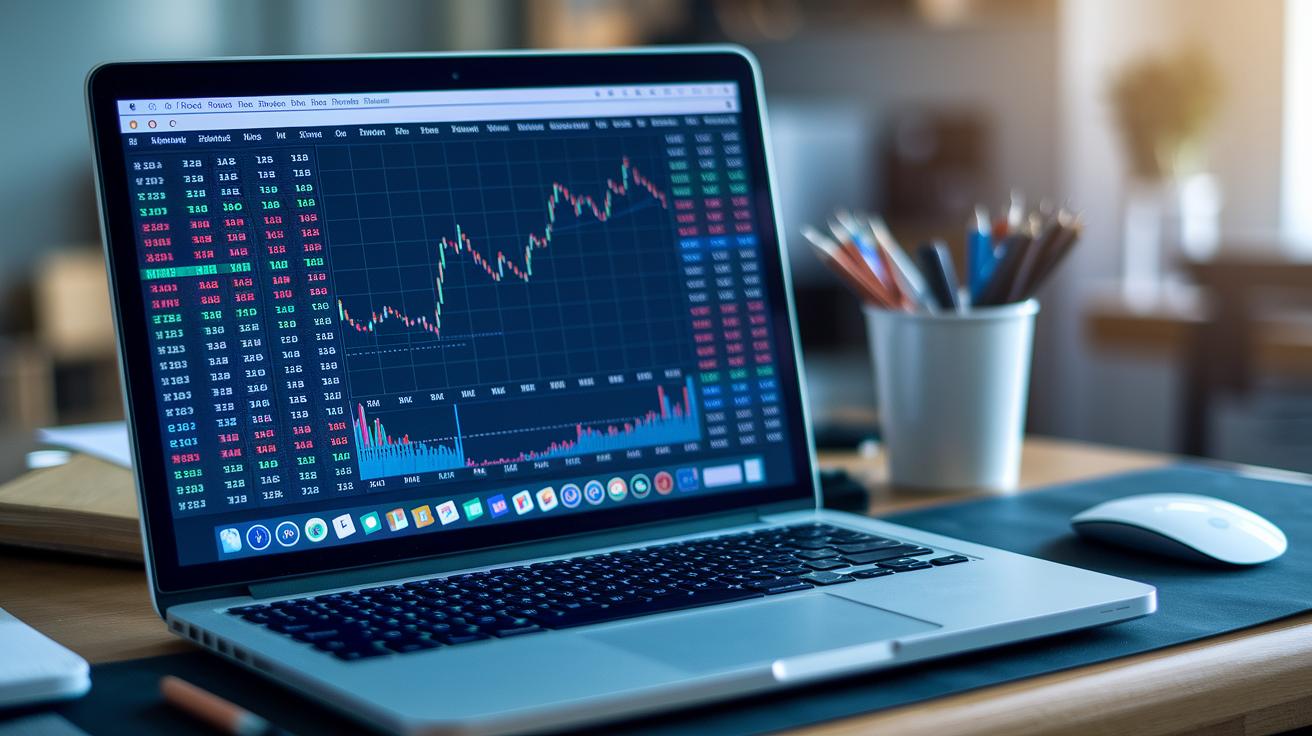
The best simulators show you real-time Level 2 market data, letting you peek into every bid and ask as if you were on a bustling trading floor. It’s like having a live window into market activity that helps you see what’s really happening.
With advanced reporting dashboards, you can keep an eye on your simulated trades as they happen. Imagine checking a report that tells you your trade went through perfectly at 2:45 PM. These dashboards break down key details like profit and loss, execution times, and order histories, giving you a clear picture of your strategy's performance.
Another key feature is the starting virtual buying power. Whether you’re given $100K or even $1M in virtual funds, this lets you experiment with different trading strategies without the risk of losing real money. And because you can trade commission-free, you’re free to test your ideas without worrying about extra fees trimming your results.
A solid paper trading simulator also supports trading across different assets. This means you’re not stuck with just U.S. stocks; you can also simulate options trading and try out strategies like option spreads or intraday momentum trades. The platform mirrors real brokerage software closely, making the experience feel just like the real market while keeping it safe and risk-free.
In the end, these simulators serve as essential tools for both beginners and seasoned traders. They offer hands-on experience that’s crucial for fine-tuning strategies and growing your market confidence.
Paper Trading Simulator Platform Comparisons
If you're exploring paper trading simulators, you'll find that each platform brings its own mix of handy features for beginners and seasoned traders alike. Take Interactive Brokers, for example. It offers a live demo powered by real market data so you can practice trades as if you were working with a real broker account. Imagine testing a strategy and watching your simulated order hit the market exactly when you expected, pretty cool, right?
Webull opts for a speedy approach by giving you unlimited virtual cash, and you can get started without a long signup process. This means you dive straight into trading without any delays. Over at Moomoo, you'll get a whopping $1M in fake funds along with detailed charts and a solid educational library. It’s like starting a trading session with supercharged buying power and plenty of guidance to show you the ropes.
Then there’s thinkorswim’s paperMoney, which mimics the look and feel of a live trading platform. This setup makes it easier for you to switch from simulated trades to real ones when you're ready. And if you’re a day trader, Warrior Trading’s simulator might catch your eye. It comes with advanced reporting features that break down your performance in simple, easy-to-understand ways, so you can see which strategies work best.
| Platform | Key Features |
|---|---|
| Interactive Brokers | Integrated demo with real market data |
| Webull | Unlimited virtual cash, no lengthy signup |
| Moomoo | $1M fake cash, detailed charts, educational library |
| thinkorswim’s paperMoney | Live platform replication |
| Warrior Trading | Advanced reporting for day traders |
- Easy-to-use interfaces
- Realistic market simulations
- Educational tools for strategy refinement
These comparisons show how each paper trading simulator can serve as a valuable practice tool, letting you build skills without risking real money.
Step-by-Step Paper Trading Simulator Tutorial

Getting started with a paper trading simulator is really straightforward and secure. First, sign up for a demo account on your favorite practice trading site. Next, choose a virtual starting balance that suits you, like $100,000 or even $1 million, to mirror real market vibes.
Take some time to explore the trading screens and get used to entering different types of orders. Try placing both a market order (which buys or sells immediately) and a limit order (which only executes at your desired price). For example, you might place a market order right when the market opens to see what happens.
Then, play around with the built-in charting tools. These help you see how prices change and track important technical signals. After that, check out the reporting sections so you can review your trade timings, profits or losses, and order history.
This simple simulation helps you test a variety of trading ideas without risking any real money. Think of each demo trade as a practice run, an opportunity to gain confidence and fine-tune your strategy. Over time, reviewing your trades will build the skills you need for real market scenarios. Every simulated trade is a chance to better understand market behavior and make smarter decisions next time.
Boosting Skills with Paper Trading Simulator Tips
Start by trying out both technical and fundamental strategies with your paper trading simulator. Mix different methods to see what truly fits your style. For example, you might use a simple moving average technique where a crossover signals you to buy or sell.
Then, practice short selling and option spreads as part of your learning journey. Use your demo account to explore these tactics, protecting your virtual portfolio when markets turn against you. Have you ever noted why a short sale might work based on a market trend? It’s a smart way to understand your moves.
Stick to solid risk-management rules in every session. Use stop-loss orders and adjust your position sizes just as you would if real money were on the line. This builds safe habits and steady confidence.
Keep a detailed trade log to track your progress. Write down every entry, exit, and decision, like noting a reversal signal that inspired your trade. Reviewing these notes will help show what’s working and what might need tweaking.
| Key Strategy | Action |
|---|---|
| Test Strategies | Combine technical and fundamental approaches |
| Practice Tactics | Explore short selling and option spreads |
| Manage Risk | Apply stop-loss orders and proper position sizing |
| Track Performance | Maintain a detailed trade log |
Treat each simulation as a focused practice session that builds your skills. Every run adds a bit of insight to help you make smarter, more confident trading choices.
Advanced Strategy Testing in a Paper Trading Simulator

If you're curious about fine-tuning your trading plan without real risk, our simulator is the perfect stage. Here, you can experiment with features like setting up automatic rules and adjusting hedges on the fly. Imagine programming the system to rebalance your portfolio the moment market swings push prices by 2% in a minute, it’s like having an extra pair of eyes keeping watch over your investments.
Experienced traders appreciate the clear, real-time performance numbers. They can see how simulated trades handle unexpected market twists, such as a sudden flash crash where both speed and automatic hedging come into play. One trader even mentioned how a rule to automatically close positions after a 3% loss helped cut down risks when markets got turbulent.
Key features include advanced algorithmic rule-testing, automatic adjustments to hedging based on preset risk levels, and detailed performance metrics like execution times and profit margins.
| Simulation Feature | Details |
|---|---|
| Algorithmic Rule-Testing | Set up rules that trigger trade adjustments as market conditions change. |
| Hedging Adjustments | Automatically refine your hedging strategy to manage risk in real-time. |
| Performance Metrics | Monitor key indicators like trade speed and profit levels for better insights. |
This setup lets you practice and perfect your strategies, making it easier to face live trading with confidence.
Selecting the Best Free Paper Trading Simulator
When looking for a paper trading simulator, don't just settle for risk-free trades. You want a tool that gives you a real feel for market action. Think of it like testing a car before you drive it. Look for simulators that reflect live market conditions and offer real-time numbers. This helps you see exactly how your simulated trade might shift with the market.
Take a moment to consider factors like how quickly data shows up, whether your orders are handled precisely, and if the simulator comes with helpful guides and tips. Ask yourself: does the platform feel responsive? Does it show detailed performance reports? Is it easy to start a trial? And does it include user experiences that mirror true trading scenarios?
Here’s a simple breakdown comparing these key features:
| Feature | Tested Simulator Example |
|---|---|
| Real-time analytics | Gives you instant feedback on your performance |
| Data accuracy | Closely mirrors actual market conditions |
| User testimonials | Case studies confirm realistic order processing |
By digging into these details, you can uncover the true value of a simulator beyond just a free trial. It’s all about choosing a tool that brings your trading strategy to life, just like watching a live market pulse perfectly, one beat at a time.
Final Words
In the action, we explored the world of paper trading simulators, tools that let you practice market trades without risking real capital. We broke down how to set up a demo account, compare top platforms, and test both basic ideas and advanced strategies. Each section offered clear steps for managing risk and keeping your financial data secure. Keep using a paper trading simulator to fine-tune your approach and build confidence in your investment decisions. Happy trading!
FAQ
Q: What is the best free paper trading simulator available?
A: The best free paper trading simulator offers virtual cash and real-time market data, letting you practice trading stocks and options without risk. Many platforms such as Webull, thinkorswim, and Moomoo provide no-cost demo accounts.
Q: Is there a reliable paper trading simulator app that uses fake money for practice?
A: A paper trading simulator app lets you execute trades using fake money in a secure, risk-free environment. It provides a straightforward way to practice strategies before committing real funds.
Q: How does Webull paper trading function?
A: Webull’s paper trading lets you practice with unlimited virtual cash on a platform that mirrors live market conditions. This feature is useful for both beginners learning the ropes and seasoned traders testing new strategies.
Q: What should I know about TradingView paper trading?
A: TradingView’s paper trading tool uses a simulated market that reflects real-time conditions. It helps you refine your trading strategies by practicing order execution and monitoring performance without financial exposure.
Q: Is paper trading still available and considered a valid simulation tool?
A: Paper trading remains available and serves as an effective simulation tool using virtual money. It offers a safe way to learn market mechanics, test strategies, and build confidence before trading with real cash.
Q: How do I download or access a paper trading simulator?
A: You can access a paper trading simulator by signing up for a free demo account through many broker platforms. Often, these tools are available via mobile apps or directly on their websites, making them easy to use.