
Have you ever wondered if smart forex trading might be as simple as spotting trends? Imagine old price moves like footprints in the sand, showing you a hint for what comes next.
Every trade in the forex market leaves a clue in its price pattern. By looking at these past patterns, you can often see hints that point to the next big move.
In this post, we're sharing easy ways to uncover these signals, so you feel more confident when making your forex decisions. Ready to see how clear trends can boost your trading?
Mastering Trend Analysis in Forex Trading
Trading currencies and spotting trends might sound tricky, but it’s really just about looking back at past prices to guess what might happen next. Think of it like following footprints in the sand; by averaging out the ups and downs, you can see the overall path the market might take.
Every day, the forex market buzzes with trillions of dollars traded. This constant flow makes the market busy, so there’s plenty of price action for us to study. For instance, if you notice a currency pair slowly climbing over a series of sessions, that steady rise could be a strong sign a trend is forming.
Now, let’s chat about two main methods traders use. Technical analysis is all about the charts and historical data. It works on the idea that all the important details are already in the price movements. So, if you’re looking for clear, visual cues to know when to buy or sell, technical analysis might be right up your alley.
In contrast, fundamental analysis digs into economic data, like how many people are working or changes in interest rates. Many traders prefer the clear picture that technical analysis offers, especially when it comes to timing their moves. Have you ever experienced that moment when a trend just becomes clear? It’s like a light bulb going off, guiding you to the right decision.
By sticking with these simple, clear methods, you can navigate the busy forex market with confidence, much like chatting with a friend about your next big idea.
Identifying Forex Market Trends with Chart Patterns
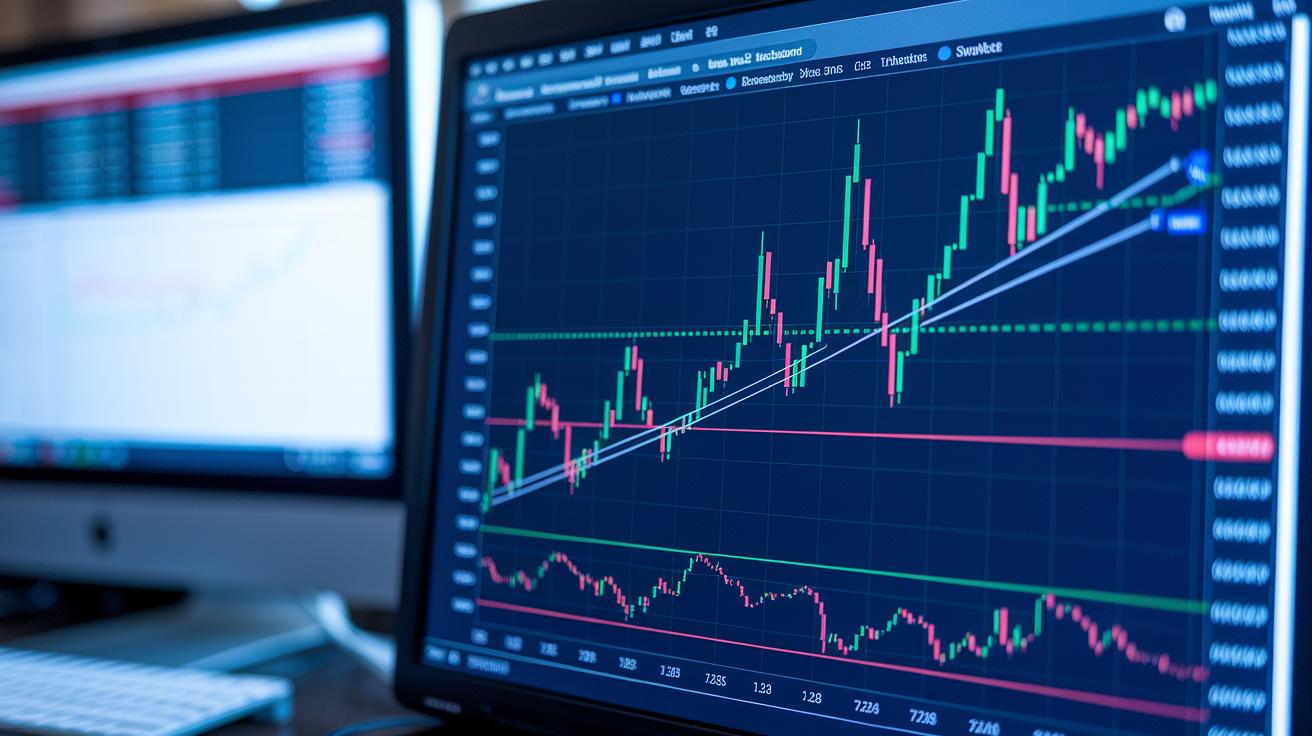
Have you ever looked at a price chart and seen a story unfolding? Chart patterns help you do just that by drawing a picture of how prices have moved over time. Traders lean on these clues to decide if a trend will keep going or if it might change direction. Sometimes a pattern shows a strong move building up, tells you to hold steady, or warns that the current trend is running out of steam. Spotting these signals can really help you pick the best moments to jump into or pull out of a trade.
Here are some common patterns to watch for:
- Bullish Flag (Continuation): Picture a fast upward move that then takes a little sideways break. This pattern usually means the rise is set to continue.
- Bearish Flag (Continuation): Much like the bullish flag, but in a downtrend. A short pause after a drop suggests that prices might keep falling.
- Symmetrical Triangle (Continuation): In this pattern, prices close in on each other, showing balance between buyers and sellers until a breakout happens.
- Head and Shoulders (Reversal): This one looks like a head with two shoulders. It hints that the current trend might soon reverse.
- Double Top/Bottom (Reversal): When you see two similar highs or lows, it often signals that the market could change direction.
- Rising/Falling Wedge (Reversal): Here, the price range narrows, which often indicates that a reversal of the trend might be coming up soon.
- Pennant (Short Consolidation): After a strong move, a small, tight pattern forms, suggesting that the trend will likely continue quickly.
Recognizing these patterns can help you decide when to make your move. By reading these visual clues, you gain a bit more confidence in your decisions, relying on signals that have worked in past market conditions.
Leveraging Technical Indicators for Trend Confirmation
Moving averages are a simple but powerful way to understand market trends. They average out prices over set times to clear away daily fluctuations and show the real trend. For example, if you compare a 20-day simple moving average with a 10-day exponential moving average against a 50-day exponential moving average, you might notice something useful. When the shorter average moves above the 50-day, it often hints at a bullish trend, and if it dips below, it could point to a bearish trend. This straightforward method helps traders focus on the true rhythm of price movements. For a deeper dive, check out basics on technical analysis.
RSI and MACD are also popular for spotting market momentum. The Relative Strength Index, or RSI, helps you see if an asset might be overbought (over 70) or oversold (below 30). It’s like getting a quick heads-up on market conditions. The MACD, which mixes 12-day and 26-day EMAs along with a 9-day signal line, is there to catch shifts in momentum. When the MACD crosses above its signal line, it usually signals a boost in upward momentum. A drop below might mean the strength is fading. These tools work hand in hand with moving averages to confirm trends.
Volume analysis brings an extra layer of trust to these signals. Even though it can be a bit tough in forex due to various trading platforms, a big surge in volume during a move usually backs up the trend you’re seeing. By combining several indicators and watching for volume spikes, traders can cut out fake signals and get a more complete view of what the market is doing. This approach makes it easier to time entries and exits with confidence.
Refining Entry and Exit Points with Support, Resistance, and Fibonacci Techniques

Traders often use support and resistance levels to decide when to enter or exit a trade. These levels come from looking at past highs and lows and simple round numbers, like when EUR/USD hovers around 1.1000. They work like road signs, when a price hits a support level, it can bounce up, and when it reaches a resistance level, it might pull back. This method helps traders spot chances for price moves where they can either secure their gains or cut their losses. It also guides them where to place protective stop-loss orders.
Fibonacci retracement techniques add another step of precision. They use common ratios, 38.2%, 50%, and 61.8%, to show where the market might hesitate before continuing its trend. These numbers help traders pinpoint zones where prices could pull back a little. By comparing these Fibonacci levels with nearby support or resistance, traders can set clear take-profit targets and safe stop-loss orders. For example, in a strong trend that shows a bit of a pullback, a Fibonacci level might signal the right moment to jump in, balancing risk with potential reward.
Integrating Multiple Time Frames and Cycle Analysis for Forex Trends
When you check different chart timeframes, like the 15-minute, hourly, daily, and weekly charts, you get a clear picture of how the market behaves. The shorter charts show you quick movements, while the longer ones reveal the steady trends. Imagine noticing a small drop on a 15-minute chart, but the daily chart clearly shows an uptrend. This mix of views helps cut through the usual market noise, making your trading choices more reliable.
It’s also important to understand the different cycle phases. That means spotting when prices make higher highs and higher lows during uptrends, or lower highs and lower lows during downtrends. Sometimes, prices will bounce between fixed support and resistance levels, creating range-bound phases that matter too. By matching the signals you see on shorter charts with the broader trend on longer ones, you can feel more confident about when to enter a trade. This way, you're trading in step with the overall market cycle and reducing the risk of being out of tune with the bigger picture.
Backtesting and Validating Forex Trend Strategies

Backtesting is like taking your trading rules for a spin on old price charts to see how they might have played out. It lets you peek into past market action and get a feel for whether your strategy could work before you risk real cash.
You can pick a specific time span, say, a few months with different market moods, or use smart tools like algorithmic models and even machine learning (which helps spot hidden trends) to do the job. Some traders prefer to test manually for that hands-on touch, while others use software tools, such as those available at TradeWiselly.com, to save time and effort.
After testing, you move on to reviewing your performance scores. You'll check things like the win rate (how often your trades succeed), the risk-reward ratio (a simple way to compare potential profits against possible losses), and drawdown levels (which show how deep your losses might get). This step is like tuning an engine before a long drive, you tweak your rules and fine-tune entry and exit points based on what the numbers tell you.
This thoughtful review helps you iron out mistakes and builds up your confidence, so you're ready to take your trend-based trading approach live.
Risk Management and Avoiding Common Trend Analysis Pitfalls
Risk management in forex trading isn’t something you throw in at the end, it’s the heart of a solid plan. Using stop-loss orders (instructions to close a trade if prices dip too much) and limiting risk on each trade to just 1–2% of your account helps shield you from unexpected moves. This careful method stops you from overtrading and keeps your feelings in check when prices jump around. So even if the market surprises you, your losses stay small, letting you focus on fine-tuning your plan instead of scrambling to recover.
- Avoid overleveraging by adjusting your position sizes and always setting a stop-loss; this stops losses from spiraling.
- Check the market’s overall direction before you trade so you’re not swimming against the current.
- Don’t rely on just one indicator, using a mix helps confirm the signals and avoid false alarms.
- Watch out for sudden market swings and be ready to adjust your stops and risk limits when things get bumpy.
- Set clear exit rules and stick to them to prevent impulsive decisions that might cost you dear.
By keeping these straightforward tips in mind, you build a risk management strategy that not only protects your money but also helps you steadily move forward in the forex market.
Final Words
In the action, you’ve seen how studying past price movements can guide your next move in forex markets. The post broke down technical methods, chart patterns, and entry and exit tactics with quick snapshots of support/resistance levels and Fibonacci techniques.
You also learned to combine different time frames with backtesting to check your approach while keeping risk in check. With this strong base in trend analysis for forex trading, you’re all set to make smart, confident investment decisions.
FAQ
What is free trend analysis for forex trading?
Free trend analysis for forex trading provides no-cost tools that study past market movements to predict future price changes. It offers practical insights to help traders plan and make timely decisions.
How can I obtain forex trend analysis PDFs or free downloads?
Obtaining forex trend analysis PDFs means accessing detailed charts and analysis documents at no cost. These free downloads offer a ready reference to understand market patterns and improve trading strategies.
How do I identify and analyze trends in forex?
Identifying and analyzing forex trends involves studying price charts and spotting key patterns like higher highs in uptrends or lower lows in downtrends. This approach helps set well-timed entries and exits.
What does the 5-3-1 rule in forex trading mean?
The 5-3-1 rule in forex trading outlines a specific trade management strategy, guiding position sizing and risk control. It assists traders in maintaining balance and reducing potential losses during trading.
How does the 90% rule apply in forex trading?
The 90% rule in forex trading suggests that a significant portion of strategies may underperform. It highlights the need for stringent risk management practices and disciplined trading methods to safeguard capital.
Which type of analysis is best for forex trading?
The best analysis for forex trading depends on your approach; technical analysis focuses on charts and price behavior, while fundamental analysis reviews economic data. Many traders combine both to gain a clearer market view.
What roles do resources like FXStreet, DailyFX, TradingView, Myfxbook, ForexLive, and IG Group play?
Resources like FXStreet, DailyFX, TradingView, Myfxbook, ForexLive, and IG Group offer real-time news, charting tools, and market insights. They empower traders with detailed analyses and data to enhance trading decisions.